






 Portuguese
  Spanish
  5 min of reading
  1 comment


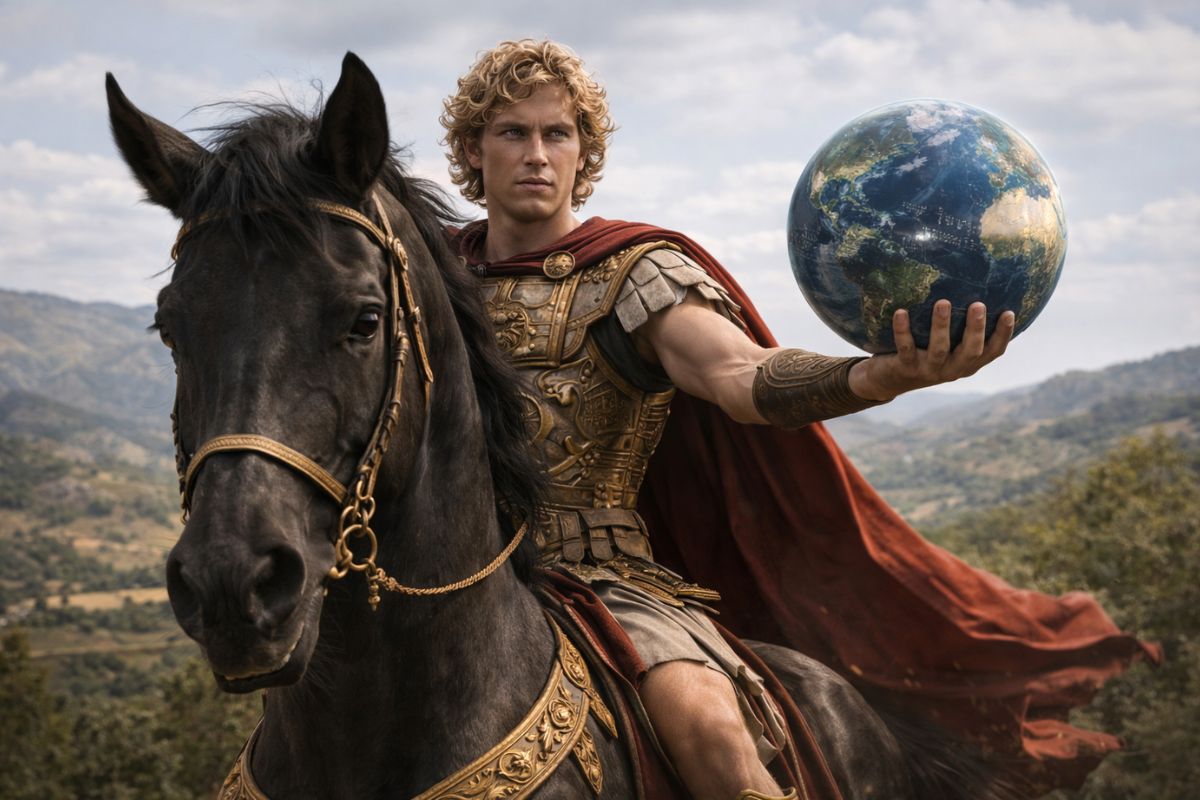


In The Debate About Brainets, Alexander The Great Appears As Proof That Empires First Arise In The Mind, With Horse And Speed, Before The Blood. The Same Mechanism That United Macedonians Also Explains Why Cultured Societies Accept Extreme Leaders, From The Middle East To 1930s Germany Without Any Fanfare.
Alexander The Great Often Enters History As A Shining, Almost Inevitable Name, A Boy Who Inherited An Army And Delivered An Empire. However, The Most Disturbing Point Is Not The Map. It Is The Ease With Which The Human Mind Accepts A Collective Narrative When It Seems Inevitable.
The Idea Of Brainet, Discussed By Miguel Nicolelis When Studying Civilizations And Power, Helps To View This Phenomenon From Another Angle. It Is Not Just Military Strategy. It Is The Construction Of A Mental Unit That Bonds Individuals, Groups, And Fears, Making The Impossible Seem Logical, Even When The Society Is Highly Intellectualized.
The Tribal Brain And The Hole That Asks For A Narrative
The Thesis Starts With A Simple Discomfort.
-
Neymar’s Family Sells 300,000 Bottles of Wine Before Launch, Aims for $20 Million Revenue in First Year

-
Cambridge Introduces 25m² Modular Homes to Bridge the Gap from Shelters to Permanent Housing
-
Facing high costs and limited expertise in Brazil, couple builds 27 m² tiny home on wheels for $36,000 using online resources.

-
Tired of High Rent in Portland, Newlyweds Buy 37m² Tiny House with 36 Cabinets, King-Size Bed, and Loft Office, Paving Way to Financial Freedom




The Human Species Struggles To Perceive That It Is One, With The Same Form For Hundreds Of Thousands Of Years, And Thus Creates Isolated Groups That Begin To Combat The Neighbor And The Neighbor’s Neighbor.
The Division Arises Before The Battle, And Then The Battle Becomes Justification For The Division.
At This Point, A Mechanism Enters That Fills The Void Of Uncertainty.
The Attempt To Create A Larger Narrative, Capable Of Surpassing The Closed Tribal Society, Can Turn Into Religion, Identity, And Belonging.
The Somber Detail Is That This Social Glue Can Both Expand A Group And Transform The Other Into A Permanent Enemy, With Little Effort.
Mongols, Horse And Speed As A War Brainet
In Trying To Understand Why The Mongols Were So Overwhelming, The Proposed Hypothesis Is Brutally Concrete.
They Formed Brainets With Their Horses, A Connection To The Animals That Allowed Them To Leave One City And Reach Another 300 Km Away In Almost Continuous Riding, Before Any Defense Was Ready.
The Warning Came Too Late Because The Speed Had Already Arrived First.
This Dynamic Was Not Just Logistical, It Was Cognitive. There Are Descriptions Of Horsemen Who Did Not Stop To Eat Or Sleep, They Slept In The Saddle And Fed On The Blood From The Horse’s Jugular Mixed With Mare’s Milk During The Ride.
When A Society Accepts This Kind Of Rhythm, It Also Accepts A Type Of Warfare That The Opponent Can’t Even Imagine Yet.
And History Places A Brake That Illuminates The Central Point.
Who Managed To Defeat The Mongols After The Invasion Of Baghdad Was An Army That Knew The Method.
The Mamluks, Described As Slaves Coming From Regions Near Today’s Ukraine And Central Asia, Used Similar Animals And Techniques. In Other Words, It Took An Equivalent Power Brainet To Interrupt The Machine.
Alexander The Great And The Empire Born In The Ear
The Uncomfortable Question Comes Soon After. If Human History Is A Clash Of Brainets, What Did Alexander The Great Do Differently When Leaving Macedon And Taking The Persian Empire?
The Suggested Answer Is Not Just In The Spear. It Is In The Act Of Embedding In The Generals’ Minds An Idea Of Destiny, Heritage, And Identity, To The Point Of Transforming An Army Into A Mental Community.
The Account Of Alexander The Great’s Youth Exposes The Mechanics Of This Persuasion.
When His Father, Philip II, Was Murdered Before Him, The Young Man Found Himself Surrounded By Older, Veteran, And Hardened Generals.
Nevertheless, Alexander The Great Would Have Conducted Repeated, Almost Ritualistic Conversations About What It Would Be Like To Rule The Persian Empire.
In One Of Those Moments, A General Becomes Annoyed With The Fantasy, And The Boy Responds With A Formula That Seems Simple, But Is A Key To Power: Before Building A Tangible Empire, One Must Build It Here, In The Mind.
The Background Helps To Understand Why This Works. Alexander The Great Was A Student Of Aristotle And Appears As Someone Who Understood That The Persian Empire Could Be Bigger, More Advanced, And More Numerous, Yet Still Vulnerable To A Well-Built Mental Unit.
The Result Narrated Is Well Known: Years Later, He Would Be Sitting In Persepolis As The Emperor Of Persia.
The Startling Step Is Not To Conquer, But To Convince Experienced People To Act As If The Conquest Were Already A Fact.
When Intellectualized Societies Accept The Unacceptable


The Most Uncomfortable Argument Does Not End With Horses, Nor With Persepolis. It Ends In A Paradox: Societies With A High Concentration Of Educated People Can Also Accept The Unacceptable.
The Cited Example Is 1930s Germany, Described As A Place With An Enormous Density Of PhDs, Philosophers, Musicians, Artists, And Scientists, With Names Associated With Modern Physics, And Yet Crossed By A Social Adherence To An Extreme Project.
This Part Hurts Because It Destroys The Comfortable Fantasy That Barbarism Is Always The Work Of Ignorance.
It Is Not A Debate About Individual Intelligence, It Is About Social Brainet, About How A Collective Narrative Can Capture Fear, Belonging, And Ambition At The Same Time.
Perplexity Even Appears In A Letter Attributed To Einstein, In Which He Is Astonished By Fellow Physicists Entering This Logic And Wanting To Denounce Him.
The Point Is Not To Absolve Anyone. It Is To Acknowledge The Mechanism So As Not To Repeat The Excuse.
Alexander The Great, Viewed From This Angle, Becomes More Than A General. He Becomes A Mirror Of Human Power In Its Most Frightening Side.
The Same Brainet That Raises Empires With Horse, Blood, And Speed Also Manages To Make Highly Intellectualized Societies Accept What, In Theory, Would Be Unacceptable.
Now I Want You To Respond With Personal Honesty, Not With A Stock Phrase: At What Moment Does A Brainet Only Become Social Cohesion, And When Does It Turn Into A License For Cruelty? And If You Had Lived Alongside Alexander The Great, Would You Have Seen Him As An Inevitable Leader Or Would You Have Seen The Risk Before Everyone Else?





Um GRANDE Líder, pois já conhecia os métodos de persuasão do FBI. Hoje dominar pessoas virou arte.