Portuguese
  Spanish


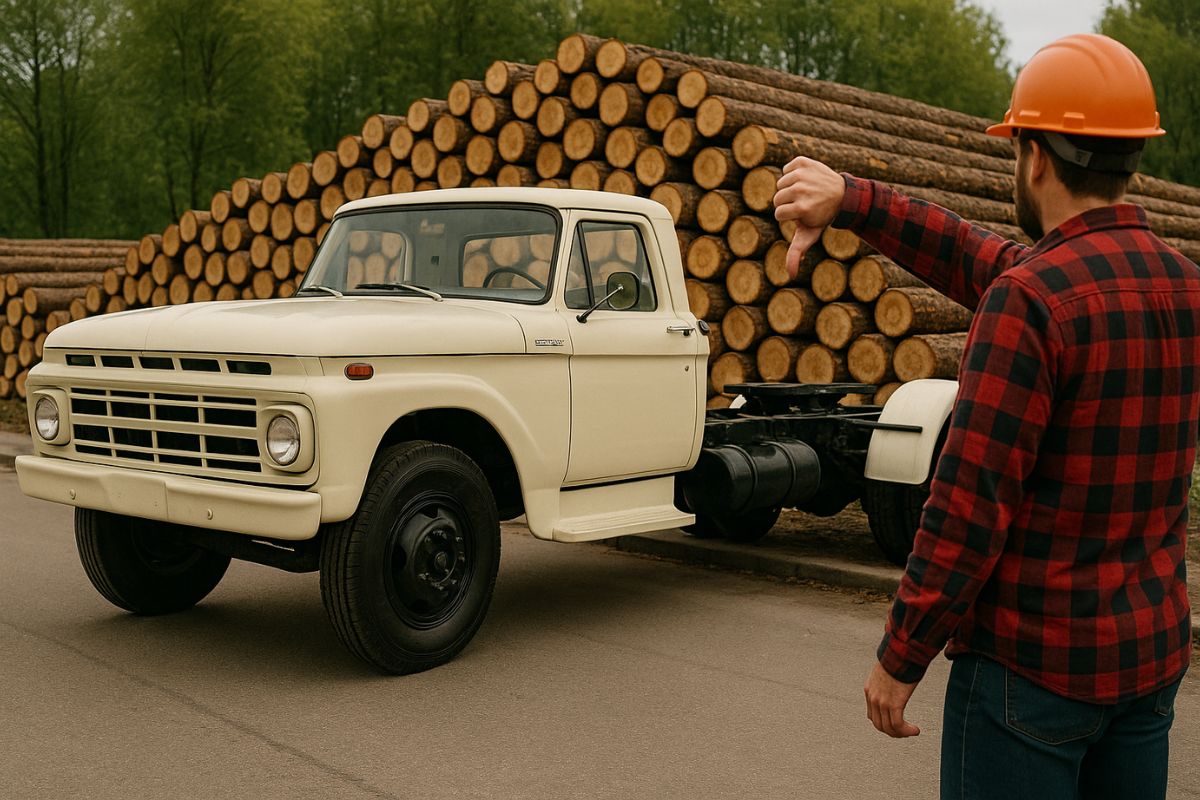


The Ford F-8500 Launched in the 70s with Innovative Engine, the Ford Workhorse Lasted Less Than 3 Years. Understand the Bold Bet and the Reasons for the Rejection.
The 1970s were a time of significant change in Brazil. The country was experiencing the so-called “economic miracle.” Road transport was gaining strength with new roads. In this competitive landscape, Ford decided to make a bold bet. It launched the Ford F-8500. It was its first heavy workhorse manufactured in Brazil on a large scale.
The truck featured an innovative, two-stroke engine coming from the United States. It promised power and modernity. However, the project quickly failed. The Ford F-8500 lasted less than three years on the market and became a symbol of a misstep for the automaker.
The Bold Bet by Ford

Ford identified a gap in its portfolio. It did not have a national workhorse to compete with the Mercedes-Benz LS 1519. The Mercedes model was the king of the roads, pulling trailers of up to 32 tons. Ford then decided to launch the Ford F-8500.
-
Brazil’s Imigrantes Highway Celebrates 50 Years with Plans for Major Expansion, Including a 6 km Tunnel and Third Lane to Ease Traffic to São Paulo’s Coast

-
Brazilian Job Market Surprises: Unemployment Falls to 5.6%, Hits Record Low for May, Brazilian Incomes Rise, and Underemployment Reaches Lowest Level Ever Recorded by IBGE

-
Chinese E-commerce Giant Predicts Robots Will Replace 700,000 Delivery Workers as Autonomous Vehicles Expand to 200 Cities, Offering Training for Workers to Maintain Their Machines

-
Trump warns Europe with 100% tariff threat on digital tax, potentially impacting wine and trade agreements


The idea was to offer a modern truck with good performance. The differentiator would be an innovative engine. Ford was confident. The mission of the F-8500 was to compete on equal terms with the giants.
The Innovative (and Complicated) 2-Stroke Engine of the Ford F-8500
Ford’s major bet was the Detroit Diesel 6V53 engine. It was a two-stroke diesel engine. Something completely out of the Brazilian standard at the time. Two-stroke engines were associated with smaller vehicles. They are known for being noisier and more agitated. They complete the power cycle in just one crankshaft rotation. This is half the time of a conventional four-stroke engine. The result, in theory, is more power and less weight.
The 6V53 had around 5 liters and over 200 horsepower. It generated 60 kgfm of torque. It could rev up to 2600 rpm, which was quite high for trucks of that era. It had a metallic, sharp, and unmistakable roar. The goal was to offer a more agile alternative to the Mercedes OM 355/5 engine. The F-8500 had a towing capacity of 30 tons. It came with a Clark 5-speed transmission and a 2-speed differential (totaling 10 gears). The brakes were air-operated, an advanced standard for the time. The suspension was robust. On paper, it seemed competitive.
Why Did the Market Reject the Ford F-8500?
Despite the innovative proposal, the Ford F-8500 faced strong rejection. Brazil was not prepared for the two-stroke engine. Mercedes-Benz already had significant market confidence. It had a wide service network, easily found parts and experienced mechanics. The Detroit Diesel engine, on the other hand, frightened workshops. There was a lack of technical knowledge for maintenance. Parts were scarce and expensive. Many mechanics avoided working on the engine or charged exorbitant prices for the service.
The sharp noise of the engine also bothered drivers on long trips. Moreover, the innovation did not translate into clear fuel savings. Consumption varied widely, especially if the driver did not know how to operate the two-stroke engine properly. Another negative point was the lack of a factory sleeper cabin. This made life difficult for those traveling long distances. The famous “word of mouth” in the trucking community was decisive. The reputation of a problematic, expensive-to-maintain truck spread quickly. Doubts about reliability and the limited service network kept buyers at bay.
Rapid Discontinuation and Engine Swaps


Given the low acceptance, Ford decided to halt production of the Ford F-8500 quickly. Launched around 1977, the model was discontinued in less than three years. Only about 365 units were produced. A very low number for a truck. The F-8500 practically disappeared from the roads. Many were sold already with the original engine swapped out. The difficulty and cost of maintaining the Detroit Diesel led many owners to replace it.
Simpler and more reliable four-stroke engines were adapted. Perkins, MWM, and Cummins were common choices. The stock in dealerships was high. Promotions and offers for free maintenance were attempted unsuccessfully. Ford learned a harsh lesson. It only returned to compete in the heavy workhorse segment more than a decade later, in 1990, with the Cargo 3224. Today, finding a Ford F-8500 with the original Detroit Diesel engine is extremely rare. The model is marked as a bold project, but launched at the wrong time and place.