Portuguese
  Spanish


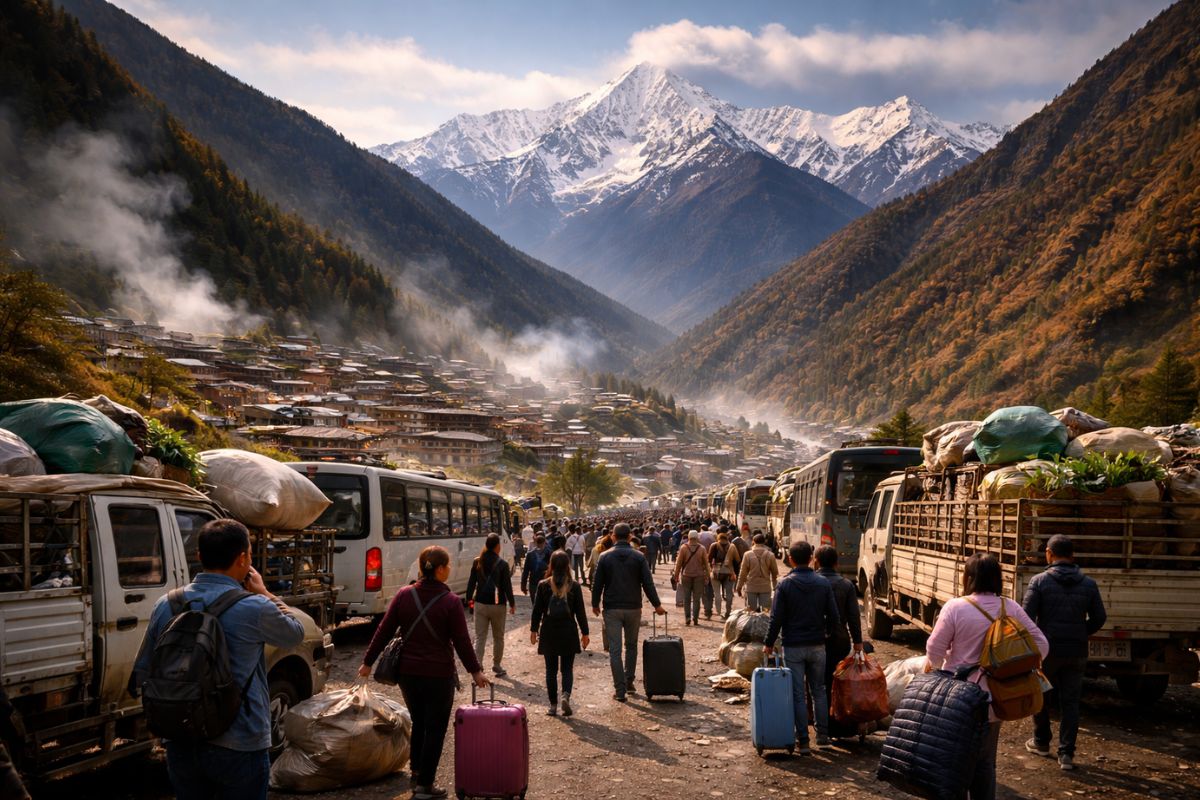


The Relocation Order of Deqin, The Last Stop in Yunnan Before Tibet, Shortens the Horizon for Merchants and Families Who Live off Mushrooms, Cordyceps, and Cattle, Promising Landless Homes 100 km Away, While Tourism From Mount Meili 6,740 Meters Insists on Staying a Few More Days Here
Deqin has become synonymous with a countdown in the far north of Yunnan. The city, which serves as the last stop before entering Tibet, has repeatedly received the message that it will need to abandon its ground in just 3 months, with a planned move to a new site 100 km away.
The impact does not appear in an abstract announcement. It appears at the closed metal door, in the shop that does not restock goods, in the restaurant that hesitates to renovate the dining area, in the family that has always lived off mushrooms and is now trying to understand how to live without the mountain, without trails, and without cordyceps.
When the Order Arrives, Routine Becomes Inventory

In Deqin, the idea of relocation is not new.
-
California Opens Floodgates to Restore Wetlands and Create Natural Flood Protection in the Central Valley

-
US Mayor Goes Undercover as Homeless for a Week to Understand Rising Homelessness, Sparking Debate in His City

-
Teen from Brazil Turns School Snack Sales into Million-Dollar Confectionery Business Projected to Earn Nearly $1.9 Million in 2024
-
Why Do Electrical Outlets and Switches Turn Yellow? Understanding the Impact of Light, Temperature, and Materials on Color Change


Residents say the warning has been circulating for over a decade, long enough to erode the willingness to invest and to push the city into a visible lag behind other counties in the region.
The result is a daily life that seems to function with the brakes pulled.
Many shops are closed, and the urban space, described as narrow and without traffic lights, gives the impression that each person manages the present without knowing if it is worth planning for the next season.
100 km Is Not Just Distance, It Is a Change of World

The planned move to a location more than 100 km away reorganizes everything that sustains local life.
Those who work in commerce fear a severe loss: rental contracts may end without compensation, and the response heard from some shopkeepers is direct, as if the defeat has already been accounted for.
The distance becomes a detail compared to the lack of guarantees. For families dependent on mushrooms, firewood, and the annual mountain cycle, the relocation changes the way they earn a living and belong to the place.
A resident sums up the dilemma simply: in the new location, the government provides housing, but land does not come in the package, and without land, the work with cattle becomes an open question.
Mushrooms and Cordyceps as High-Altitude Economy
What sustains Deqin, aside from tourism, has the smell of woods and winter markets.
There are those who climb the mountains to harvest mushrooms, those who trade cordyceps bought from local residents, and those who mix agriculture and cattle raising to get through the year.
This economy has a detail that doesn’t fit into spreadsheets: it depends on geography.
Deqin is located in a high-altitude area, cited as close to 3,000 meters, and the cold is part of the work, referencing indoor environments at -13 degrees Celsius and a street that can reach -20 or -30 degrees Celsius.
It’s not just climate, it’s logistics, it’s energy spent to live and produce.
The City That Seems Empty Still Serves Meals for Those Going to Mount Meili
Even with the uncertainty, tourism remains a thread of continuity.
Deqin is seen as a transfer point for those seeking Mount Meili, standing at 6,740 meters, described as unclimbed to date, which continues to draw visitors to a city that may disappear.
This presence of tourists explains why some still open businesses.
A restaurant owner says that near Mount Meili, eating tends to be expensive, and many still prefer to stop in Deqin for a cheap meal before continuing their journey.
It is an economy that endures out of habit, even when the calendar points to the end.
Tibet on the Horizon, Identities on the Corner
The geographical position shapes local identity.
Deqin is presented as a county of an autonomous Tibetan prefecture, with twelve ethnic groups coexisting and about 80% of the population described as Tibetan.
This is evident in the language on the signs, in the repeated greetings on the street, and in the routine of high-calorie foods.
The yak butter tea, made with salt and tea, emerges as a practical symbol: it warms, sustains, helps face the cold.
When the city is dismantled, it is not just an address that changes, but a way of life that has been adapted to altitude and the edge between Yunnan and Tibet.
What Stands in the Last 3 Months
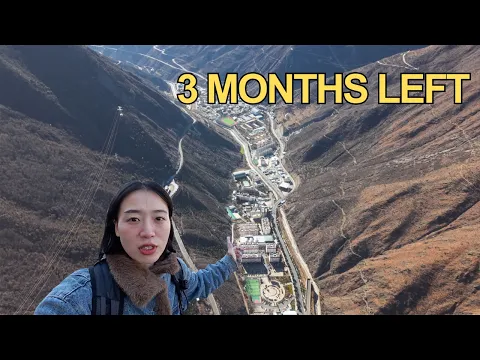

With the countdown, Deqin enters a kind of provisional economy.
There are those who continue working as if nothing will happen, because the definitive notification still seems like a cloud that changes shape.
There are those who end plans because a renovation today could become a loss tomorrow.
The question that crosses merchants and residents is similar, though expressed in different ways: what happens to those who leave 100 km away and discover they have housing but no land, and that the livelihood they got from mushrooms and cordyceps does not fit into the new map?
No one seems to have a complete answer, and perhaps that is why the city still tries to function, even when it has already been put in exit mode.
Deqin faces a type of displacement that does not fit into the word change.
In 3 months, the city may become a memory, while Mount Meili remains on the horizon and while mushrooms, cordyceps, and cattle continue to be the language of daily life for those who fear starting over 100 km away without guarantees.
If you had to leave your home with a countdown, what would you take first and what would you leave last? And looking at Deqin, what weighs more: the promise of new housing or the loss of territory that sustains work, identity, and future?