Portuguese
  Spanish


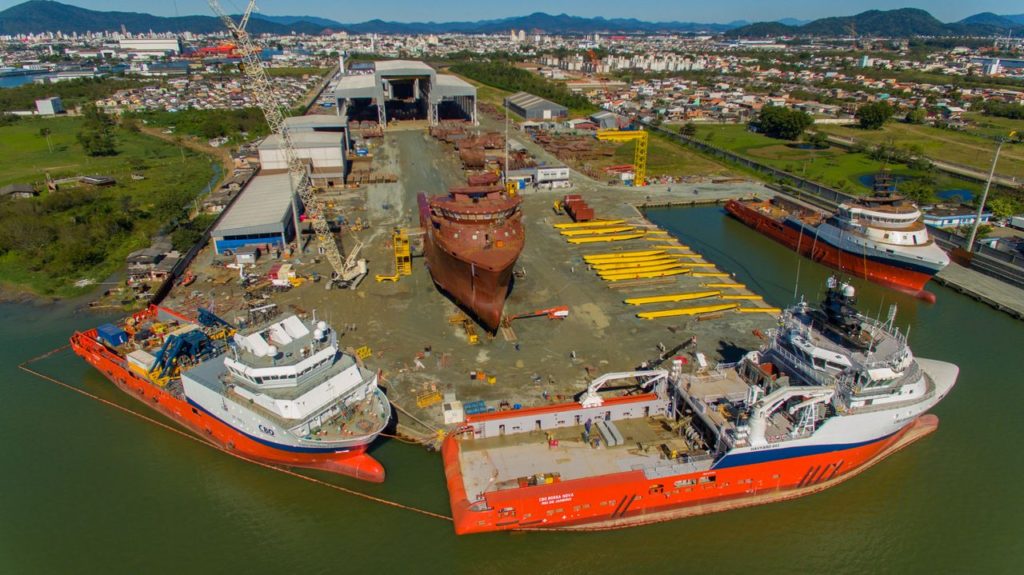

The Construction of Ships for the Brazilian Navy Is Expected to Start Next Year at the Shipyard Located in Santa Catarina
On Tuesday (07/27), the Commander of the Navy, Admiral of the Squadron Almir Garnier Santos, visited Itajaí, in the state of Santa Catarina, to tour the facilities of the Estaleiro Brasil Sul – ThyssenKrupp, where the Navy’s “Tamandaré” class ships will be built starting in 2022. See also: CShipbuilding: Petrobras Closes Contract with Keppel for the Construction of FPSO P-78, Which Will Be Installed in the Pre-Salt Layer in the Santos Basin
- URGENT Selection Process Demands Home Office Job Vacancies in Different Areas; Professionals in Entry-Level, Mid-Level, and Senior Positions from Anywhere in the Country Can Participate
- General Motors Confirms the Arrival of the New Chevrolet Montana to Brazil, and the Plant in São Caetano do Sul, SP, Will Be Responsible for Production
- Federal Deputies Linked to the Oil and Gas Sector Approve Kitchen Gas Aid for Low-Income Families in Several States
- Burger King Is Hiring 2,299 Job Openings Nationwide for High School and University Candidates
- Battery Manufacturer Develops Device 10 Times Cheaper Than a Lithium Battery Capable of Storing Renewable Energies
Details of the Construction of the Navy Ships in Santa Catarina
The Estaleiro Brasil Sul – the new name of the Oceana shipyard in Itajaí, which was acquired by the German ThyssenKrupp – is undergoing a revolution. The structure is being renovated to accommodate the construction of four ships ordered by the Brazilian Navy, a R$ 9 billion project. The first vessel is already scheduled to begin construction. Steel plates will start being cut in April of next year.
The expectation is that the construction of the ships will create 2,000 direct jobs at the peak of construction and up to 6,000 indirect jobs. For now, recruitment of production line workers has not been opened – but it is common for people to seek out the shipyard to leave their resumes.
-
French Brand Transforms 6 Million Brazilian PET Bottles into Sustainable Sneakers for Global Fashion Market

-
Abandoned Factory in Rio’s North Zone Becomes Urban Hazard with Standing Water and Debris

-
The U.S. Navy Conducts Submarine Tests in Idaho Lake to Detect Underwater Noises Hidden by the Ocean
-
British Factory Transitions from Mechanical Parts to Producing 420,000 Electric Power Units Annually, Supplying 70% of Ford’s Electric Cars Sold in Europe


Municipality Prepares for the Works
Rodrigo Duarte, CEO of Itajaí Participações – a public company that promotes business in Itajaí – stated that the moment is focused on seeking local, regional, and state partnerships to supply the construction of the ships.
The municipality in Santa Catarina is also preparing infrastructure for the construction phase of the Navy’s frigates. The movement of trucks around the shipyard, which is located on the banks of the Itajaí-Açu River, is expected to increase significantly. In December, for example, the arrival of 200 trucks loaded with steel for the ships is anticipated.
Also Check: Construction of New Navy Ships at Shipyards in Rio de Janeiro May Open Many Job Vacancies
At the end of May, the Special Commission on Naval and Offshore Industry of the Legislative Assembly of the State of Rio de Janeiro (Alerj), chaired by Deputy Célia Jordão, became enthusiastic about the job generation expectations with the construction of frigates and patrol ships for the Navy at the state’s shipyards. This possibility was discussed during a technical visit to Emgepron and the Naval Technology Cluster.
Representatives from the public company in Rio de Janeiro, which manages naval industry projects, stated that the Navy needs 12 frigates. Of these, four are already under construction in the state of Santa Catarina, with up to 40% local content recruitment. The remaining projects could be brought to Rio de Janeiro, with potential job generation in the state.
The CEO of Emgepron, Admiral Edesio Teixeira, says they have the intelligence and production capacity, and that 90% of trade occurs by sea. According to him, bringing these Navy shipbuilding projects to Rio de Janeiro requires a joint effort between them and the state government. Teixeira states that the maritime economy is fundamental for the development of Rio de Janeiro, which has full conditions to restructure itself to grow.