Portuguese
  Spanish


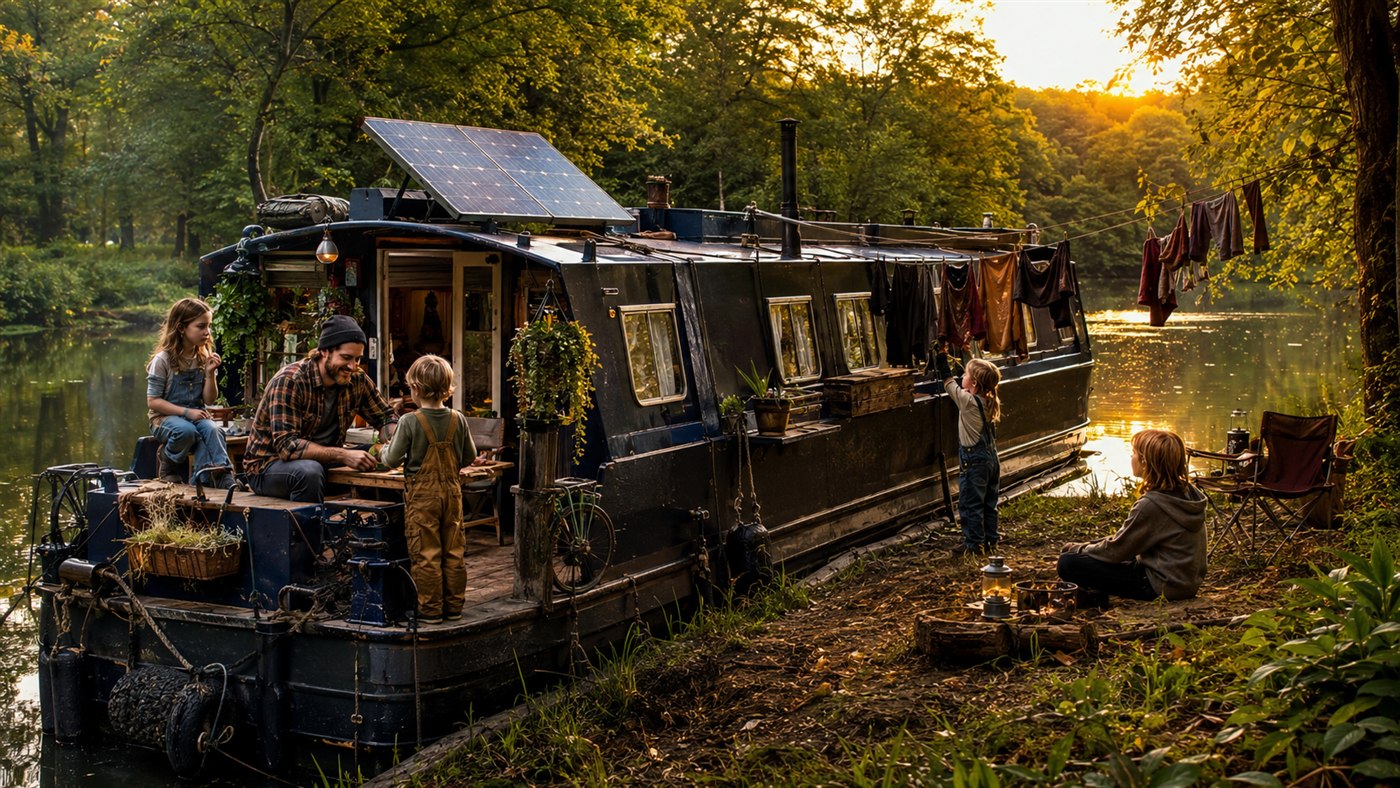

The Liveration tour shows the 1972 houseboat powered by 500 W of solar energy, the wood stove that heats the radiators, the 3,500 W inverter that powers even an air fryer, and the homemade filtration that replaces a 5,000-pound equipment
Exchanging a four-bedroom house for a narrowboat seems like a loss, but for those who do the math, it can mean freedom. According to the Liveration channel, in a tour published in February 2026, a father named Andy lives with his three children on a 50-foot houseboat, about 15 meters, completely off the grid, and reduced the family’s living costs to around 500 pounds per month.
The exchange is directly reflected in the budget. Previously, the house installment was about 650 pounds monthly just for financing, and today the total expense on the boat, including license, gas, and fuel, is close to 500 pounds per month, as recorded by Liveration. The boat, named Ini and built in 1972, was purchased for 38,000 pounds and became the home of a single father who decided to work less to be more present.
The floating house that runs on 500 W of solar energy
The heart of the boat is the energy system. According to Liveration, the floating house operates with about 500 watts of solar panels mounted on the roof, some of them embedded in boxes with lids that serve as both tool storage and tiltable support to better capture the sun.
-
In 1961, Hollywood held a unique audition with 152 black cats to cast the perfect feline for the horror film The Black Cat.

-
Brazilian Truck Driver in the U.S. Earns $11,200 Commission on Heavy Haul, Highlights High Income Potential and Demands of the Job

-
Teen without prom date invites pet cat to dance, goes viral with tuxedo and pink dress photoshoot
-
Boy Uses Mother’s Sewing Machine to Make Teddy Bears for Hospitalized Children in Tasmania Over 365 Days





The autonomy covers almost the entire year. For about 80% of the year, the boat sustains itself solely with solar energy, and in the months with short days, a generator and two alternators in the engine come into play, charging the service batteries when the sun is not enough, as explained by Liveration. There is also a 2,200-watt portable station as an emergency backup, enough to get through the long winter nights with lights, a laptop, and an electric blanket on.
The wood stove that heats the entire house
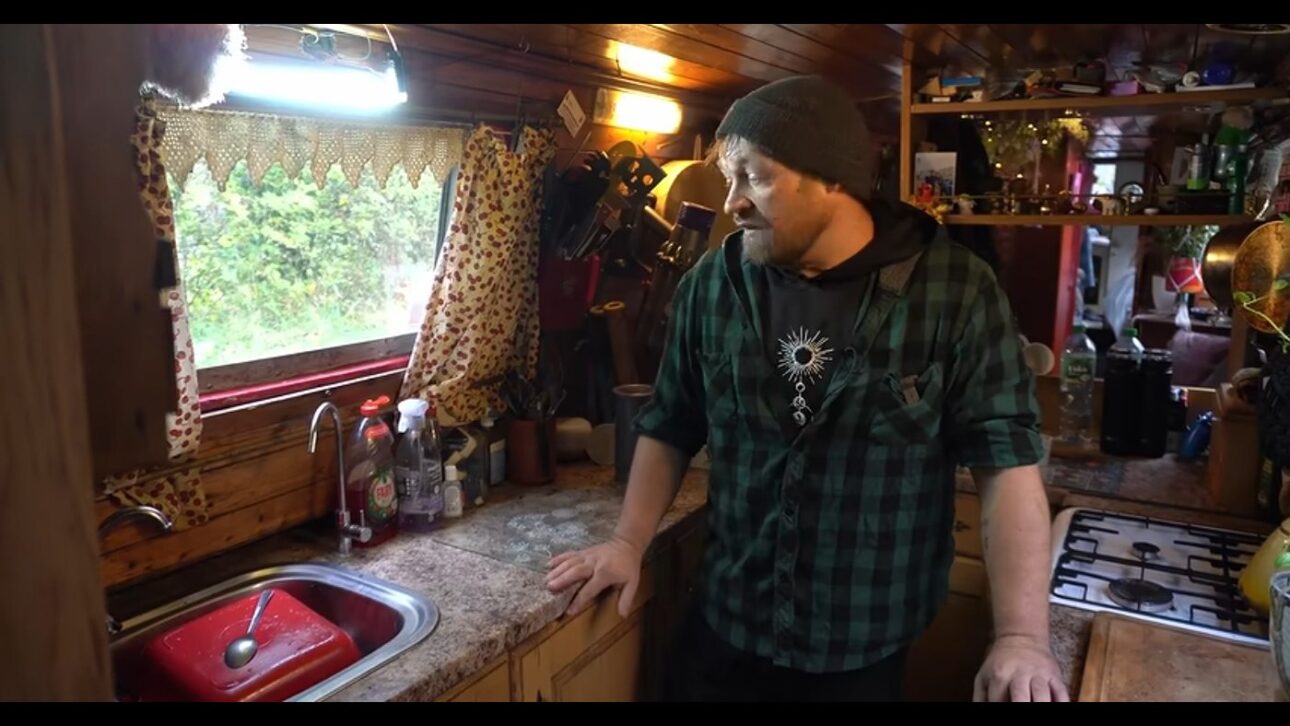
In winter, the heat comes from the flame. According to Liveration, the heating is entirely done by a wood stove from the brand Morso, the Squirrel model, which is located in the main space and keeps the interior of the boat so warm that the owner ends up opening doors and windows even at the height of the cold.
The trick is the stove doing two jobs. The wood stove is connected to a rear boiler, which makes the same fire heat radiators both in the living room and the children’s bedroom, distributing the heat throughout the boat, as shown by Liveration. The fuel is a mix of wood, which burns hotter but faster, and smokeless coal, which burns cooler but lasts longer, a dosage that those who live with a wood stove learn by feel.
The 3,500 W inverter that powers even an air fryer
Living off the grid doesn’t mean giving up appliances. According to Liveration, the houseboat has 240-volt power provided by a 3,500-watt inverter, which allows running practically all common kitchen appliances.
The list dismantles the spartan off-grid prejudice. The kitchen has a 12-volt refrigerator, four-burner stove, oven with grill, microwave, and air fryer, and the 3,500-watt inverter can handle even high-consumption appliances, as detailed by Liveration. Water is another resolved chapter: a 400-liter tank supplies hot and cold taps, with the water heated by the boat’s own engine through a heat exchanger.
The homemade filtration of 300 pounds that replaces the 5,000 one

The most impressive ingenuity of the boat is the water. According to Liveration, the owner built his own filtration system to treat the canal water and use it daily, instead of relying solely on the tank filled at external points.
The cost is what impresses. The system passes the canal water through six sediment filters and a UV filter that sterilizes the liquid, then receives chlorine in the tank, and cost about 300 pounds to assemble, compared to 3,000 to 5,000 pounds for a factory-ready equipment, as shown by the Liveration channel on YouTube. These are simple components, a pump, and some hoses that, as shown by Liveration, work just like any purchased system, delivering clean water for bathing, cleaning, and general use. The boat solves energy and water with homemade ingenuity that, combined, costs a fraction of what the conventional grid would charge in monthly bills.
Nomadic life in 2,000 miles of canal
The freedom of the boat has a mobile address. According to Liveration, the floating house provides access to over 2,000 miles of canals, a nomadic lifestyle that, unlike those living in vans and being expelled from parking lots, is accepted and regularized through a paid license.
The family’s logistics adapt to the movement. Two children attend regular school, always within 15 to 30 minutes, and the oldest, 14 years old, studies at home and got his own 21-foot boat as a room to have teenage privacy, as Liveration reports. The change in life came after family losses that made the father rethink what success was, exchanging the large financed house and expensive car for a more present routine with the children.
What the floating house says to Brazil


The model has a close relative in the Brazilian landscape. In the Amazon, thousands of riverside families have lived in floating houses and stilt houses for generations, with the same logic of living on water and solving energy and supply outside the conventional grid.
The onboard technology updates the concept. The combination of solar energy, inverter, water filtration, and a stove that heats the entire house is the same that today enables sites and isolated houses in the interior of Brazil, proving that living off the grid has become a cost option, not just a necessity, a notable parallel for the Brazilian reader. From the English canal to the Amazon river, the equation is similar: less dependence on utility companies, more autonomy for those who generate their own energy and treat their own water.
The video covers the deck, the solar system on the roof, the wood stove, the kitchen, the water filtration system, and the children’s rooms.
Andy’s floating house proves that living off the grid is not giving up comfort, it’s exchanging the electricity bill for ingenuity. Tell us in the comments: would you trade a brick-and-mortar house for an off-grid houseboat?