In Ohio, USA, carpenter Jeff Makkos dreamed where to search and, the next morning, found a 308-gram meteorite, the size of a baseball, after a meteor exploded over Medina County. NASA confirmed that the rock came from an asteroid that entered the atmosphere.
Sometimes, luck comes while sleeping. This was more or less what happened to a carpenter from Ohio, United States, who had a dream telling him exactly where to find a space rock and, the next morning, found a meteorite the size of a baseball. The story was told by the broadcaster WKYC.
The find has a name and weight. Jeff Makkos, from the Cleveland area, found a 308-gram meteorite, one of the largest fragments recovered after a meteor exploded over Medina County. What seemed like another day of frustrated searching turned into a headline-worthy discovery.
The detail that enchants is the dream. After days of searching without success, Makkos had a dream that pointed to the right place, returned to the field, and in a few steps, found the rock. Science and chance crossed paths in a story that mixes astronomy, persistence, and a touch of mystery.
-
Ohio Carpenter Finds 308-Gram Meteorite the Size of a Baseball After Dreaming of Its Location
-
Chinese Humanoid Robots Transition from Labs to Real Factories to Assemble Tablets: AgiBot Deploys G2 Machines at Longcheer, Aiming for 100 Robots in Electronics, Cars, Chips, and Energy by 2026
-
College Dropout Turned Window Cleaner Builds $1 Million Cleaning Business with Subscription Model After 18 Years of Door-to-Door Work
-
Race for Data Centers in Brazil Intensifies Pressure on Critical Energy Resources


The dream that led to the meteorite
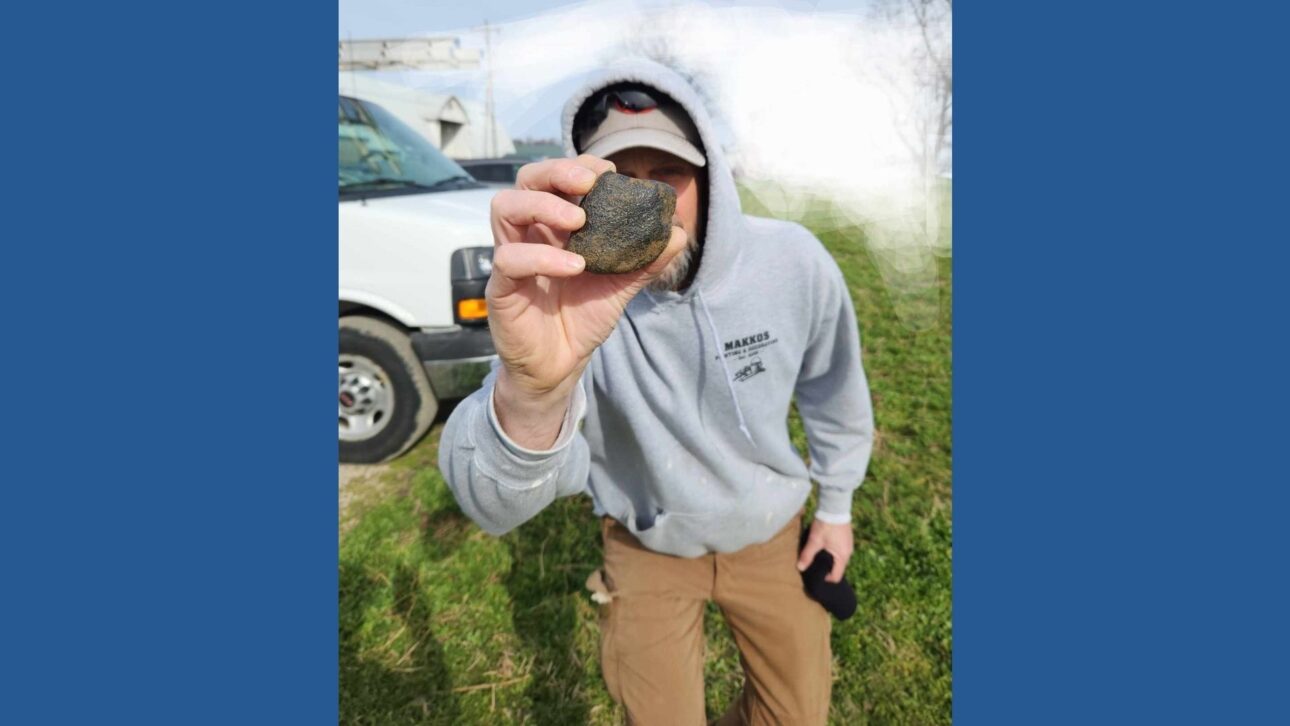
Jeff Makkos displays his baseball-sized meteorite, found in Medina County.
The hunt began without much luck. Makkos, who works independently in construction, scoured the region from Wednesday to Sunday after the fall, finding only a small fragment. It was little for so much effort, and the search seemed to have given all it had to give.
The turning point came during sleep. “I had a dream that Monday night that I would find another piece, and it told me exactly where to go,” Makkos recounted. Instead of ignoring the dream, the carpenter decided to bet on it and returned to the field the next morning, guided by that nocturnal intuition.
The result was almost instantaneous. “I knew where to go because of the dream. I literally walked about 150 meters from my truck, looked down, and there was the crater,” he reported. At the bottom of that small hole was the 308-gram meteorite that would crown his search.
It’s hard to know if it was a premonition or just the brain processing days of searching. Either way, the dream worked like a map, and Makkos turned an unlikely clue into one of the greatest finds of that shower of fragments. The story of the dream became an inseparable part of the meteorite.
A space rock the size of a baseball
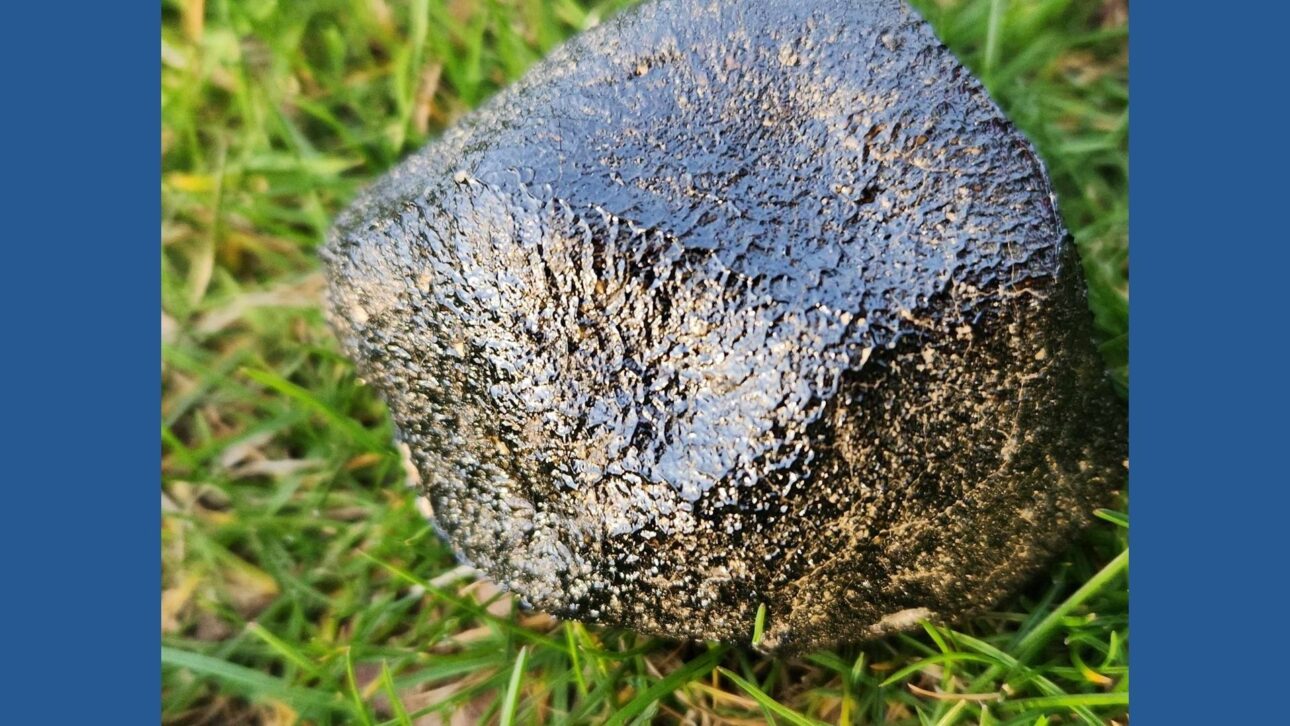
The discovery the size of a baseball.
The size of the find is impressive. Weighing 308 grams and with dimensions similar to a baseball, Makkos’ meteorite is among the largest fragments recovered after the explosion over Ohio. Most pieces found in such cases are much smaller, which makes the piece special.
The appearance helps identify the space origin. Fragments like this are usually dark stones, with a shiny outer shell formed by the heat of entering the atmosphere, and a grayish interior. It is this “fusion crust” that differentiates a meteorite from an ordinary stone on the ground.
Finding a piece of this size intact is rare. When a meteor breaks apart in the sky, it scatters into many small fragments over a large area, making the recovery of a 308-gram block a stroke of luck and technique. No wonder, Makkos’ find caught the attention of hunters and curious people.
The weight also tells a story. Each gram of a meteorite helps scientists understand what type of body it came from and what conditions it went through. A 308-gram specimen provides plenty of material for analysis, which increases its interest for research, far beyond its striking size.
The meteor that exploded over Ohio
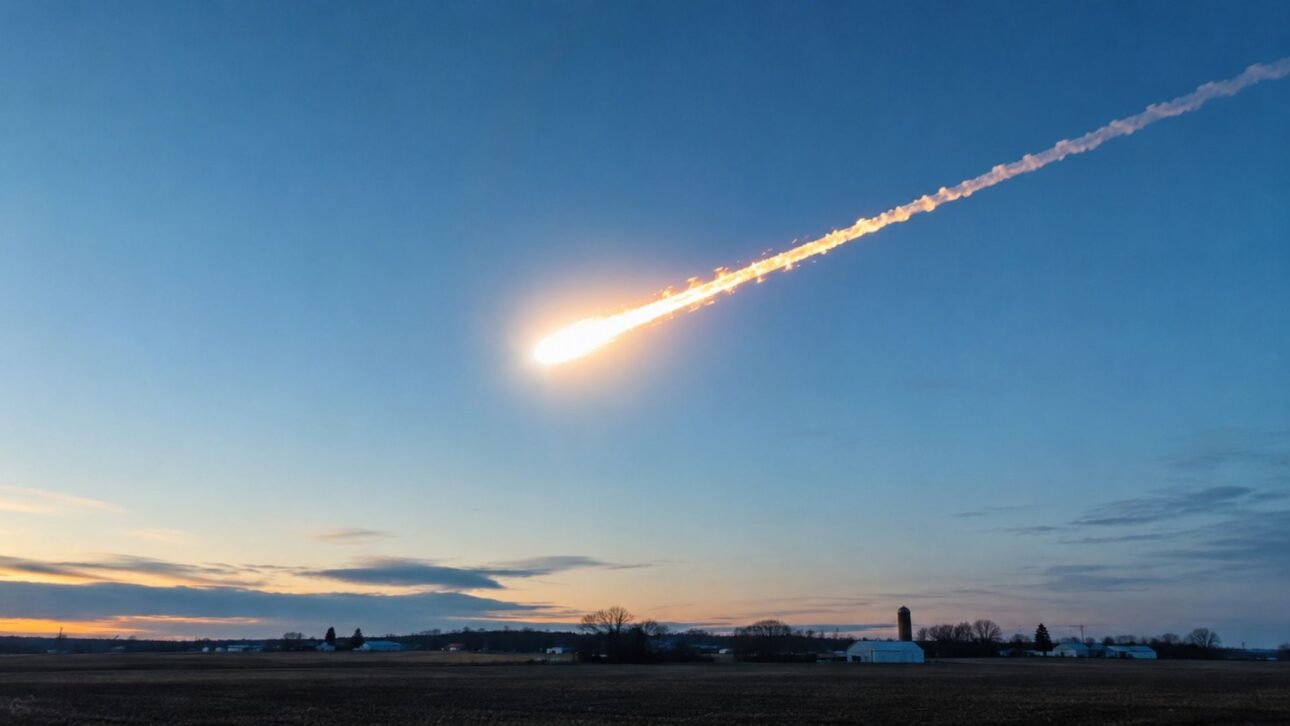
The episode that started it all was grand. On St. Patrick’s Day, March 17, a meteor crossed the sky over northern Ohio and exploded over Medina County, in a flash followed by a boom. Tens of thousands of people heard and felt the explosion, which resonated as far as Pennsylvania and New York.
The origin was confirmed by the leading authority on the subject. According to NASA, it was an asteroid weighing about seven tons that entered the atmosphere, was detected around 8:57 a.m. near Lake Erie, and traveled more than 50 kilometers through the air before breaking apart. It was this fragmentation that scattered the rocks across the ground in Ohio.
Events like this are more common than one might imagine, but rarely so visible. Most meteors disintegrate high up, leaving no trace within reach of people. When a larger asteroid enters and explodes low, as in this case, it turns an entire region into a hunting ground for pieces from space.
NASA closely monitors this type of event. The agency maintains systems that track near-Earth rocks and, when one enters the atmosphere, it can estimate its size, trajectory, and explosion point. This is how NASA confirmed that the flash over Ohio came from an asteroid of about seven tons, and not from something else.
Asteroid, meteor, and meteorite: understand the difference
The three terms seem synonymous, but they are not. An asteroid is a rocky body that travels through space, orbiting around the Sun, and can range from a few meters to kilometers. It was a seven-ton asteroid that started this whole story about Ohio.
The second phase is the spectacle in the sky. When this body enters Earth’s atmosphere at high speed, it heats up and shines, becoming what we call a meteor, or fireball. It is this intense light, sometimes followed by an explosion, that people see and hear, as happened in Medina County.
The third phase is the one that yields finds. If any piece survives the fiery passage and reaches the ground, it ceases to be a meteor and is called a meteorite. In other words, what Makkos picked up from the ground is a meteorite, the solid survivor of an asteroid that became a meteor before falling.
Understanding this difference avoids common confusions. Many people call any shooting star a meteorite, but the shooting star is the meteor, the streak of light in the sky. It only becomes a meteorite if it survives and falls, and not every meteor leaves a meteorite, as most disintegrate completely before reaching the ground.
The race of meteorite hunters
The explosion over Ohio triggered a true race. As soon as the news spread, meteorite hunters from various states traveled to the region to scour fields, yards, and parking lots in search of fragments. What for some is just a rock, for these hunters is a scientific treasure.
The examples show the group’s dedication. Roberto Vargas came from Connecticut and found a piece weighing 12.2 grams, while Carl Dietrich, from South Carolina, collected fragments totaling more than 20 grams, including in a parking lot. They met in the region, united by the same passion for space rocks.
This movement has its own practical rules. For a fragment to be taken seriously by science, it is usually necessary to gather a certain amount of material, in the tens of grams, for submission to laboratories that confirm the origin. The hunt, therefore, mixes adventure, technical knowledge, and a lot of patience.
There is also etiquette to follow. Serious hunters ask for permission to enter private properties, agree on sharing any finds with the landowners, and respect local rules regarding meteorite ownership. Following this code is what keeps the activity well-regarded and avoids conflicts in the heat of the race.
Why Meteorites Matter So Much to Science
More than just curiosity, meteorites are time capsules. They hold material that formed along with the Solar System billions of years ago and has changed little since then. Studying these rocks is like opening a window to the distant past of space, something no telescope can do alone.
That’s why they are so valued by scientists and collectors. Each meteorite can provide clues about the composition of asteroids, the chemistry that gave rise to planets, and even the ingredients of life. This scientific value explains why laboratories and museums compete for access to good specimens.
There is also a fascination that goes beyond research. Holding in your hands a stone that came from space, older than the Earth itself as we know it, has an appeal that enchants anyone. It’s this mix of science and wonder that makes meteorite stories go viral worldwide.
It’s no wonder that agencies like NASA invest fortunes to bring pieces of asteroids from space in complex collection missions. A meteorite that falls alone in the backyard delivers for free, in part, what these missions seek: original material from the beginning of the Solar System to study in the laboratory, without needing a rocket.
How to Know if You Found a Meteorite
Distinguishing a meteorite from a common stone is not simple. The first sign is usually the fusion crust, that dark and smooth shell formed when the rock burns upon entering the atmosphere. Inside, many meteorites have a grayish tone, different from the external appearance.
Other tests help with suspicion. Many meteorites contain iron and, therefore, tend to be attracted to magnets and appear heavier than a common stone of the same size. These indications do not provide a definitive diagnosis but serve to separate candidates from any stones found in the backyard.
The confirmation, in the end, is a specialist’s task. Only laboratory analyses, conducted by institutions that study meteorites, can confirm if a rock indeed came from space and to which type it belongs. Therefore, those who find a possible meteorite are advised to seek universities and museums instead of drawing conclusions on their own.
Those who suspect a find should act carefully. The ideal is to photograph the stone, note exactly where it was found, and seek specialists, instead of sanding, breaking, or wetting the rock, which could erase valuable information. Preserving the meteorite as it fell is part of respecting the science behind it.
What Does Brazil Have to Do with It
Brazil is also a stage for space falls. Fireballs frequently cross the Brazilian sky, and the country has famous meteorites, such as Bendegó, a huge iron rock found in Bahia in the 18th century and now displayed at the National Museum in Rio de Janeiro. The fascination with these stones is not an American exclusivity.
There are even organized networks watching the sky. Monitoring projects, formed by amateur and professional astronomers, record meteors over Brazil and help calculate where possible fragments may have fallen. When a fireball is seen, a hunt similar to the one in Ohio commonly arises on Brazilian soil.
Recent cases show how the topic is alive here. Fireballs have already been seen and filmed over several Brazilian states, and the search for fragments mobilizes curious people and researchers whenever a fall is recorded. Brazil, with its enormous territory, is a full plate for those who study meteors and meteorites.
For the public, there is an invitation to look up and down. Knowing how to differentiate between asteroid, meteor, and meteorite, and recognizing the signs of a space rock, helps any curious person understand what they see in the sky and appreciate a potential find. The next unusual stone in the backyard may have come from far away.
And you, would you go after a meteorite?
Jeff Makkos’ story proves that science and luck sometimes go hand in hand: guided by a dream, he found a 308-gram meteorite, the size of a baseball, after a meteor confirmed by NASA exploded over Medina County, Ohio. A piece of asteroid that turned into treasure in the backyard.
And you, do you believe in hunches like the dream that led this carpenter to the meteorite, or do you think it was pure coincidence? Share in the comments if you’ve ever seen a fireball in the sky and if you would have the courage to go hunting for space rocks like the meteorite hunters in Ohio.