






 Portuguese
  Spanish


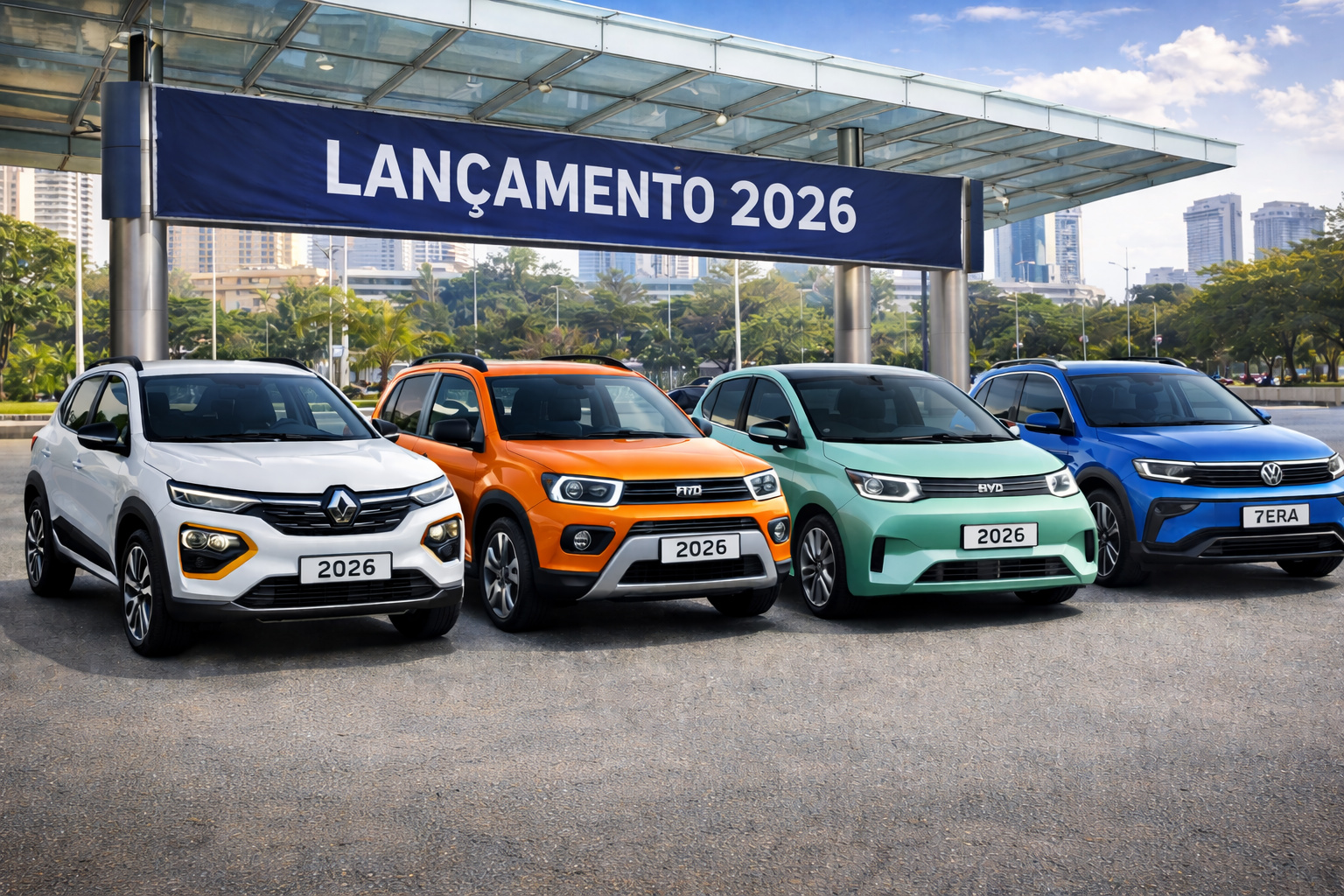


From Electric Popular Cars to Hybrid SUVs, See How Much the Main Releases Expected for the Brazilian Market Should Cost
The Brazilian automotive market is expected to undergo a significant renewal in 2026. Electrification is advancing, SUVs continue to dominate, and entry-level cars promise more efficiency. To understand the real impact of these models on consumers’ wallets, we organized the main expected releases for 2026 in a ranking format, from the cheapest to the most expensive, with estimated prices.
Renault Kwid Electric

Estimated Price: R$ 95 thousand to R$ 105 thousand
Regarded as the most affordable electric car in the country, the electric Kwid is expected to focus on urban use, low maintenance costs, and extreme efficiency. It has the greatest potential for popularizing electric mobility in Brazil.
-
British Factory Transitions from Mechanical Parts to Producing 420,000 Electric Power Units Annually, Supplying 70% of Ford’s Electric Cars Sold in Europe

-
Toyota Shifts from Hybrid Cars to Electric Air Taxis with Joby’s 6-Rotor Aircraft, Capable of 322 km/h, Aiming for Mass Production to Electrify Urban Skies

-
Ferrari Unveils Limited Edition 12Cilindri Manuale: 6.5-Liter V12, 830 HP, 0-100 km/h in 2.9 Seconds, Top Speed Over 340 km/h, Only 1,499 Units Available

-
Discover the 2021 Fiat Cronos 1.3: Affordable Maintenance, Reliable Mechanics, and Fuel Efficiency of Up to 15.6 km/l


Fiat Panda Electric (New Generation)
Estimated Price: R$ 105 thousand to R$ 115 thousand
Compact, urban, and functional, the electric Panda arrives as a direct alternative to entry-level hatches, focusing on economy and simplicity.
BYD Dolphin Mini (National)
Estimated Price: R$ 110 thousand to R$ 120 thousand
With local production, the Dolphin Mini promises competitive autonomy, embedded technology, and reduced operating costs, aiming for a high sales volume.
Volkswagen Tera (Compact SUV)

Estimated Price: R$ 115 thousand to R$ 130 thousand
Entry-level SUV from Volkswagen, positioned below the Nivus, focusing on competitive pricing and efficient engines for urban use.
Chevrolet Onix Mild Hybrid
Estimated Price: R$ 120 thousand to R$ 135 thousand
The mild hybrid version of the Onix is expected to prioritize fuel economy without significantly increasing the cost of the model, maintaining its popular appeal.
Hyundai New Generation HB20
Estimated Price: R$ 125 thousand to R$ 145 thousand
With a new design and more technology, the HB20 is expected to take a step up in sophistication while retaining strong appeal in the compact segment.
Jeep Renegade Hybrid
Estimated Price: R$ 155 thousand to R$ 175 thousand
The hybrid Renegade targets consumers looking for an urban SUV with better energy efficiency and lower consumption in heavy traffic.
Toyota New Generation Corolla Hybrid

Estimated Price: R$ 175 thousand to R$ 195 thousand
Renowned for reliability, the hybrid Corolla is expected to bring improvements in efficiency, safety, and connectivity while maintaining its leadership in the segment.

GWM National Hybrid SUV
Estimated Price: R$ 185 thousand to R$ 210 thousand
Produced in Brazil, GWM’s hybrid SUV bets on a medium size, technology, and a good equipment package to compete with traditional brands.
Tesla Entry Model
Estimated Price: R$ 230 thousand to R$ 260 thousand
If it confirms its official debut in Brazil, Tesla is expected to arrive with an entry model focused on technology, performance, and status, still far from the concept of a popular car.
What the Ranking Reveals About 2026
The list shows a clear shift in the market:
- Electrics entering the R$ 100 thousand range
- Hybrids consolidating as an intermediate alternative
- SUVs dominating the releases
- National production as a strategy to reduce prices
The Brazilian consumer now has more efficient options, with varying levels of technology and investment.


