Portuguese
  Spanish


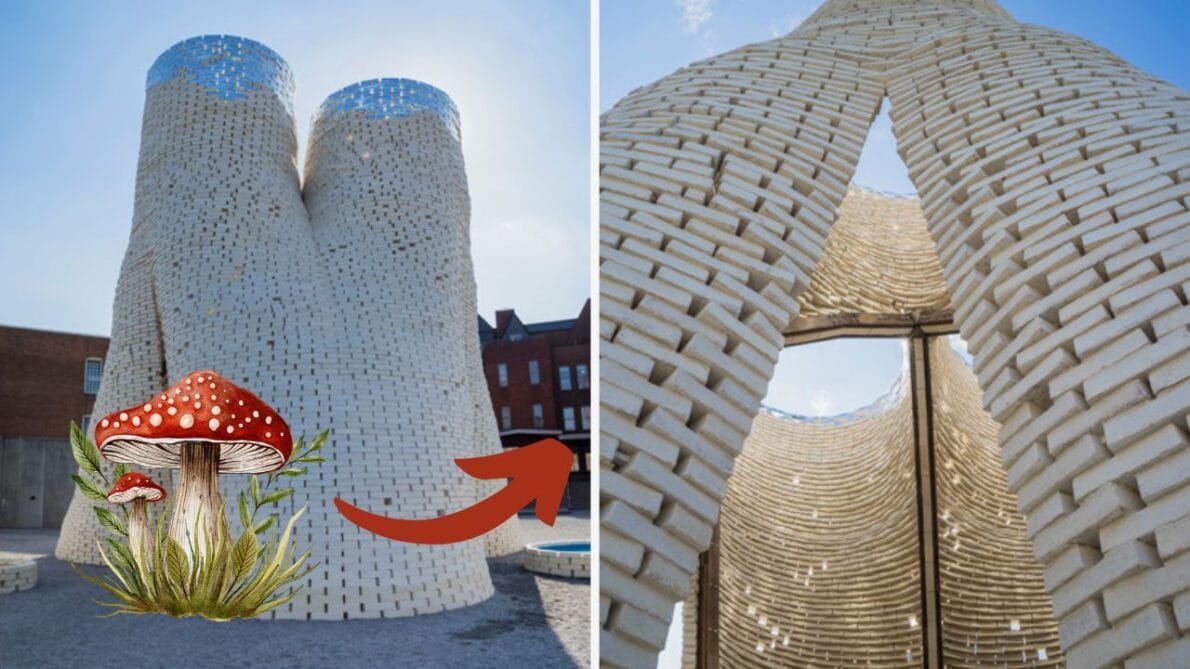

The Unique Properties Of Mycelium, Mushrooms Emerge As A Sustainable Alternative To Concrete In Civil Construction. This Innovative Material, Cultivated From Agricultural Waste And Transformed Into A Solid Mass By Mycelium, Not Only Offers Strength Comparable To Concrete But Also Benefits The Environment With Its Biodegradability, Promising To Revolutionize The Industry With Eco-Friendly And Effective Construction Solutions.
In nature, mushrooms play a crucial role in the decomposition of organic matter, recycling nutrients, and purifying soils. This natural capability of fungi is being harnessed in a revolutionary way in civil construction, where researchers have discovered that mushrooms can be grown to produce a biodegradable and highly sustainable building material.
The root system of mushrooms, known as mycelium, is the secret behind this innovation. When cultivated on substrates like sawdust or straw, mycelium acts as a biological glue, transforming these waste materials into a solid mass after a controlled growth process. This material not only has insulation properties comparable to concrete but is also resistant to fire and water.
Ecovative, A Pioneer In This Field, Has Explored The Use Of Mycelium To Produce Packaging And Is Now Expanding Its Applications To Civil Construction


Companies like Ecovative, a pioneer in this field, have explored the use of mycelium to produce packaging and are now expanding their applications to civil construction. The mushroom-derived material promises not only to reduce the carbon footprint of conventional building materials but also to contribute to waste management, as it is completely compostable at the end of its life cycle.
-
28-meter, 156-ton titans traveled 20,000 km from China to the port of Santa Catarina: Portonave received 7 fully electric megacranes, part of a R$ 210 million package, to double container handling.

-
They exchanged the idea of a large house for a 35 m² warehouse, spent US$ 12,000 on the structure, and created a tiny house in Colorado with space to live and work.

-
A newly opened terminal in the middle of the Amazon has begun transporting soy and corn through Amapá, eyeing the queue of ships that is congesting the ports in the South.

-
Goodbye to old tiles: renovation technique without construction transforms bathrooms in a few hours, eliminates debris, and reduces costs with coverings using special paints, high-resistance adhesives, and modern finishes that completely renew the space.


Viable Alternative To The Use Of Traditional Materials Such As Gypsum And Cement For Concrete
One of the most notable examples of using mycelium in civil construction is the Hy-Fi Project, developed by the New York studio The Living, in collaboration with Ecovative Design. The project was the winner of MoMA’s Young Architects Program in 2014. With structural advisory from ARUP, mycelium bricks were created from chopped corn stalk waste, which grew in prism-shaped molds in less than a week. These innovative bricks were used to build an impressive tower about 12 meters tall in the MoMA PS1 courtyard.
Demonstrating the viability and robustness of the material, the tower not only maintained its structural integrity during the two months of exposure but also highlighted the sustainability of the process: after disassembly, the bricks were sent for composting, returning to the natural cycle without leaving harmful waste to the environment. This experiment not only validated the potential of mycelium as a viable building material but also exemplified its positive environmental impact.
The Use Of Mycelium As A Building Material Still Faces Challenges
Despite its enormous potential, the use of mycelium as a building material still faces challenges, including the need for more research to ensure its effectiveness and competitiveness on an industrial scale. However, the growing interest and investments in biotechnology indicate that the future may be promising for building materials based on fungi.
The ability of mushrooms to transform agricultural waste into a robust and eco-friendly building material not only opens new doors for sustainable construction methods but also aligns the civil construction industry with greener and more responsible practices.