






 Portuguese
  Spanish


Discover Three Common Practices That Many Drivers Commit and That Can Lead to Serious Damage. Avoiding These Errors That Ruin the Engine Is Crucial for the Durability of Your Vehicle.
Understand three of the biggest errors that ruin the engine, practices that may seem harmless but have serious consequences. Pay attention and protect your investment from now on.
Many drivers, unknowingly, make mistakes that seriously compromise the health of their car’s engine. Ignoring certain care can lead to premature wear and even engine failure, resulting in significant losses and headaches.
The Importance of Knowing the Errors That Ruin the Engine for Vehicle Longevity
Understanding how certain practices affect the engine is the first step to ensuring its durability and proper functioning. Small oversights in daily use or fuel choice can, over time, lead to serious problems. Knowing these mistakes helps to adopt more conscious driving and to carry out preventive maintenance more effectively.
-
Fiat Cronos Precision 2018: Affordable Sedan with Spacious Trunk and Reliable Maintenance

-
Volkswagen to Cut Production by 1 Million Cars by 2030, Reducing Jobs and Platforms, Focusing on More Profitable Models

-
Toyota Launches First 100% Electric Car in Brazil: bZ4X with 343 HP, All-Wheel Drive, 361 km Range, Priced at $419,990 BRL, Limited to 99 Units

-
Chinese SUV Achieves 24.4 km/l, Outperforms Toyota Yaris Cross in Real-World Tests with 224 hp Hybrid System, Offers 51-Liter Tank for Greater Range, and Costs Up to R$ 5,000 Less.


Avoiding the errors that ruin the engine not only extends the vehicle’s lifespan but also contributes to better performance and fuel economy. The right information is the key to keeping your car in great condition for longer.
Error 1: Using Ethanol in Severe Urban Cycle and Its Impacts
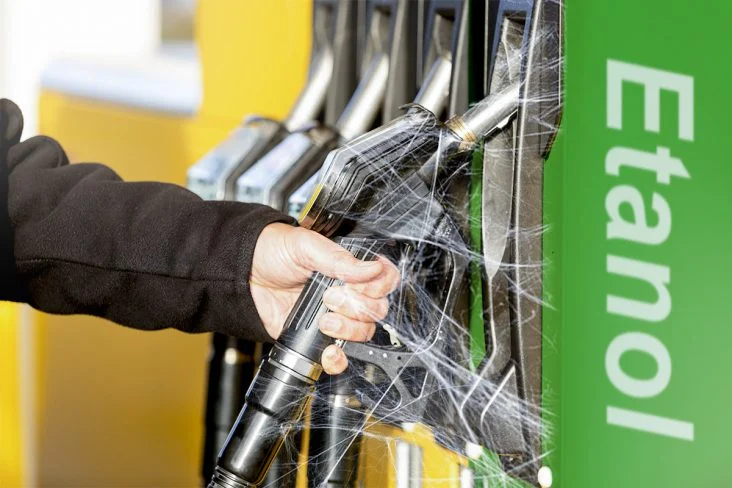
Using ethanol predominantly in severe urban use is one of the errors that ruin the engine. In this type of cycle, ethanol can cause high contamination of the lubricant oil, altering its viscosity and all its protective properties, resulting in reduced engine durability.
Moreover, ethanol has a different property for heating the engine; gasoline can heat the engine much faster. Therefore, for urban and severe use, the recommendation is always to use gasoline to avoid these contamination and wear issues.
Error 2: Constantly Driving at Low RPMs and the Risk of Detonation
Driving always at low RPMs, especially around 1000 to 1500 RPM, such as when going over bumps in second gear, is another critical error. This can cause a phenomenon called detonation or, due to numerous detonations, pre-ignition, which can lead to huge damage and even engine failure.
Current lubricating oils are formulated to protect against pre-ignition at low RPM (LSPI), a phenomenon caused by oil evaporation that generates carbon buildup. Always pay attention to the engine speed when going over bumps, avoiding forcing the engine in high gears at low RPM.
Error 3: Neglecting the Engine’s Pre-Heating, Even with Electronic Fuel Injection
Neglecting the engine’s pre-heating before driving is one of the common errors that ruin the engine. Many think that cars with electronic fuel injection (direct or indirect) do not need to warm up, but this system only minimizes problems, not eliminates them. Internal combustion engines are thermal machines that need to exchange heat to generate work and move the car.
It is essential to warm up the engine on the first start of the day. Wait at least 45 seconds with the car idling for lubrication and pre-heating. For the next 5 minutes, drive at lower RPM, at most 3000 RPM, allowing for gradual warming and avoiding greater wear, as the engine needs to operate at the ideal temperature for durability, power, and efficiency.
Protecting Your Investment: How to Avoid the Errors That Ruin the Engine


Avoiding these three errors that ruin the engine is simpler than it seems and essential for the health of your vehicle. Opting for gasoline in severe urban use, keeping engine RPM at appropriate levels, and performing pre-heating are practices that make a big difference.
Adopting these precautions does not require great effort, just attention and a change of habits. By avoiding these mistakes, you ensure greater durability, better performance, and more fuel efficiency for your car’s engine, protecting your investment and avoiding future problems.








Discordo de não usar etanol, usei no carro que está com 20 mil km rodados, faço as revisões programadas pela fábrica, no caso a GM/Chevrolet, e o motor está funcionando muito bem.
Corretíssimo