






 Portuguese
  Spanish


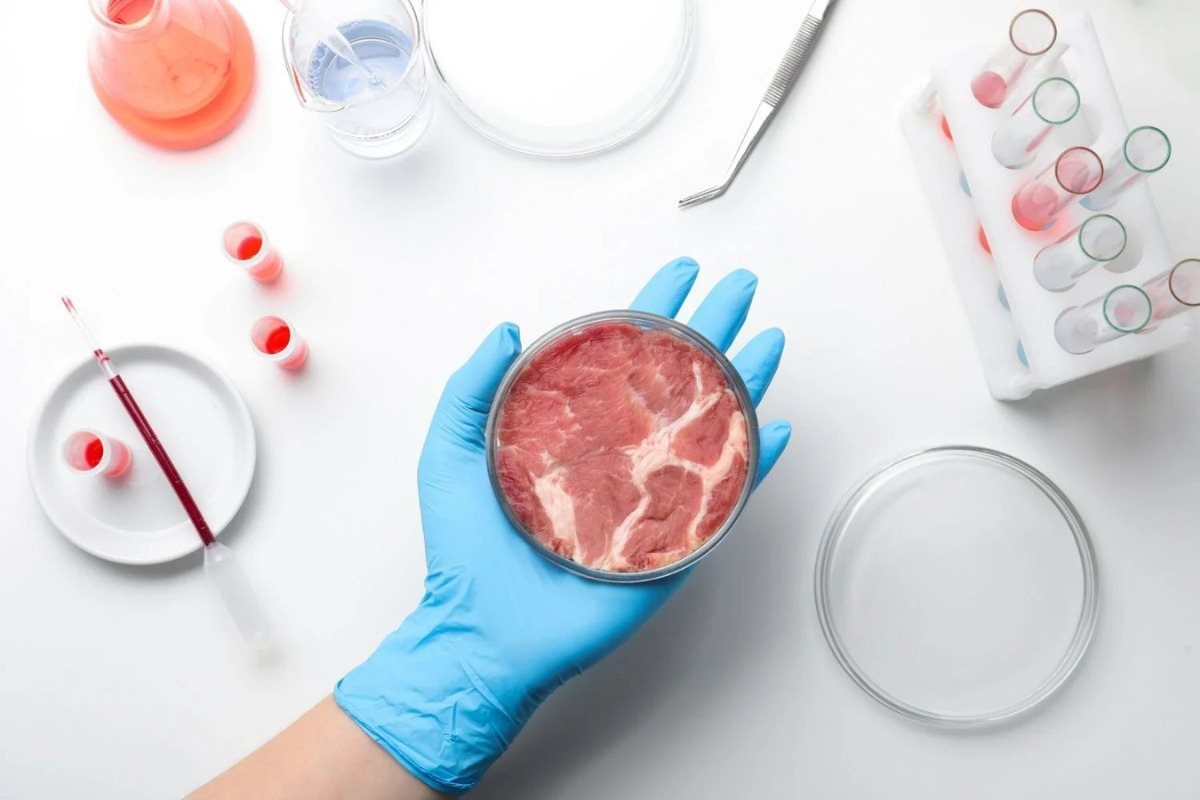

Can You Imagine That, Already in 2023, for Some Restaurants in the United States, Serving Laboratory-Grown Meat May Be a Reality? It Has Become a Commercial Reality and Sparks Optimism in the Industry.
The lab-grown meat industry, developed and cultivated in large steel tanks, may soon be on American tables. Executives are just waiting for an important regulatory approval for commercialization to actually take place, which would boost the American economy for now.
Trust is also something these companies nurture, with many investing in hiring top chefs. Argentine Francis Mallmann and Spanish José Andrés are among those already lined up to feature lab-grown meat on their menus. One of the biggest obstacles still remains getting the product to supermarket chains, some executives confessed to Reuters. Only by attracting more funding, which will allow for increased production, will it be possible to lower shelf prices. Not to mention that there is resistance from a large portion of consumers who do not even want to try the product. Only in Singapore has retail sales been approved.
Processing of Laboratory-Grown Meat
Large water tanks, where various nutrients are added. These are the slaughterhouses of the lab-grown meat industry. To produce it, it is necessary to extract cells from the animal through a biopsy and nurture these substances to create muscle tissue, which becomes the main component consumed in animal meat.
-
Small Farm in Brazil’s Minas Gerais Produces 403 Liters of Milk Daily, Sets Benchmark for Rural Producers

-
Man Revives 1930s Abandoned Trout Farm, Learns from Scratch, and Earns $1.1 Million Annually Selling Fish to Michelin-Starred Restaurants

-
Brazil to Issue “Panda Bonds” in China, Aiming to Raise Up to 5 Billion Yuan at Lower Interest Rates Than Dollar Debt
-
NATO Faces Internal Tensions as U.S. Pushes for Increased Defense Spending, Targeting 5% of GDP by 2035, with Warnings for Countries Near 2% Level



The entire process employs bioengineering technologies aimed at creating healthier, more sustainable, and more ethical food systems. There are two methods of cultivation: one using genetically modified fetal serum; and the other using real animal-derived cells, such as muscle and fat.
Reuters was invited by Californian company Upside to try the meat and found that, at the table, the flavor is indistinguishable from that of traditional meat, making the product identical to conventional meat. However, it is necessary to invest in supplying the nutrient mix used to feed the cells of the product.
It took four years to receive the FDA license, and that’s why Upside is celebrating. Even with limits on production, only about 200 tons of meat are cultivated annually.
This represents a small portion of the traditional meat market, which, in 2021, accounted for 48 billion tons in the United States. Only venture capital companies and large food firms, such as the Brazilian JBS and American Tyson Foods and Archer-Daniel-Midland have been investing in this industry.
It is worth noting that lab-grown meat cultivation also contributes to planetary sustainability, as it mitigates the environmental impact of livestock, a sector that generates 14.5% of the greenhouse gases, according to the United Nations (UN). However, Upside projects that by 2028 it will already be possible to find laboratory-grown meat in stores, allowing consumers to contribute even more to reducing the planet’s crisis.







