






 Portuguese
  Spanish
  4 min of reading
  0 comments


Technology with larger and lighter blocks reduces mortar use, speeds up wall construction, and decreases the need for wood in beams and slabs, while promising faster construction, less waste generation, and significant weight reduction on pillars, beams, and foundations.
Cellular concrete blocks associated with structural channels are gaining ground in residential construction for promising cost reduction, faster execution, and less wood use, according to a demonstration presented by builder Thiago Melo during an explanation of the construction system.
Instead of using dozens of smaller pieces to build a wall, the technology relies on larger and lighter components, capable of speeding up laying and reducing the number of joints, a factor that directly affects mortar consumption.
Each block presented is 1 meter long, 50 centimeters high, and 15 centimeters thick, dimensions that allow approximately 1 square meter of wall to be executed with just two units, reducing assembly stages and waste on site.
-
Via Mar promises to relieve BR-101 in Santa Catarina, but it will be the state’s first toll state highway and faces soft soil and rice fields that threaten the timeline.

-
To halt the advance of the Sahara, the 8,000 km Great Green Wall in the Sahel relies on reforestation to combat desertification, but by 2026 it remains far behind the goal of 100 million hectares.
-
Long before sustainable construction became a trend, China built earthen fortresses with multiple floors, a central courtyard, and the capacity to house up to 800 people living in a community.

-
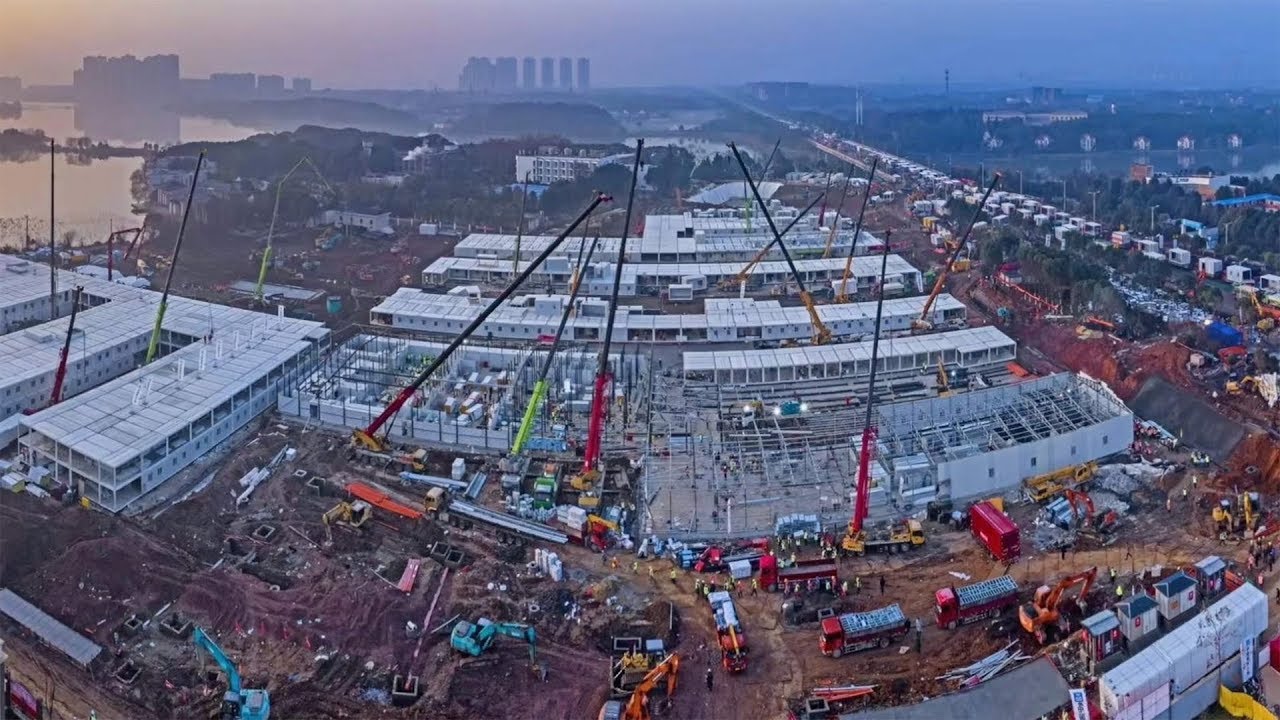
While in the rest of the world building a hospital takes years from design to inauguration, China erected the Huoshenshan Hospital from scratch in just 10 days, with 1,000 beds, foundation, structure, electrical installations, plumbing, and oxygen system ready to receive patients, mobilizing 7,000 workers.



Cellular concrete blocks reduce wall weight
According to the technical explanation presented, each whole piece weighs about 20 kg, while the half block used in corner and wall junctions weighs approximately 10 kg, a characteristic that facilitates manual transport and work in elevated areas.
Besides simplifying handling during execution, the system draws attention for the significant reduction in the self-weight of the masonry, as a conventional ceramic brick wall can approach 100 kg per square meter before coatings.
In the case of cellular concrete, the estimated weight is around 42 kg to 43 kg per square meter, already considering the laying mortar, a situation that tends to reduce the overload transmitted to the construction’s pillars, beams, and foundations.
With less structural load distributed over the construction, the project may require a smaller volume of steel, concrete, and forms, although the sizing still depends on calculations performed by qualified professionals and compatible with applicable technical standards.
Thermal insulation and mortar savings
Another point frequently associated with cellular concrete is the thermal and acoustic performance provided by the material’s composition, which also presents fire resistance due to the mineral structure and internal voids responsible for reducing heat conduction.
In practice, productivity tends to increase because the system uses fewer pieces per square meter, unlike conventional masonry, which may require about 25 ceramic bricks to fill the same area, in addition to cuts, losses, and adjustments.
According to Thiago Melo, the mortar savings can exceed 90% compared to traditional methods, precisely because there are fewer horizontal and vertical joints during wall laying, also reducing the time spent on application.
This operational gain usually varies depending on the type of construction executed, as industrial warehouses have fewer structural interferences, while residences require the installation of doors, windows, lintels, and hydraulic passages, factors that naturally slow down the pace of the work.
Embedded installations and less waste on site
The internal holes in the blocks allow for embedding electrical, hydraulic, and sanitary installations.
This feature can reduce later cuts in the wall, provided the project is coordinated before execution and respects the manufacturer’s limits.
In the beams, the system uses cellular concrete channels.
These pieces function as permanent forms, receive reinforcement and concrete, and eliminate part of the work with wood, shoring, and stripping.
In some cases, the elimination of wood can reach 100%.
Two models are mentioned in the demonstration: the U-shaped channel, used to form beams, and the J-shaped channel, applied at slab junctions.
The choice depends on the structural project, the height of the beam, and the type of slab adopted.
When the beam is taller than the available channel, it may still be necessary to complement the form with wood.
Even so, the system reduces assembly steps and can decrease material losses, especially when there is good project modulation.


Rapid construction can take up to 15 days
The construction can also generate less debris because the larger pieces reduce cuts and finishes.
The promise of houses ready in a week or even 15 days depends on the size of the project, the team, the logistics, the design, and the availability of the blocks.
The Brazilian standards for autoclaved cellular concrete blocks cover specification, testing, and execution of non-structural masonry.
Therefore, the use of the material should be defined with technical supervision, especially when there is an impact on structure, foundation, and building performance.
The presented system has its promotion headquarters in Recife, Pernambuco, and depends on nearby manufacturers or partners to reduce freight costs.
The distance between the construction site and the supplier can directly influence economic viability.
The advertised savings of up to 50% on the final cost appears as an estimate for specific situations, especially when there is modulation, low material loss, and significant reduction of labor, steel, concrete, and wood.
Under common conditions, the estimate mentioned by the presenter is closer to 30%.


-

-

2 people reacted to this.