






 Portuguese
  Spanish
  4 min of reading
  2 comments


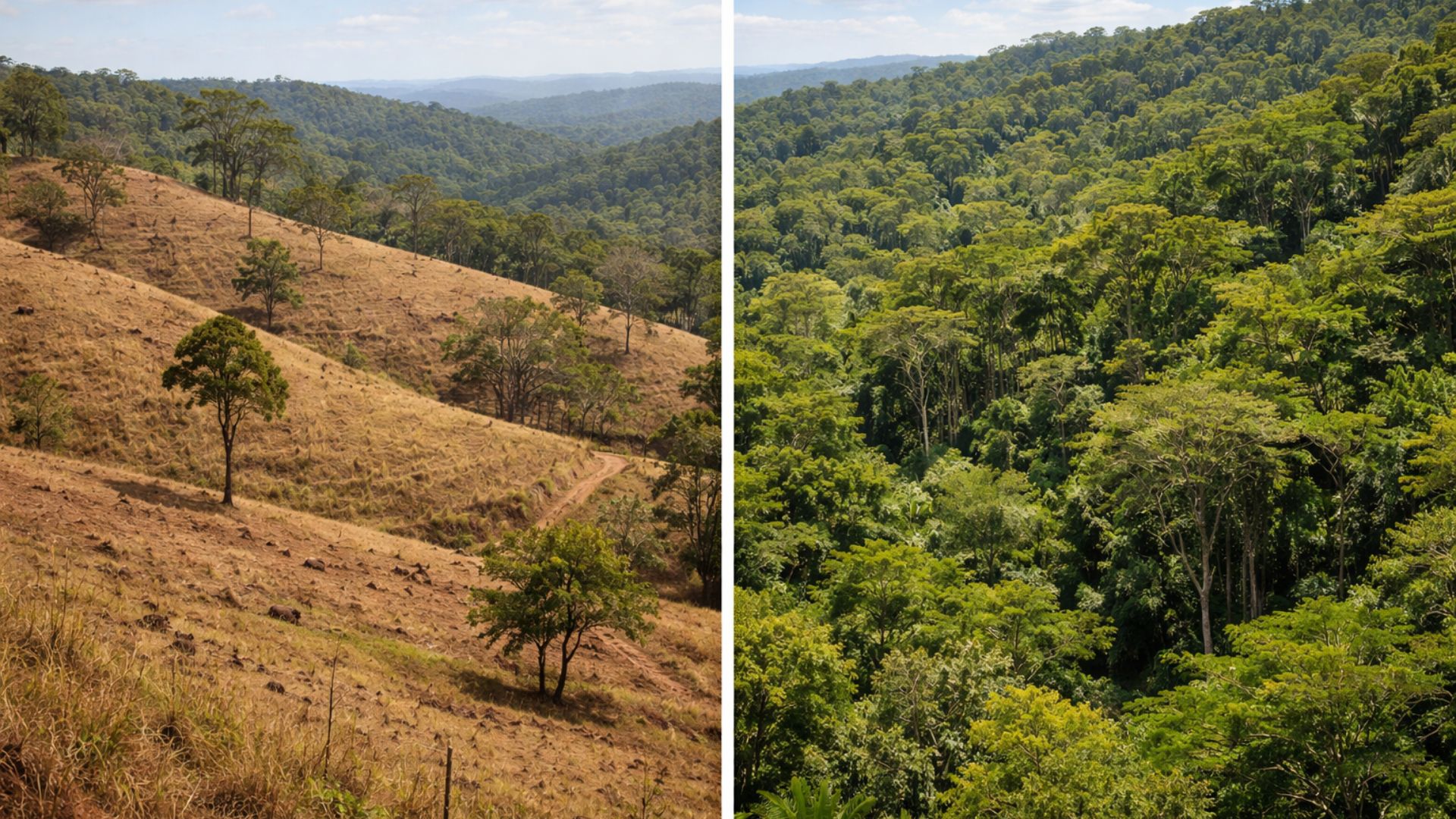


Country That Once Was Among The Leaders In Deforestation In Latin America Managed To Reverse Forest Loss By Transforming Conservation Into State Policy, With Contracts Since 1997, Payment For Environmental Services And Resources Tied To Climate Performance.
In Just A Few Decades, Costa Rica Went From Being One Of The Worst Examples Of Deforestation In Latin America To Being Cited As A Showcase Of Restoration, After Expanding Forest Coverage To Nearly 60% Of Its Territory With Continuous Public Policies.
At The Center Of This Turnaround Is A National Program That Pays Rural Landowners To Maintain Or Recover Vegetation, With Formal Contracts, Adherence Rules, And Payments Conditioned On Compliance With Commitments, A Design That Faced Initial Doubts And Gave Rise To The Expression “Green Utopia.”
In The Years Leading Up To The Change, The Cutting Down Of Native Forests Increased Fueled By Agricultural Expansion And Economic Incentives Favoring Land Use Conversion, Creating A Scenario Where Conserving Was, For Many, Synonymous With Losing Income In The Short Term.
-
An abandoned weapons factory that still contains ammunition and military vehicles has been discovered.

-
Businessman puts modern 1,100 square meter fortress in Russia up for sale for $550,000, featuring high walls, archer towers, a 1.2-hectare plot, and an isolated location on the banks of the Don River.
-
Small shops in the interior of São Paulo have been around for up to 70 years, maintaining credit accounts, preserving artisanal preserves, and showing how small rural businesses have turned customers into friends, families, and guardians of stories that remain alive even after the advance of sugarcane, the end of coffee plantations, and the arrival of large commercial chains.

-
Chinese students build a 6.06-meter remote-controlled paper airplane, achieve a flight of almost 15 minutes, and turn a school pastime into an engineering project to attempt a world record.


By Treating The Forest As A Measurable Value Asset, Costa Rican Policy Shifted The Focus Of State Response, Which Was No Longer Restricted To Monitoring And Creating Protected Areas, To Include Direct Payment To Those Who Decide To Maintain Vegetation Cover.
Payment For Environmental Services And Forest Law Of 1996

The Legal Basis Of The Mechanism Was Consolidated With The Forest Law 7575 Of 1996, Which Recognized Environmental Services Provided By Forests And Paved The Way For A National Payment For Environmental Services Scheme, Operational Since 1997.
Management Was Linked To FONAFIFO, A Public Agency Dedicated To Forest Financing, Responsible For Structuring Contracting Modalities, Selecting Eligible Areas, Formalizing Commitments, And Organizing Monitoring Routines, Creating An Institutional Arrangement That Sustained Recurring Payments Over The Years.
Practically, The Program Offers Contracts With Defined Terms And Modalities That Include Protection Of Existing Forests, Regeneration, And Restoration, With Payments Conditioned On Maintaining Cover And Complying With Rules, Reducing The Risk Of Momentary Adherence.
This Design Aimed To Solve A Historic Point Of Deforestation: The Difference Between Collective Benefits And Private Costs, As Water, Biodiversity, And Carbon Benefit Society, While Landowners Often Bear The Costs Alone By Renouncing More Lucrative Uses.
Funding, In Turn, Combined Internal Sources And International Cooperation, Highlighting The Linking Of Part Of The Revenue From The Fuel Tax To The Program, A Strategy That Provided Predictability And Avoided Reliance Solely On Donations Or Specific Projects.
Jump From 21% To 57% In Forest Cover

The International Projection Came When Studies And Reports Began To Register Recovery In Historical Series, Including The Widely Reproduced Reference Of An Increase From About 21% To Approximately 57% Forest Cover Between 1987 And 2017, Associated With The PSA Arrangement And Related Policies.
Consolidated Bases By Multilateral Organizations, Fueled By Data From FAO, Also Indicate Growth Of Forest Area As A Proportion Of The Territory Over The Decades, Even Though The Exact Comparison Varies According To Methodology, Reference Year, And Forest Classification Criteria.
Even With Differences Among Sources, The Consensus Is That Costa Rica Went Through A “Forest Transition,” A Term Used To Describe The Shift From A Phase Of Accelerated Losses To A Cycle Of Recovery, With Vegetation Again Occupying A Significant Part Of The Country.
Academic Research And Institutional Analyses Highlight, However, That Payment For Environmental Services Did Not Act Alone, As The Economy Changed, Land Use Was Reoriented, And The Environmental Agenda Gained Strength, Forming A Set Of Factors That Helped Reverse The Curve.
World Bank Resources And Payment For Climate Results
In Connection With International Climate Mechanisms, Costa Rica Signed An Agreement With The World Bank, Through The Forest Carbon Partnership Facility, For Payment For Results, Which Provides Disbursements Linked To Verified Emission Reductions, With A Ceiling Of Up To US$ 60 Million And Targets Through 2025.

The Logic Behind These Payments Reinforces The Idea Of “Climate Infrastructure,” As The Resources Depend On Metrics, Verification, And Performance, Bringing Forest Conservation Closer To A Conditional Financing Model, Rather Than Generic Support, Something That Influenced Debates Outside The Country.
Within The Program, Contracts, Audits, And Monitoring Seek To Ensure That The Incentive Remains Tied To What Was Agreed Upon, And This Governance Component Is Often Pointed Out As A Differentiator Compared To Initiatives Limited To Planting Without Ensuring Permanence.
At The Same Time, Journalistic And Institutional Analyses Record A Recurring Challenge: To Maintain Sustainable Funding Sources In A Country That Aims To Reduce The Use Of Fossil Fuels, Which Historically Has Been One Of The Bases That Funded The PSA.
The Discussion About Design Adjustments Also Includes Expanding Access, Simplifying Processes, And Ensuring That Small Producers And Priority Areas Are Not Left Out, As The Reach Of The Incentive Influences The Ability To Keep The Forest Standing In The Face Of Local Economic Pressures.
With The Experience Accumulated, The Costa Rican Case Has Started To Guide Conversations About How To Align Climate, Biodiversity, And Land Use In Private Areas, Showing That Restoration Depends Less On Symbolic Gestures And More On Rules, Money, Monitoring, And State Continuity.





Indubitavelmente, se o Brasil tivesse à muito tempo adotado algo semelhante, hoje não teria milhares de centenas de produtores rurais respondendo na Justiça Federal pelos crimes ambientais que se submeteram, agora respondendo processos, em especial a eterna Ação Cível Pública (ACP) de forma imprescritível, contrariando o Inciso II do Art. 5º da Constituição Brasileira.
Exemplo que cabia replicar no Brasil em larga escala