Portuguese
  Spanish


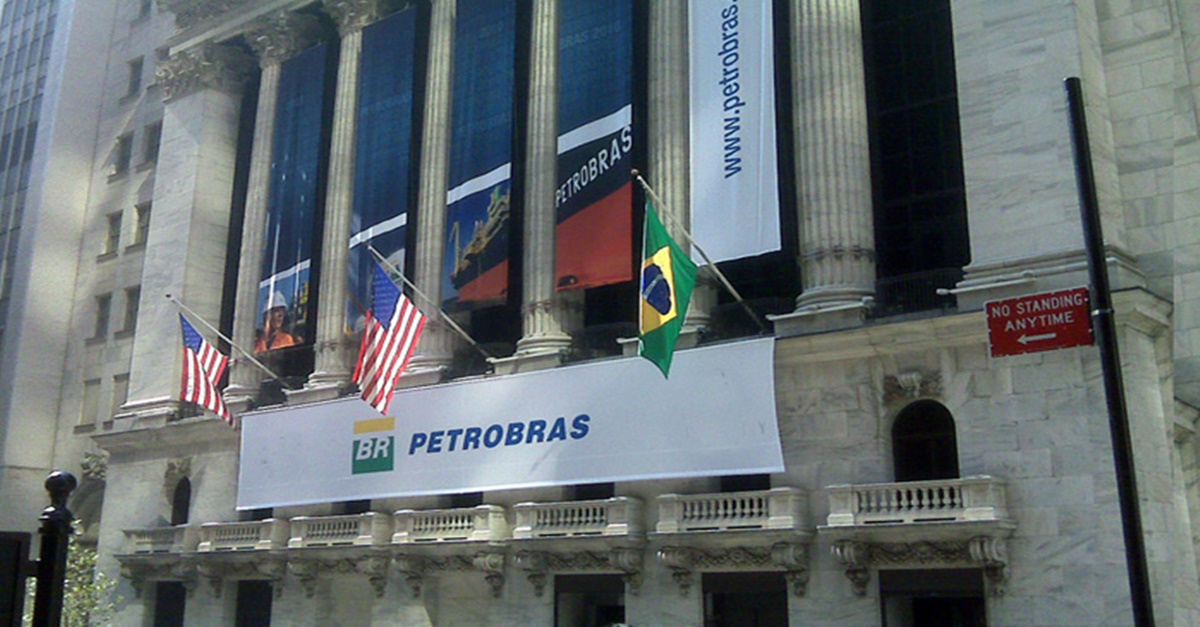

Petrobras Closed Three Agreements with U.S. Authorities: One with the Department of Justice, Another with the SEC, and Also with Investors.
Petrobras requested Minister Luiz Edson Fachin of the Supreme Federal Court to treat the company as an embassy, so it would not have to share the full texts of three billion-dollar agreements made with U.S. authorities. Contractor Providing Services for Petrobras Works at Comperj Files for Bankruptcy, Leaving 200 Workers at a Loss
Read Also
- Naval and Petrochemical Contractor Based in Rio das Ostras and Rio de Janeiro Calls for Job Openings in Offshore Regime
- Revealed Facts in Operation Car Wash May Remove Golar Power from the Bid for Petrobras LNG Terminal in Bahia
- Odebrecht Achieves the Largest Judicial Recovery in Brazil’s History
The request was sent to the Supreme Court on October 16, in the case where former President Lula seeks access to the agreements, considering them essential for his defense in the Guarujá triplex case and the alleged receipt of bribes from Odebrecht.
To avoid disclosing the files, Petrobras cited a habeas corpus reported by Celso de Mello, judged by the Supreme Court’s Second Panel in 2010, which stated that “to compel Petrobras to present documents pertaining to foreign administrative procedures that contain information owned by a foreign state (U.S.) would, indirectly, violate the understanding established in HC 102.041, aiming to address the conflict between sovereignties that this Supreme Court sought to avoid in the aforementioned precedent.”
-
Norway’s $2 Trillion Dilemma: How Oil Revenue Created a Massive Savings Fund with Too Much Money to Spend

-
Microsoft Lays Off 4,800 Employees, Cuts 20% of Xbox Staff Amid AI Pressure on Major Tech Firm

-
Brazil’s ANP Opens 86 New Oil Blocks in the Equatorial Margin, Expanding the Amazon River Mouth Frontier

-
Warren Buffett’s Lesson: How Discipline, Extra Income, and Small Investments Can Transform Your Financial Future




However, Petrobras is a mixed economy company that holds control over the assets requested by Lula’s defense. Thus, the agreements with the U.S. were made directly between the company and U.S. authorities, with no relation to the DRCI.
In a filing submitted last Friday (October 23), Lula’s defense claims that Petrobras provided incorrect information and requests that the oil company be condemned for bad faith litigation. The document is signed by lawyers Cristiano Zanin, Valeska Martins, Maria de Lourdes Lopes, and Eliakin T. Y. Pires dos Santos.
“Although Petrobras has attempted in these proceedings to even equate itself to an embassy to justify the concealment of documents and information, the oil company is a mixed economy enterprise. Despite the impression it aims to create, what is being demanded here is not, evidently, documents and information from the DoJ [U.S. Department of Justice], the SEC [Securities and Exchange Commission], or any other U.S. agency, but rather documents and information under the domain and disposition of Petrobras, a Brazilian company that has voluntarily positioned itself as an assisting party in the ‘Car Wash’ case,” said the lawyers.
In total, Petrobras made three agreements with U.S. authorities: one with the Department of Justice, which involved a criminal investigation; another with the SEC, which is of a civil nature; and finally, an agreement with investors.