Portuguese
  Spanish



A Company Spun Off From MIT Plans To Dig The Deepest Hole In The World To Generate Unlimited Renewable Energy. And For That, It Has Raised A Total Of US$ 63 Million In Funding
Amid all the talk about renewable and clean energy, a company formed in 2020 called Quaise has managed to raise US$ 63 million in funding to boost its effort to drill deeper into the Earth’s Crust than any other entity has done before. The ultimate goal of the ambitious drilling project by the MIT-spun-off company, Quaise, is to harness the planet’s geothermal energy, which could ultimately become a huge source of renewable energy if done correctly.
Expansion Of The Use Of Renewable Energies
Today, there have been many debates surrounding the advantages of the use of solar, wind and hydro energy, although many tend to overlook the potential of using the heat stored deep within the Earth to provide a widespread renewable energy source.
Undoubtedly, there has been good reason for this hesitation, considering that thus far it has been a huge technological challenge for companies to access hot geothermal rocks buried deep in the planet’s crust. So far, humanity’s best efforts to dig deep into the Earth have reached a maximum of about 12.3 kilometers in depth, although this has not been enough for us to effectively harness the planet’s heat on a massive scale.
-
Green Hydrogen Projects in Northeastern Brazil Stalled for 18 Months Awaiting Government Decree, Delaying Billions in Investments

-
Brazil Concludes Largest Energy Auction in History, Secures 18.97 GW and Mobilizes $12.8 Billion to Ensure Supply Until 2031
-
How Norway Produces More Energy Than It Consumes with Nearly 1,800 Hydropower Plants and Over 1,100 Reservoirs

-
Axia Energia Invests $280 Million in Q1, Increases Investments by 36%, and Turns Loss into $740 Million Profit


Now, Quaise believes it can go further by combining current drilling methods with the power of a megawatt beam generator, also known as a gyrotron. This device is inspired by nuclear fusion and generates electromagnetic waves in the millimeter-wave portion of the spectrum that can – in layman’s terms – theoretically burn the hardest and hottest rocks that hinder deep drilling into the planet’s crust.
MIT-Spun-Off Company Believes It Can Drill The Deepest Hole In The Earth In Months
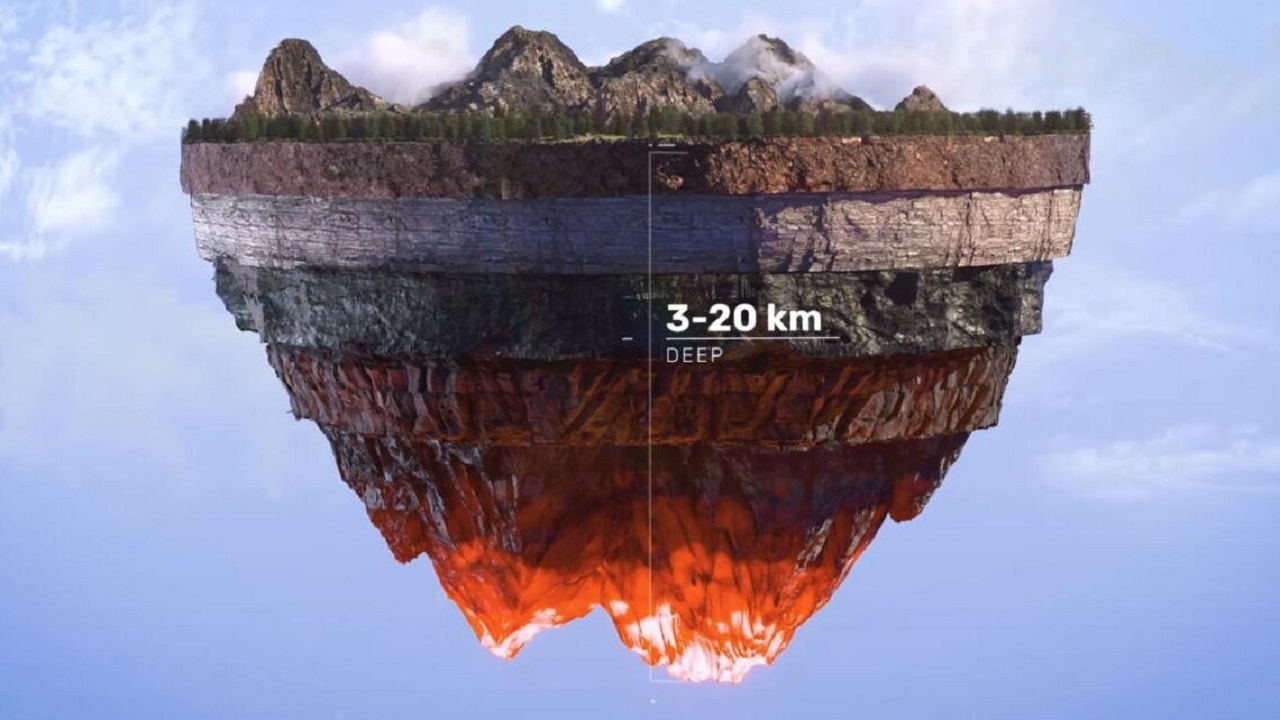
Quaise believes that this solution could allow its machines to drill depths of up to 20 kilometers within a few months, where the surrounding rock heat can reach temperatures of up to 500 degrees Celsius.
This amount of heat will rapidly convert any liquid water pumped to these depths into a supercritical vapor state (with low gas viscosity and high liquid density), which is suitable for generating electricity when placed in turbines and generators. In simple terms, this would equate to producing and harnessing the power of steam, but significantly amplified.
Considering how much heat is stored beneath us, an efficient rollout of such technology could generate unlimited renewable energy. The funding received so far by Quaise has allowed its leaders to be confident of having proof-of-concept devices ready within the next two years, with a working system for geothermal energy generating power by 2026, if everything goes well.
By 2028, The MIT-Spun-Off Company Aims To Take Over Old Coal Power Plants And Convert Them Into Steam-Powered Units
By 2028, the company also hopes to begin taking over old coal power plants and converting them into steam-powered units. Currently, these ambitions are still things that may be considered dreams, and only time will tell whether Quaise’s implementation of its technology will be successful or not. But in the grand scheme of things, it really seems worthwhile to at least try.
Currently, less than half a percent (yes, below 0.5%) of global energy is derived from geothermal sources. This starkly contrasts with how much our use of such a source should be growing – the International Energy Agency (IEA) estimates that geothermal energy should grow by about 13% per year if we want to achieve net-zero emissions by 2050, although the current growth rate is well below that margin.
In any case, harnessing the planet’s heat for electricity should be something considered more frequently when it comes to the renewable energy discussion, and we can only hope that Quaise (or any other relevant company) can deliver something viable in the near future.