Portuguese
  Spanish


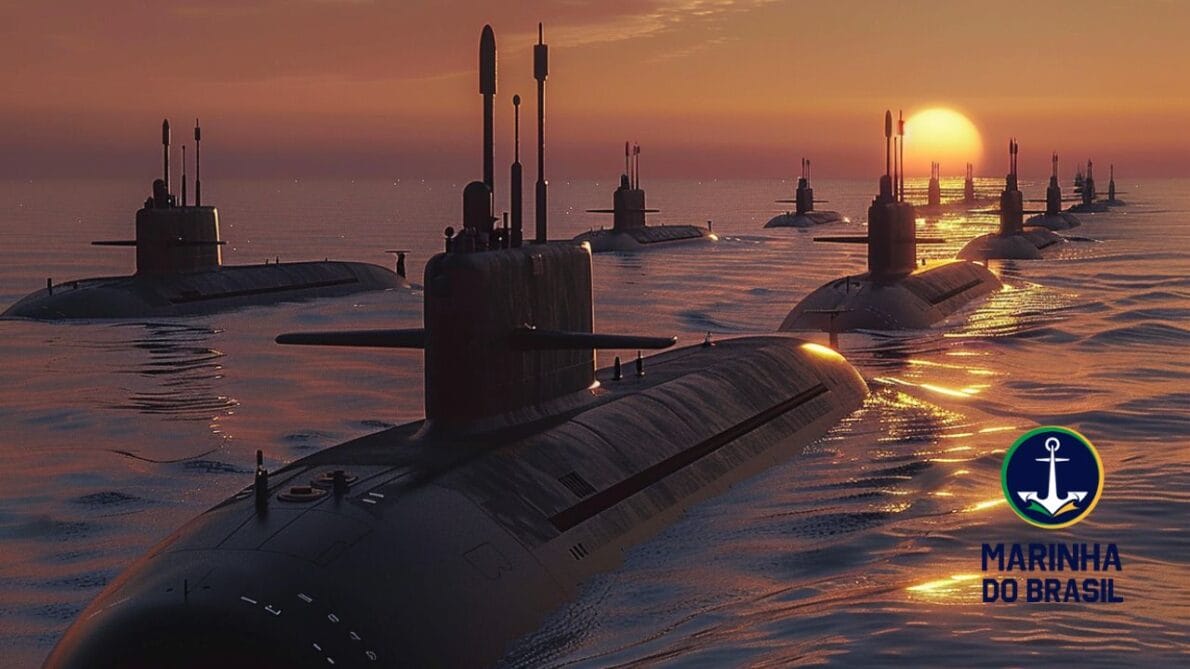

The Brazilian Navy Submarine Development Program (Prosub), launched in 2008 in collaboration with France, aims to construct advanced diesel-electric and nuclear submarines. So far, the program has launched three conventional submarines and plans to commission a nuclear submarine by 2034. This effort not only strengthens Brazil’s defensive capability but also boosts the national naval industry, enabling the country to join the select group of nations with nuclear submarine technology.
The Prosub, the submarine development program of the Brazilian Navy, represents one of the most significant efforts to modernize the country’s naval force. With French collaboration, Brazil has seen a qualitative leap in submarine construction, which now includes diesel-electric propulsion models and, in the future, nuclear ones.
Since the launch of the S40 Riachuelo submarine in 2018, ten years after the program commenced, Brazil has demonstrated an increasing capacity in its naval industry. This submarine, which incorporated various modifications to meet the specific requirements of the Brazilian Navy, was followed by the S41 Humaitá and the S42 Tonelero, launched in subsequent times with increasingly shorter construction intervals.
Next Great Milestone for the Prosub Is the Completion and Testing of the S42 Tonelero


The next great milestone for the Prosub is the completion and testing of the S42 Tonelero, with commissioning plans by the end of 2024 for the Brazilian Navy. The last conventional submarine planned in the program, the S43 Angostura, is scheduled to be launched in 2025, solidifying the fleet of modern and efficient submarines in Brazil.
-
Eni Acquires 25% Stake in Chilean Lithium Project, Plans to Invest Up to $225 Million in Eco-Friendly Extraction Method

-
French Brand Transforms 6 Million Brazilian PET Bottles into Sustainable Sneakers for Global Fashion Market
-
Abandoned Factory in Rio’s North Zone Becomes Urban Hazard with Standing Water and Debris

-
The U.S. Navy Conducts Submarine Tests in Idaho Lake to Detect Underwater Noises Hidden by the Ocean



Development of the Nuclear Submarine SN10 Álvaro Alberto for the Brazilian Navy
However, the crown jewel of the program is the development of the nuclear submarine SN10 Álvaro Alberto. This submarine, whose construction began in 2018, is scheduled to be launched in 2029 and commissioned between 2032 and 2034. The Álvaro Alberto is a crucial part of the Brazilian Navy’s long-term strategy, which aims to include up to six nuclear submarines by 2047.
Places the Country Among the Few Nations in the World Capable of Building and Operating Nuclear Submarines
The incorporation of the nuclear submarine not only expands Brazil’s defensive capability but also places the country among the few nations in the world capable of building and operating nuclear submarines. This advancement reflects the success of the Prosub in bringing autonomy and technological innovation to the Brazilian naval industry.
The submarine development program of the Brazilian Navy is a testament to the country’s commitment to modernizing its naval defense and strengthening its technological independence. With more advanced submarines and the introduction of nuclear technology, Brazil is positioning itself as a respectable naval power in the region and the world.