Portuguese
  Spanish


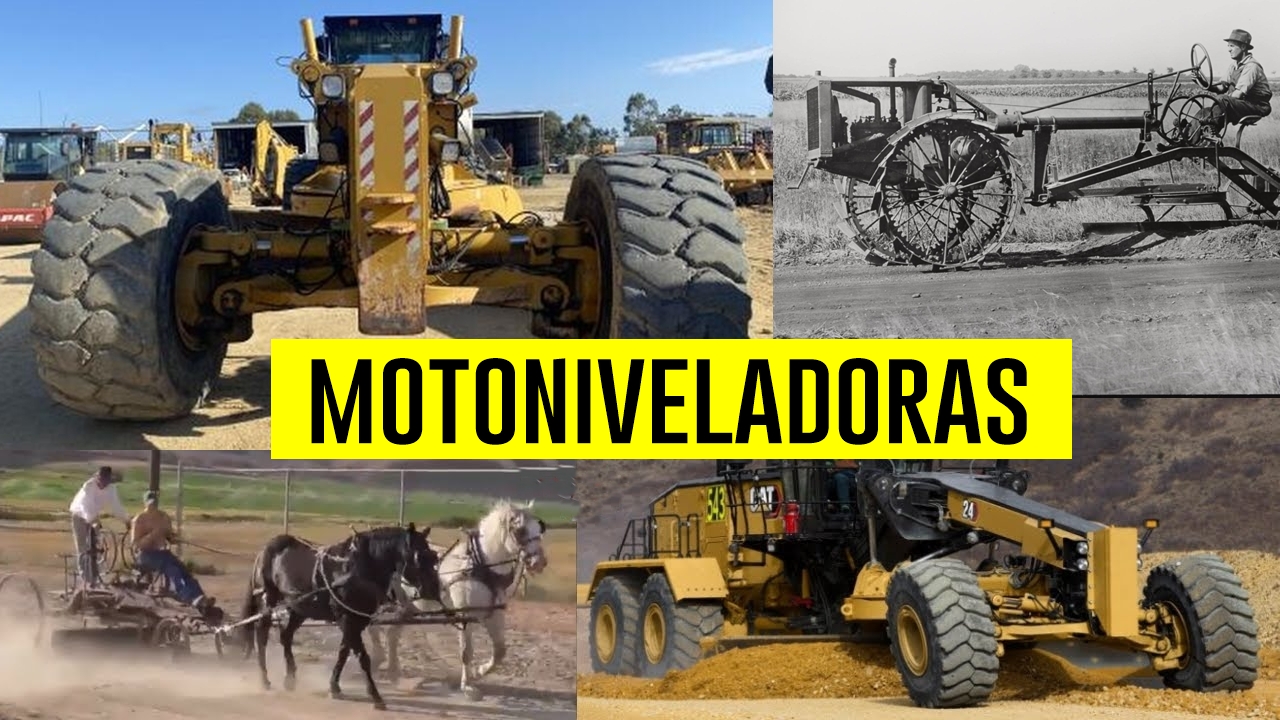


Have You Ever Wondered How Roads Were Made in the Past? Discover How Horses Were Used to Pull Graders in an Era When Technology Did Not Yet Exist.
Motor graders, or graders, as they are known in Brazil, are essential for road construction, mining, and agriculture.
These incredible machines have evolved dramatically since their invention in the late 19th century. What started as rudimentary tools pulled by horses became a symbol of technological efficiency.
But how did these machines reach their current stage? Follow this fascinating journey.
-
Pennsylvania Mine Creates Ice in Summer Heat and Melts in Winter, Turning a Mountain Crevice into a Reverse Natural Refrigerator

-
China Accelerates Global Expansion of Robotics: From Smart Vacuums to Industrial and Humanoid Machines, Millions Exported to Over 150 Markets
-
Polar Air Mass to Hit Brazil: Temperatures to Plummet in Nine States, Near Freezing in the South with Frost Risk Until Monday
-
Chinese “dark factories” produce electric cars 24/7 with minimal human intervention, as Zeekr assembles 800 units daily, raising concerns in Brazil.




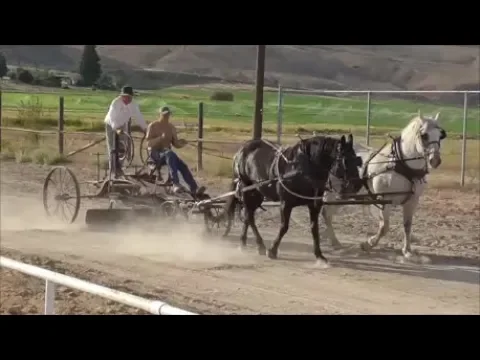
Horse-Pulled Graders
In the late 19th century, the advancement of graders began with simple steel structures, pulled by horses or oxen.
In 1885, Joseph D. Adams revolutionized the industry by creating the “Little Wonder” in Indianapolis. This rudimentary model used the principle of the inclined wheel to adjust the blade angle.
Adams did not stop there. In the 1890s, his company developed the “Road King”, equipped with four wheels and a 2.5 m blade.
This model became a milestone, showcasing the potential of graders to transform rudimentary roads into safer and more accessible routes. A youtuber showed how the equipment worked.

The Transition to Tractors
With the advent of steam tractors in the early 20th century, horses were gradually replaced.
After World War I, internal combustion engines brought even more efficiency. Gasoline-powered tractors were lighter and faster, which boosted their use alongside graders.
In this scenario, the Russell Grader Manufacturing Company stood out. In 1920, it launched the “Motor Hi-Way Patrol No. 1,” a grader attached to an Allis-Chalmers tractor.
The innovation quickly attracted other manufacturers, such as McCormick Deering and Fordson, who adapted tractors to integrate graders into their designs.

The Caterpillar Era
The 1930s marked a turning point with the emergence of the “Caterpillar Auto Patrol.” This model from 1931 solidified Caterpillar as a leader in the industry.
Unlike previous graders, it was an integrated machine: engine, powertrain, and blade designed as a single unit.
The model introduced rubber tires, abandoning traditional tracks, and set the standard for future motor graders.
Additionally, the rear-engine design provided superior balance and better visibility for the operator, standing out for its innovation.
Technological Advances During the 20th Century
Between the 1930s and 1960, the market witnessed a steady evolution. In 1935, JD Adams developed a blade that could be extended laterally, facilitating the cutting of ditches and shoulders.
Three years later, Caterpillar launched the “No. 12 Auto Patrol” with a diesel engine, marking a new standard for durability.
The growth of the construction industry in the post-war period, especially with the highway boom, increased the demand for larger and more robust graders.
In the 1960s, Caterpillar responded with the “No. 16 Motor Grader,” weighing an impressive 21 tons and equipped with a 4.3-meter blade. Later, the 16G series further enhanced this design with hydraulic controls.
The Era of Giant Machines

The year 1996 brought the 24H, the largest grader ever launched by Caterpillar. Weighing 61 tons and measuring over 16 meters, this machine was designed for extreme demands, such as mining and building large highways.
Equipped with four-wheel drive and turbocharged engines, these machines redefined the concept of efficiency.
Recent Innovations and the Future of Graders
The technology of graders has not stopped evolving. In recent years, advancements in hydraulic systems, electronic control, and ergonomics have made these machines more precise and easier to operate. The use of joysticks has replaced traditional levers, while GPS technology has brought millimeter accuracy to operations.
Manufacturers like Caterpillar continue to lead innovation. More efficient and sustainable engines have been developed to reduce emissions, while cabins offer greater comfort and visibility for operators.