





 Portuguese
  English
  Spanish
  3 min of reading
  3 comments


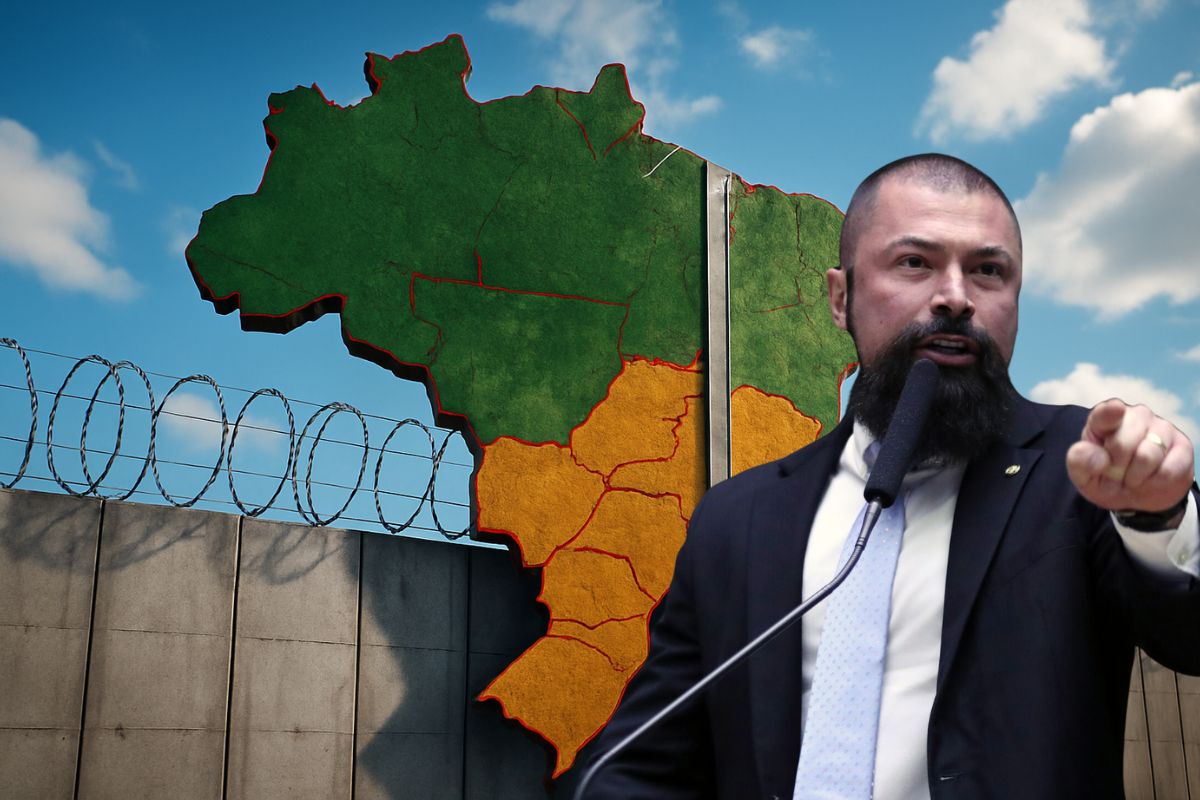


In Podcast, Commentator Claimed That the Country Could Be Divided by Walls and Visas, but Generated Criticism and Debate About Separation.
During his participation in a podcast, commentator Paulo Bilinski proposed an idea that quickly became controversial: he suggests dividing Brazil into two countries, North Brazil and South Brazil, separated by walls and visas. The statement, made in a conversational tone and seemingly as provocation, was enough to spark a heated debate about separatism, national identity, and regional inequality.
According to ANCAPSU, Bilinski even joked about the idea that, in a divided scenario, South Brazil would have a predominance of right-wing voters, while North Brazil would have a left-wing majority. The statement, although not presented as a formal proposal, raised questions about the political and economic consequences of such a division.
The Context of the Statement in the Podcast
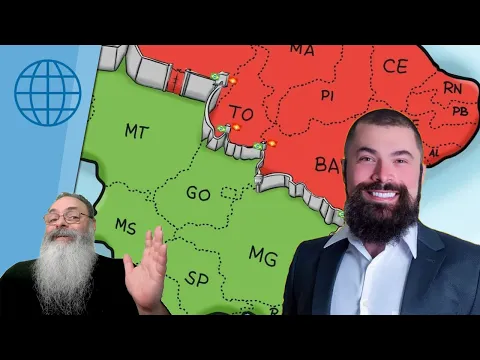

The statement arose during a casual conversation, without official character. However, the suggestion to erect walls and require visas among Brazilians gained attention precisely because of the country’s polarized political moment.
-
The fertilizer that makes the grass look nicer can become a nightmare in the garage: iron-containing fertilizer falls on the concrete, gets wet, oxidizes, and creates rust-like stains, while an overlooked detail before watering can cost hours of cleaning and a headache.

-
McDonald’s seems to sell burgers, but behind the scenes it involves real estate, rent, and strict contracts: in Brazil, a franchisee can invest up to R$ 4.5 million, give up part of the revenue, and still lose the store at the end of the agreement.
-
Fan followed the Brazilian National Team for over 25 years, traveled to 60 countries, attended more than 150 games, and became a symbol of the stands.

-
Dissatisfied with seeing highways cutting through the Amazon and isolating animals in the treetops, a Brazilian biologist created suspension bridges, has recorded over 20,000 safe crossings, and has just been awarded by National Geographic.





Bilinski highlighted historical and economic differences between regions but also acknowledged that separation would not be a solution to national problems.
Still, the statement generated immediate reactions on social media and in the press. For critics, the suggestion reinforces internal divisions and fuels unnecessary tensions. Supporters viewed the statement as an ironic critique of the difficulty of coexistence between opposing political projects.
Separation and Constitution
One of the points raised by Bilinski was the constitutional issue. The Brazilian Constitution prohibits separation, but, as he pointed out in the podcast, this prohibition does not prevent the idea from being discussed in theory.
He compared it to other historical cases, such as Brazil’s independence from Portugal and Uruguay’s separation, which also occurred in contexts where division was not legally anticipated.
Nonetheless, experts remind us that the advocacy of territorial rupture can be interpreted as an affront to national unity and would hardly find political or legal space in today’s Brazil.
Criticism of the Viability of the Proposal
Although the statement was presented as provocation, the idea of dividing the country into two blocks raises serious economic questions. The North and Northeast concentrate vast natural resources, such as hydropower and strategic minerals, in addition to significant tourism relevance.
South and Southeast, in turn, account for the majority of industrial production and tax revenue.
Separating the regions could mean creating artificial borders, reducing internal trade, and worsening social inequality. For many analysts, the measure would be unfeasible and bring more harm than benefit.
Controversy and Repercussion
Bilinski also joked about possible immigration rules between the “two Brazils,” suggesting 90-day visas and requirements such as round-trip tickets and paid stay. The proposal, seen as satire, ended up fueling memes and heated online discussions.
Critics pointed to veiled xenophobia against Northeasterners, while supporters defended the statement as mere political provocation.
Even without practical intention, the declaration highlights how political polarization reflects itself in narratives of territorial division, transforming historical inequalities into instruments of rhetoric.
Paulo Bilinski’s phrase in the podcast once again exposed the fragility of national cohesion in the face of regional and political differences. Although it is merely a provocative idea, the repercussions show that the notion of “two Brazils” is increasingly present in the collective imagination.
And you, do you believe that this type of provocation only reinforces divisions or can serve as a wake-up call for the country to face its inequalities head-on? Leave your opinion in the comments; we want to hear different perspectives on the topic.


Separar o Brasil em 2 só na cabeça de girico o Brasil tem que continuar gigante pela própria natureza, separar nos tornaremos mais fracos, temos que nos unirmos para continuarmos cada vez mais fortes. Não admito dividir meu amado pais Brasil.
No meu entender, isso vem a tona , apenas por questão políticas, mas entendo que se hj o sul e mais desenvolvido, não porquê e melhor, mas por mais investimentos , coisa que em uma virtual separação, Brasil do Norte tá poderia diminuir essa tal diferença visto que o BN e muito superior em recursos que o do Sul e pode ter certeza, a maioria das nações pretenderia investir aqui no BN, pois temos mais recursos naturais, sobre o Agro , certamente TB creceriamos e certamente passaríamos o sul, a Índia, comércio…, depende muito também se investimento estrangeiros, pode ter certeza que viriam , claro o Brasil abrind o mercado, enfim tenho certeza que alongo prazo o Sul ficaria para trás, mas e com eles
Uma casa dividida não sobrevive de pé. Pátria tem que representar comunicação, segurança e fartura entre a população. Pra isso a fé e o respeito tem que ser o oxigênio. A fé, a saúde, a educação e o trabalho tem q estar presente em cada lar. Construam a família e o reflexo será uma nação abençoada.