Portuguese
  Spanish


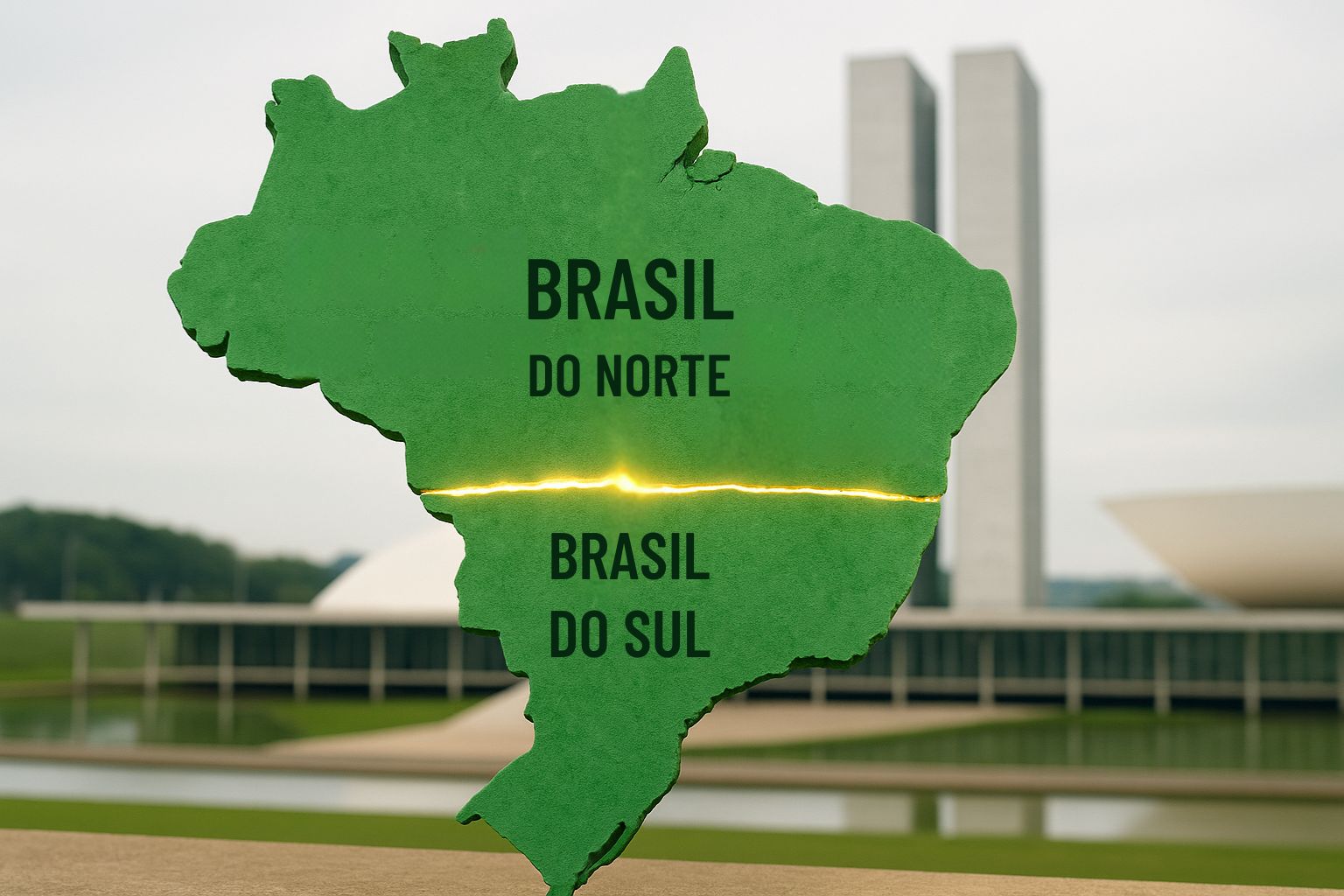


During Interview on the Podcast Redcast, Deputy Paulo Bilynskyj (PL-SP) Defended Dividing the Country in Two — “Brazil of the North” and “Brazil of the South” — Generating Intense Political and Constitutional Polemic.
The federal deputy Paulo Bilynskyj (PL-SP) starred in one of the most controversial statements of the week by suggesting, in an interview on the podcast Redcast on September 18, that Brazil be divided into two distinct countries: the “Brazil of the North,” formed by the states of the North and Northeast regions, and the “Brazil of the South,” comprising the states of the Center-West, Southeast, and South.
The proposal was made during a debate about the lack of proportionality in the Senate, where each state, regardless of its population size, has three representatives. According to the deputy, this would create distortions in political representation and, in his view, compromise democracy.
“Should We Divide Brazil?”
During the conversation, Bilynskyj stated:
-
How to Prevent Brown Recluse Spider Bites: Common Hiding Spots and Free Tips to Reduce Risks

-
Natto: The Unusual Japanese Superfood Gaining Popularity on Social Media and Driving Record Exports
-
Brazilian Mayor Goes Undercover as Homeless for 24 Hours to Assess Public Services

-
15-Year-Old Entrepreneur Malu Lira Publishes 20 Children’s Books on Financial Education, Earns $500,000, and Expands Her Project to the Amazon Rainforest




“Should we divide Brazil? We cut North and Northeast, it becomes Brazil of the North. And all the states of the Center-West, Southeast, and South become Brazil of the South.”
The program’s host immediately reacted, saying that the statement sounded like “separatism.” The parliamentarian, however, did not back down:
“What’s the problem? Did you know that, historically, the larger the territorial extent, the greater the tendency toward dictatorship? The smaller the country, the more democratic it is.”
The statement spread quickly on social media, raising criticism from experts, political opponents, and even supporters who saw the proposal as exaggerated.
Political Motivations
The deputy, known for his alignment with former president Jair Bolsonaro, reinforced his argument by recalling the electoral divisions of the country. He pointed out that the North and Northeast tend to support left-wing candidates, such as Lula, while the South and Southeast predominantly vote for right-wing candidates.
This reading, according to him, would justify the creation of two countries with distinct political and economic development projects.
Immediate Reactions
The proposal did not take long to generate controversy. Parliamentarians from different parties condemned the statement, labeling it as “an attack on national unity”. Legal experts reminded that the Federal Constitution of 1988 does not foresee any possibility of territorial division by political will, and that the idea violates fundamental principles of the Brazilian State.
On social media, the statement became the target of memes and harsh criticisms. Many recalled that Bilynskyj’s statement harkens back to old separatist discussions, such as the independence movements in Southern Brazil during the 19th century.
Experts Explain
According to political scientists, while the criticism of the representation model in the Senate is valid — since states with vastly different populations have the same number of senators — the solution advocated by Bilynskyj lacks constitutional support and practical viability.
For them, the debate should focus on political and electoral reforms, not on proposals to fragment national territory.
History of Polemics
Paulo Bilynskyj, elected federal deputy for São Paulo in 2022, is already known for controversial statements. A former police officer and declared Bolsonarist, he frequently uses social media and interviews to raise high-impact issues, especially related to public security, criticisms of the federal government, and proposals for revising the political system.
However, his most recent statement transcended the limits of institutional debate and brought to the fore sensitive discussions about national unity.
The Risk of Separatist Discourses
Experts in constitutional law warn that discourses like Bilynskyj’s may open space for radical movements, especially in times of political polarization. Although the proposal has no official character or chance of advancing in Congress, it may fuel populist narratives that weaken national cohesion.
Moreover, in a country with over 200 million inhabitants and continental dimensions, separatist proposals have the potential to create political and economic instability, compromising Brazil’s international credibility.
Bilynskyj’s comment about the division of Brazil into “North” and “South” should be interpreted as a political provocation more than a real proposal. Still, the episode highlights the intensity of Brazilian polarization and the difficulty of building consensus within the current political system.