






 Portuguese
  Spanish
  4 min of reading
  2 comments


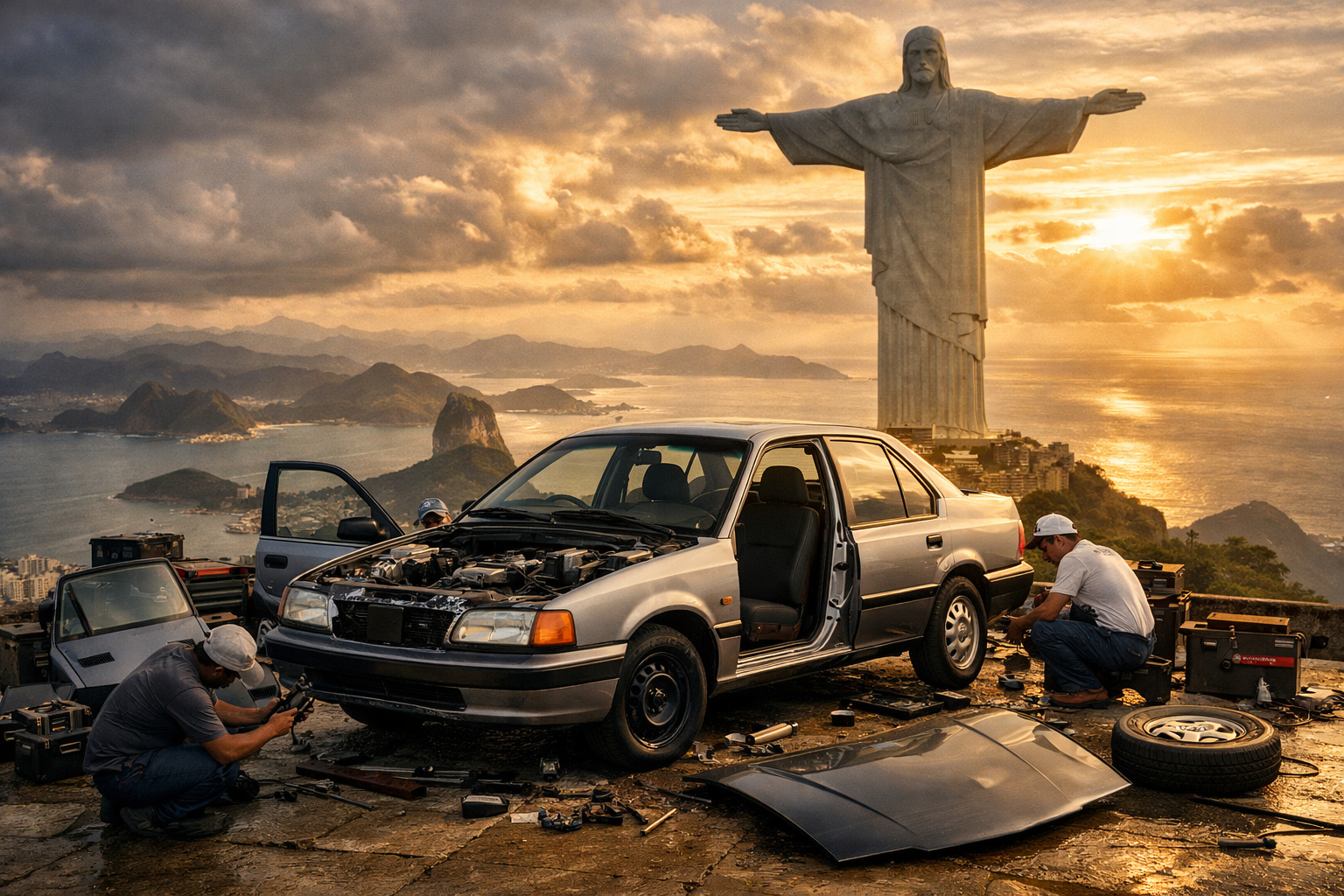


In 1994, GM dismantled and assembled a Chevrolet Monza at the top of Corcovado to record a 30-second commercial, in one of the boldest actions in Brazilian automotive advertising.
In the 1990s, when computer graphics were still in their infancy and digital effects were expensive and limited, automotive advertising relied on real, physical, and often extreme actions to make an impact. It was in this context that General Motors made a decision that today seems unthinkable: to assemble a car from scratch at the top of Corcovado just to record a 30-second commercial. The star of the show was a Chevrolet Monza, dismantled piece by piece, transported to the top of the mountain, and reassembled exclusively for the shoot. Afterwards, everything was taken apart again.
Why GM Decided to Assemble a Car at the Top of Corcovado
The goal of the campaign was simple yet ambitious: to create an image that was impossible to ignore. Placing a car in one of the country’s most iconic landmarks guaranteed immediate impact, emotional association, and brand recall.
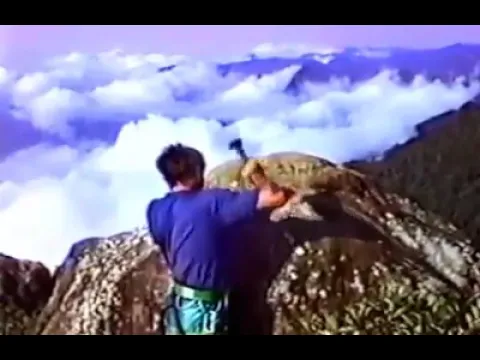

At that time, there was no advanced CGI capable of creating a believable scene of this type. The solution was to make it happen in the real world, even if it meant facing severe physical limitations.
-
Two new 300cc models from QJ Motor are expected to arrive in Brazil as SBM to target the CB 300F and shake up the low-displacement market, with more power and liquid cooling than Honda.

-
Camaro may reappear in 2027, but not as you remember: Chevrolet prepares the return of the icon with four doors, manual transmission, and an extreme performance version to face the new era of sports cars.

-
Is the BYD Song Pro worth it? The Anderson Sincero channel says it doesn’t exceed R$ 140,000, and the price dropped by R$ 47,000, reinforcing the depreciation of the plug-in hybrid in the Fipe table.
-
Caoa Changan CS75 arrives for R$ 199,990 with 4.77 m in length, a trunk of up to 1,620 liters, 8-speed Aisin transmission, 180 hp, 37.2 inches in screens, and Zero Gravity seat with massage.


The Logistical Challenge of Accessing the Top of the Mountain
Corcovado does not allow conventional vehicles to access its summit. There is no road for cars, nor space for heavy cranes or large trucks.
Therefore, the Monza was not transported whole. The only viable alternative was to dismantle the vehicle completely, separate its main components, and transport everything in smaller parts, compatible with the access allowed to the location.
Zero-Based Assembly in a Hostile Environment
At the top, the team had to rebuild the car practically from scratch. This involved assembling the chassis, suspension, body, interior, and finishing, all in a restricted space exposed to wind, temperature variations, and time limitations.
It was not an industrial assembly. It was a manual, artisanal, and improvised process, requiring precision to ensure the car looked visually perfect for the camera, even though it had no functional purpose after the shoot.
A Functional Car or Just a Scenographic One?
Reports indicate that the Monza was not meant to be driven at the top of Corcovado. The priority was external appearance and image framing, not full mechanical functionality.
This allowed for simplification of some processes, but did not reduce the structural challenge. The car needed to appear intact, aligned, and true to the model sold at dealerships, at the risk of compromising the credibility of the campaign.
Time, Cost, and Risk for Just 30 Seconds of Video
The entire operation—dismantling, transportation, assembly, recording, and dismantling again—was done for a commercial of only 30 seconds.
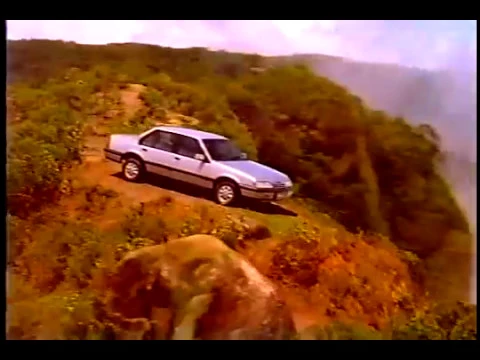
This type of investment was common in automotive advertising at the time, when grand actions served as a demonstration of industrial power and brand boldness, even though the public never knew exactly what was behind the scenes.
Today, an action of this scale would involve environmental permits, heritage authorizations, million-dollar insurance, and much more restrictive logistics.
Why Such a Thing Would Be Almost Impossible Today
Today, an action like this would face environmental, legal, and operational barriers that are practically insurmountable. Preservation areas, historical heritage, and safety regulations make this type of physical intervention unfeasible.
Moreover, the evolution of digital effects would make real assembly unnecessary from a technical standpoint, even if less impressive from a historical perspective.
The Cultural Impact of the Campaign
Even without extensive documentation in traditional journalistic archives, the story of the Monza assembled at Corcovado survives as a real legend of Brazilian automotive advertising.
It symbolizes a time when brands were willing to go beyond the reasonable to create iconic images, betting more on improvised engineering and logistical courage than on virtual solutions.
The GM action in 1994 was not just a commercial. It was an extreme logistical operation, executed to generate a single striking image. Assembling a Chevrolet Monza piece by piece at about 700 meters above sea level, in one of the most symbolic points of the country, shows how far automotive advertising was willing to go.
Today, this episode serves as a portrait of an era when cars, advertising, and improvised engineering met at the limit of the possible, something difficult to replicate—and precisely for that reason, so fascinating.


kkkk que vergonha pro jornal, o comercial não goi gravado no corcovado do rio de janeiro, foi gravado no pico do corcovado em Ubatuba SP, até pelo comercial isso ja fica claro, que é na Serra do Mar
Foi no Dedo de Deus, na serra dos órgãos, não no Corcovado.