





 Portuguese
  English
  Spanish
  5 min of reading
  0 comments


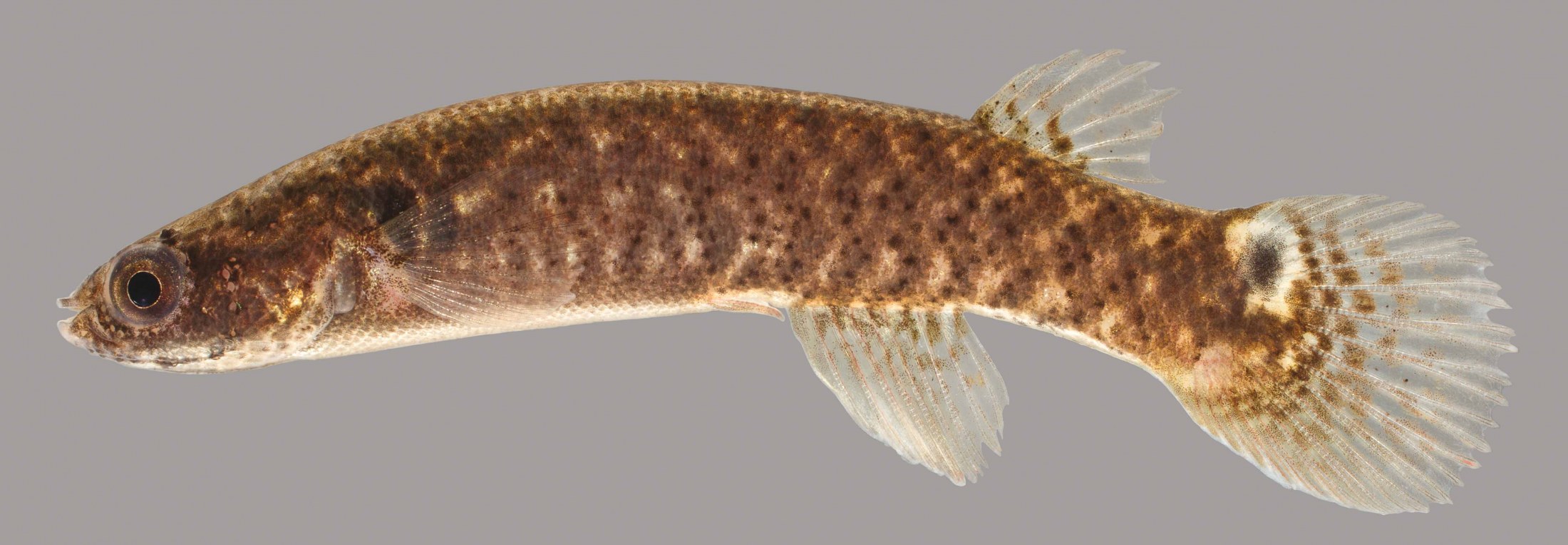
Rivulus Fish Survives Months Out of Water by Reducing Metabolism and Breathing Through Skin, Hidden in Logs During Drought in Tropical Mangroves.
Few people imagine that a fish can survive away from water for weeks or even months without dying from asphyxiation. However, the rivulus fish, scientifically known as Kryptolebias marmoratus, has developed an extreme strategy that challenges basic concepts of animal physiology. In environments subjected to periodic droughts, this small fish simply leaves the water, hides in decaying logs or damp crevices, and lives outside the aquatic medium.
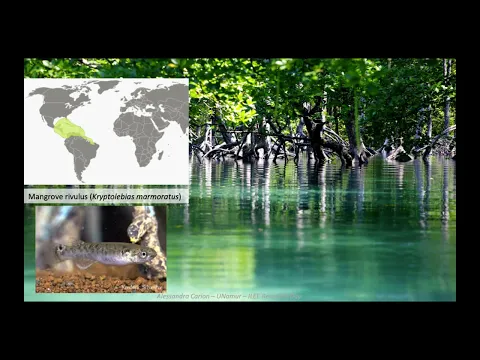
This behavior is neither casual nor accidental. It is a stable evolutionary adaptation, repeatedly observed in mangroves and tropical coastal areas of Central America, the Caribbean, and northern South America, where pools of water can disappear for long periods.
The Hostile Environment That Shaped This Extreme Adaptation
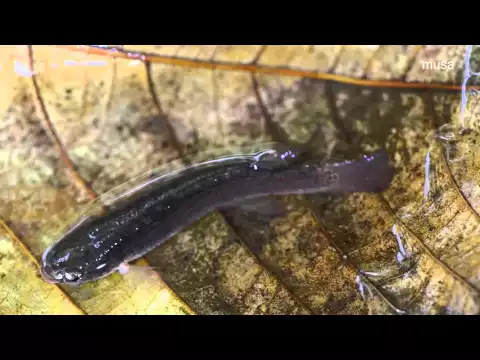

The rivulus fish’s natural habitat consists of shallow mangroves, coastal puddles, and areas subject to sudden changes in tide, salinity, and availability of water.
-
With the equivalent of a day’s salary, about 15 dollars, a resident filled the cart at a Chinese supermarket and even had the famous pork from his region for two and a half dollars, depicting the cost of living in the interior of China.

-
The CIA paid for 20 years for psychics, telepaths, and “astral travelers” to spy on Soviet military facilities using extrasensory perception: Project Star Gate recruited dozens of people with supposed ESP, produced 12 million pages of classified reports, and was only terminated in 1995 when the agency admitted that the results were “inconsistent.”

-
The largest reserve of fresh water on Earth is locked in the ice of Antarctica and cannot quench anyone’s thirst, because less than 1% of all the fresh water in the world is actually available for human use, revealing that the water crisis is one of access, not quantity.
-
France builds a 107 km canal costing €7.3 billion to connect the Seine to the northern European waterway network


In many of these locations, the water simply evaporates during the dry season, turning entire lagoons into hardened mud or completely dry areas.
For most fish, this scenario would mean almost immediate death. For the rivulus, it became an evolutionary trigger. Instead of competing for the few remaining inches of water, it abandons the aquatic environment and migrates to tree trunks, mangrove roots, decaying leaves, or damp soil crevices, where moisture is still sufficient to prevent total dehydration.
Breathe Without Gills: The Decisive Physiological Turn
The most impressive aspect of the rivulus fish’s survival out of water is how it manages to breathe. Fish rely on gills to extract oxygen dissolved in water, but outside of it, these structures collapse and cease to function.
The rivulus solves this problem by activating cutaneous respiration. Its highly vascularized skin takes on the primary role in gas exchange, allowing direct absorption of oxygen from the moist air around its body. Studies show that during this period, the gills are virtually unused, reducing risks of damage and loss of efficiency.
This change does not occur spontaneously. It involves cellular adjustments, increased skin permeability, and profound alterations in the organism’s chemical balance.
Slowed Metabolism to Conserve Energy
Breathing through the skin would not be enough if the fish maintained the same metabolic rate as aquatic life. Therefore, another pillar of this strategy is a drastic reduction in metabolism. The rivulus fish enters a state of extreme energy conservation, consuming less oxygen and reducing the production of toxic metabolic wastes.
In this state, it practically halts feeding, uses internal energy reserves, and minimizes movement to the necessary minimum. This “survival mode” allows the fish to stay alive out of water for periods that can reach two or even three months, depending on environmental conditions.
It is a radical solution to an equally radical problem: survive in an environment where water, the basis of life for fish, simply disappears.
Tree Trunks as a Vital Refuge
The locations chosen by the rivulus fish are not random. Decaying trunks provide a stable microenvironment, with relatively high humidity, moderate temperature, and protection from predators. Within these cavities, several individuals can group together, remaining motionless for long periods.
This behavior has been recorded both in field observations and laboratory experiments. In some cases, researchers have found dozens of rivulus stacked inside a single trunk, all alive, despite the external environment being completely dry.
The trunk functions as a “temporary cocoon,” where the fish patiently awaits the return of water.
A Fish That Also Challenges Traditional Reproduction
In addition to the ability to live outside water, the rivulus fish is famous for another rare biological detail: many individuals are hermaphrodites capable of self-fertilization. This means that a single fish can colonize a new environment alone, without relying on reproductive partners.
This characteristic perfectly combines with its survival strategy. Even if only one individual can withstand extreme drought, it can give rise to a new population when conditions become favorable again.
From an evolutionary perspective, this is a complete survival package: extreme environmental resilience combined with reproductive independence.
What Science Learns from the Rivulus Fish
The scientific interest in this fish goes far beyond curiosity. Researchers study the rivulus to understand how vertebrate organisms cope with hypoxia, metabolic stress, and transitions between aquatic and terrestrial environments.
The observed adaptations help explain how the first vertebrates may have begun the transition from water to land millions of years ago. In modern terms, the rivulus fish serves as a living model to study physiological limits that once seemed impossible for fish.
There are also potential applications in areas such as comparative biology, medicine, and studies on cellular tolerance to lack of oxygen.
A Silent Survivor in Times of Climate Change
On a planet where extreme events are becoming more frequent, the story of the rivulus fish takes on added significance. Prolonged droughts, rising temperatures, and water instability are growing challenges for aquatic ecosystems.
The capacity of this small fish to endure long periods out of water shows that evolution can find surprising solutions, but it also highlights that these adaptations arise at the cost of very specific and fragile environments, such as mangroves.
The destruction of these ecosystems directly threatens highly specialized species like the rivulus, which depend on this delicate balance between water, land, and organic matter.
A Reminder of the Limits and Creativity of Life
The rivulus fish does not survive out of water by chance. It represents an extreme example of how life can circumvent seemingly insurmountable biological limits when pressed by hostile environments.
By slowing its metabolism, abandoning gills, and transforming its skin into a respiratory organ, this fish redefines what it means to “be a fish.” The question that remains is inevitable: how many other equally radical strategies remain hidden in under-observed ecosystems, waiting to challenge everything we think we know about life on Earth?




-

-

-

-

-

10 people reacted to this.