






 Portuguese
  Spanish


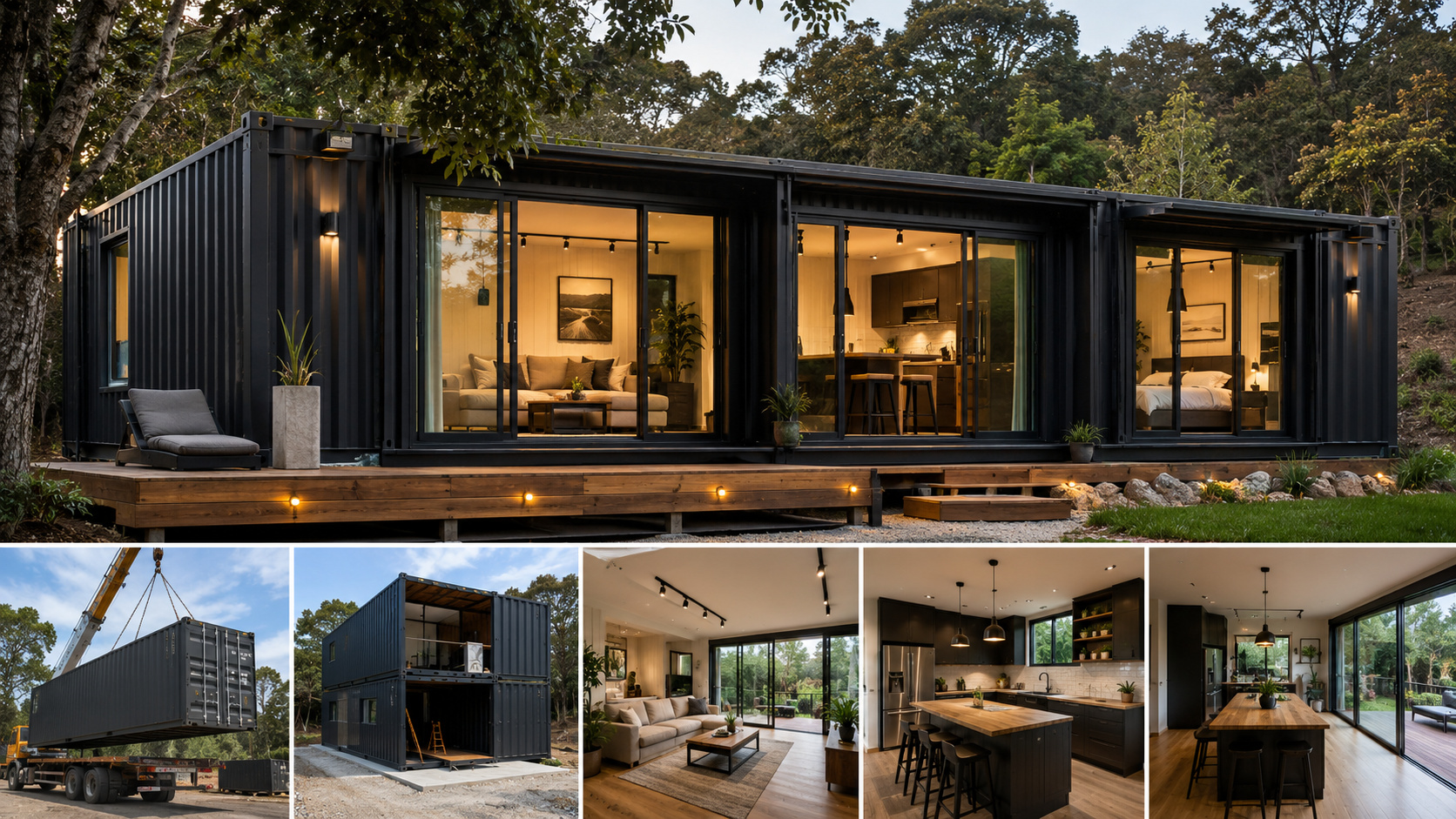

Company transforms containers into complete modular homes with up to three bedrooms, a spacious kitchen, and large glass walls.
In 2026, the Canadian company Honomobo Corporation, based in Edmonton, Alberta, consolidated in the North American market a proposal that transforms modular structures inspired by shipping containers into complete, modern, and quickly installed homes. According to the company’s institutional registration with the Modular Building Institute, consulted on May 11, 2026, Honomobo states that it uses containers to create modular residential spaces, while its official page describes the H-Series line as built with weather-resistant steel cladding and large floor-to-ceiling windows.
The differential lies in the industrial process: instead of erecting the entire residence directly on the land, Honomobo manufactures its modules in a controlled environment, with quality inspections and less exposure to delays caused by weather, labor, and site variables. On the company’s official page, consulted on May 11, 2026, the manufacturer states that factory construction makes the timeline more predictable and reduces risks, while delivering modular homes designed for durability, efficiency, and connection to the surroundings.
Honomobo uses shipping containers as the structural base for modern modular homes
The company relies on containers as the main structure for its residences. Originally developed to withstand heavy loads and extreme sea voyages, containers possess high structural resistance, a characteristic that has attracted architects and manufacturers of modular housing.
-
U.S. City Builds Tiny Home Village on Water Company Land to House 136 Homeless People: Inside the Social Housing Units

-
Woman Turns Shipping Container into Home, Embraces Rural Life to Cut Monthly Expenses to Just Over $330
-
France Revamps 530 Social Housing Units with Large Balconies and Glass Facades Without Demolishing Existing Buildings

-
Facing high rent, couple transforms parents’ garage into a fully functional apartment, creating a complete home at a fraction of the market cost.




Honomobo adapts these metal structures to transform them into complete residential units, including thermal insulation, interior finishes, and large glass openings.
HO4 model has approximately 119 m² and up to three bedrooms
The HO4 model has become one of the company’s main examples. According to Honomobo, the unit has approximately 1,280 sq ft, equivalent to about 119 m², distributed in a configuration with up to three bedrooms and two bathrooms.

The design also includes an integrated living room, a spacious kitchen, and large glass panels for natural lighting.
Large glass walls have become one of the visual trademarks of Honomobo homes
One of the most characteristic elements of the company’s residences are precisely the glass walls. While traditional containers are often seen as closed and industrial structures, Honomobo tries to create the exact opposite effect through large panoramic openings.
This transforms the external appearance of the house and brings the design closer to modern contemporary architecture residences. Unlike conventional construction, most of the building takes place inside the factory.
According to the company, the modules are already prepared with electrical and plumbing installations, kitchen, bathroom, and practically finished interior.
When they arrive at the site, the units mainly require positioning, final connections, and base preparation.
Modular construction reduces construction time compared to traditional masonry
The modular system aims precisely to accelerate stages that normally take months in conventional construction.


Instead of erecting walls, plastering, and installing infrastructure directly on the site, much of these stages occur simultaneously within the factory.
This reduces the construction’s exposure to rain, weather delays, and some of the common logistical problems of traditional civil construction.
Containers offer structural resistance originally created for maritime transport
The containers used by Honomobo were originally designed to withstand extreme environments. These metal structures can resist heavy stacking, ocean transport, and severe weather conditions during global port operations.
The company uses this very resistance as a basis to transform the modules into permanent residences. Honomobo’s proposal tries to move away from the extremely compact appearance associated with many tiny houses.
The HO4 model, for example, features a kitchen integrated into the social area, separate bedrooms, and relatively ample spaces for modular standards. The large glass openings also help to enhance the visual sense of internal space.
Container homes gained traction with rising construction prices
The growth of the modular sector is linked to the increase in traditional construction costs in several countries.
More expensive materials, scarce labor, and long project schedules have led consumers to seek faster and more predictable alternatives. Modular container homes have precisely started to occupy part of this market. Another argument used by modular manufacturers involves waste reduction.

As production occurs in a controlled industrial environment, some of the common material losses can be reduced compared to conventional construction carried out directly on site.
Furthermore, the structural reuse of containers is also frequently associated with sustainability proposals.
Modular homes can function as residences, offices, or rental properties
Although many projects are residential, the units have also come to be used for other purposes. Modular container homes are increasingly appearing in short-term rentals, remote offices, tourist cabins, and compact rental properties.
The modern design and industrial look help increase the commercial attractiveness of these projects. Even arriving partially ready, the units still depend on specialized transport to the site.
This involves trucks, cranes, and proper preparation of the base where the modules will be positioned. Depending on the property’s location, logistics can become one of the most complex stages of the project.
Container homes still face debates about thermal insulation
One of the main challenges of this type of construction precisely involves thermal comfort. Since the container is made of steel, inadequate insulation can lead to excessive heating or rapid heat loss depending on the local climate.
Therefore, manufacturers like Honomobo invest in specific internal insulation and finishing systems to make the units more comfortable.
Modular market tries to transform houses into industrialized products
Honomobo’s proposal is part of a broader shift within the construction industry. Companies in the modular sector are trying to bring housing closer to the industrial logic used in automobiles, where a large part of production happens inside a factory before final delivery.
The goal is to reduce time, standardize quality, and increase the predictability of the construction process. The most curious aspect is perhaps the transformation of the container itself.
Originally created to transport cargo on ships and trucks, the metal module has come to serve as a structure for modern residences with planned kitchens, bedrooms, bathrooms, and large glass walls.
This change helped transform containers into one of the strongest symbols of contemporary modular architecture.
Honomobo represents the attempt to accelerate residential construction through ready-made industrial modules
The growth of modular homes shows how part of the real estate sector is beginning to seek alternatives to slow and expensive conventional construction.
While traditional construction still depends on months of execution directly on site, companies like Honomobo try to transfer a large part of the process to industrial production lines.
Ultimately, the proposal reveals an important shift in the very logic of modern housing: transforming industrial structures originally created for global transport into complete, move-in ready homes, installed much faster than conventional construction.









