Portuguese
  Spanish


An Amazing Archaeological Finding May Change The Current Understanding Of Prehistory. Researchers Have Discovered Evidence Of Transportation Technologies Used More Than 20,000 Years Ago
An archaeological discovery from Bournemouth University reveals that the first inhabitants of the Americas had already been using transportation technology over 20,000 years ago. Fossilized marks found in the White Sands National Park in the U.S. state of New Mexico change what was known about the earliest human inventions for carrying objects.
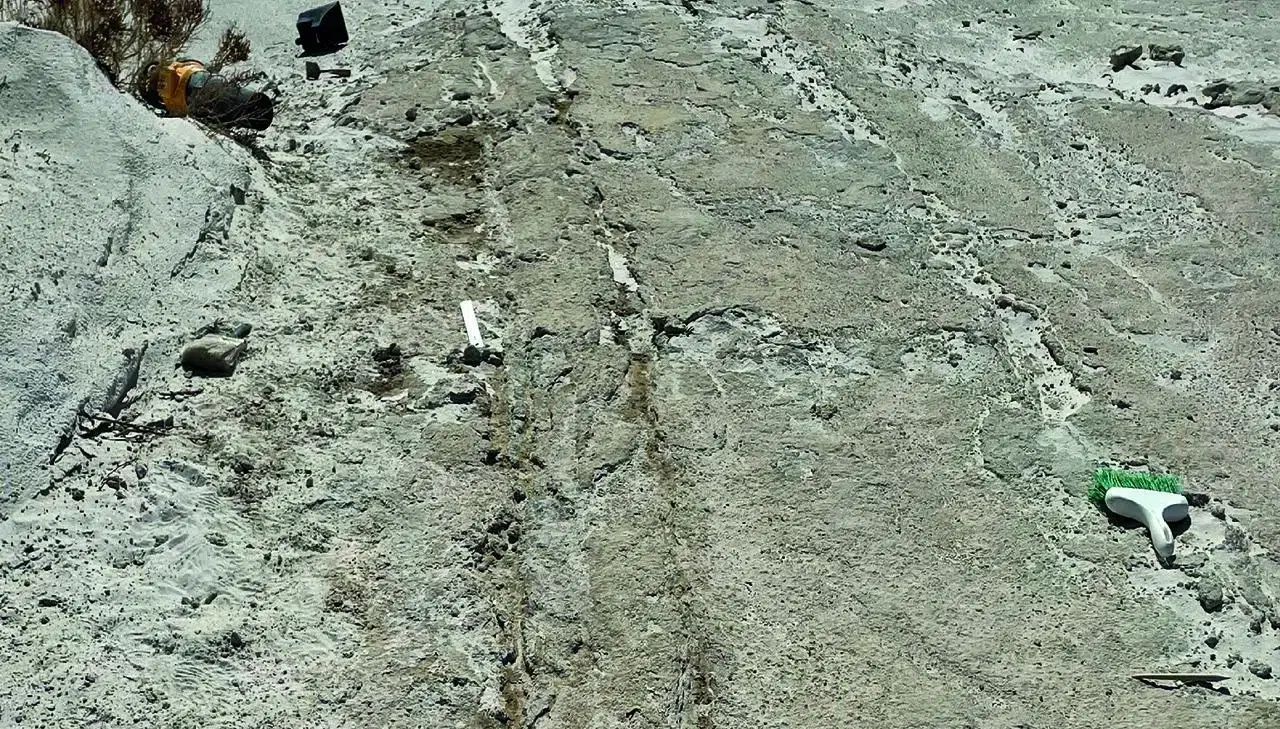
The evidence, published in the journal Quaternary Science Advances, indicates the use of sleds, a type of rudimentary sled. This anticipates the documented beginning of transportation technology by at least 10,000 years, directly impacting the understanding of human migrations.
Researchers from Bournemouth University identified human footprints alongside drag trails. These traces suggest that people were dragging sleds made of wood over the ground. The marks date back to approximately 22,000 years.
-
Stingless Bee Honey from Brazil Can Cost Up to $120 a Liter, Surprises with Flavors of Wood, Citrus, and Even Cheese

-
Woman Claims to Have Spotted a Technical Pattern in Recent FIFA Tournaments, Predicts Possible World Cup Winner
-
Chevrolet Offers Chance to Win a 2026 Sonic RS for Free via WhatsApp
-
Earthquake vs. Tsunami: Which Causes More Destruction and Why One Can Be Even More Dangerous


The presence of children’s footprints near the drag marks reinforces the idea that the sleds were pulled by people, not by animals. This indicates a collective effort to move belongings, possibly during group relocations.
Scientists view this finding as a vivid portrait of the daily life of populations living in a challenging environment, with a constant need for adaptation.
Practical Test Reinforces Hypothesis
To confirm the origin of the marks, researchers recreated sleds with wooden posts and dragged them through wet clay. The marks left matched the fossilized traces.
This experimental method reinforces the theory that the first Americans developed creative solutions using the resources available in their environment. The similarity between ancient tracks and those reproduced in the lab brought more consistency to the analysis.
The discovery also alters what was known about the emergence of transportation technologies. Until now, the oldest records came from cave paintings and modifications to the hooves or paws of domesticated animals, which are dated much later.

Traditional Knowledge Contributes
In addition to the scientific analysis, the study received support from Indigenous communities, who contributed interpretations about the marks. This dialogue between science and tradition helped enrich the reading of the data found.
The participation of native peoples highlights the importance of traditional knowledge in modern archaeology. These collaborations help make research more complete and sensitive to historical and cultural contexts.
Understanding how these populations lived, moved, and organized their displacements is fundamental to reconstructing the history of the first inhabitants of the Americas.
What Is A Travois
The travois is a simple transportation device, formed by two long wooden posts connected at one end. Between them, a net or platform is secured to carry objects.
It can be pulled by humans or by animals, such as dogs and horses. Its structure is ideal for uneven terrain, where wheels do not function well.
Nomadic populations used travois for centuries, including Indigenous groups from North America. With it, it was possible to transport food, utensils, and other essential items for survival during long journeys.