





 Portuguese
  English
  Spanish
  4 min of reading
  1 comment


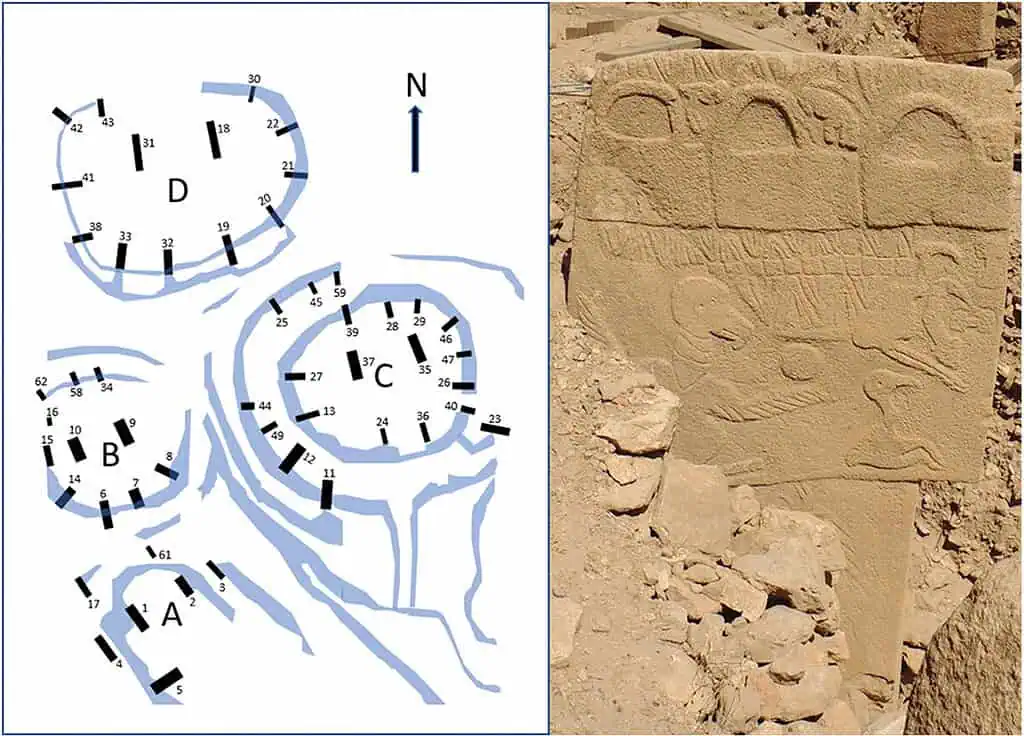

Researchers Find 12,000-Year-Old Archaeological Site in Turkey That May Be the Oldest Calendar in the World, Offering New Perspectives on Time and Astronomy in Ancient Civilizations.
An archaeological site located in southeastern Turkey is one of the most important discoveries of modern archaeology, revealing fascinating aspects of the early human civilizations.
Dated to approximately 12,000 years ago, the archaeological site is considered the oldest known temple complex, predating Stonehenge by about 6,000 years.
What makes Göbekli Tepe particularly remarkable are its gigantic sculptures and stone formations that, according to new research, may represent the oldest solar calendar in the world.
-
The amphibious bicycle made from metal scrap that looks like a garage invention, but uses floats, welding, human pedaling, and discarded parts to travel on roads, enter rivers, and demonstrate how sustainable engineering can transform metal waste into creative mobility.

-
Pressured by nearly 10,000 homeless people in Maricopa County, Phoenix is converting containers into 40 transitional housing units of 14.8 m² for homeless seniors, with a bed, sink, bathroom, shower, microwave, mini-fridge, solar power, and social services before moving to permanent apartments.

-
Japan uses stunt doubles to simulate real accidents in front of children at schools and turns staged accidents with cars, bicycles, and pedestrians into shock lessons to teach traffic safety from an early age.

-
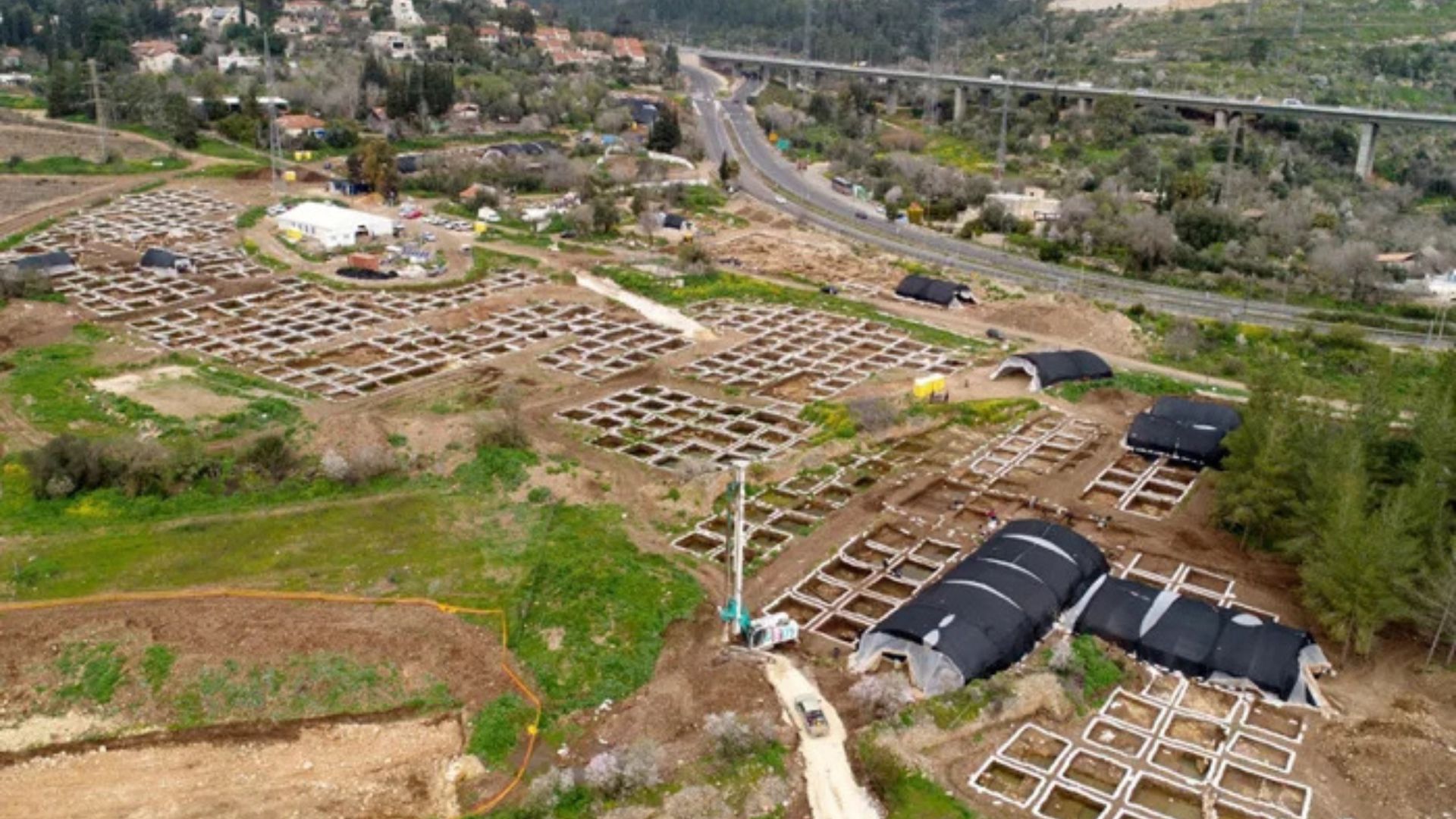
Before opening a new highway near Jerusalem, archaeologists discovered a 9,000-year-old “metropolis”: houses, streets, worship areas, thousands of tools, and a population comparable to that of a small modern city were hidden beneath the road’s layout.




The Enigmatic Göbekli Tepe
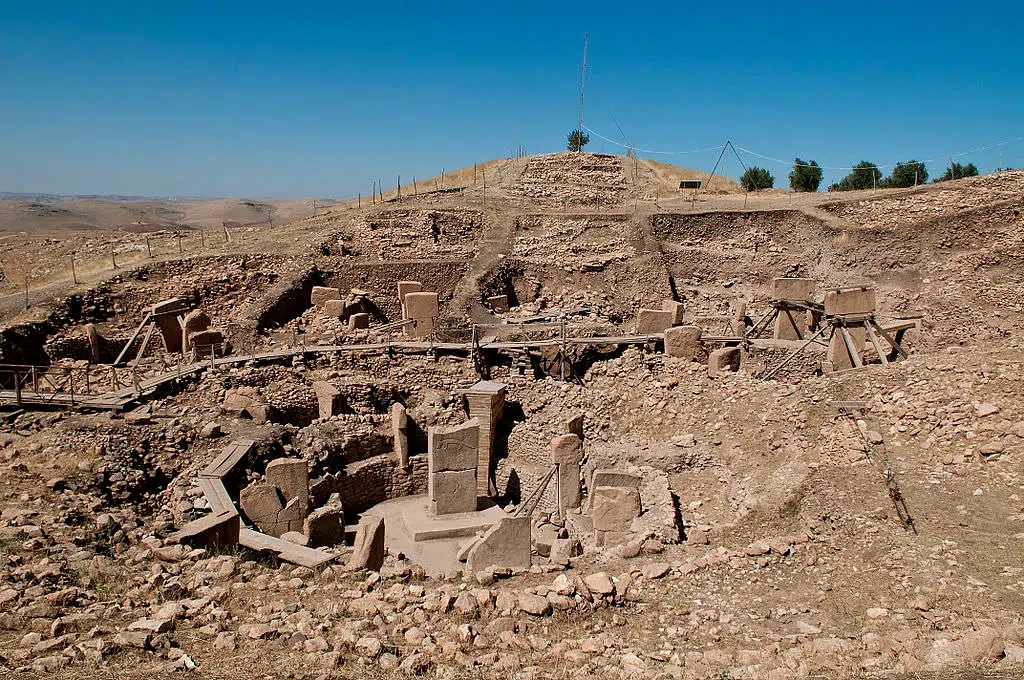
Built around 9600 B.C. during the Pre-Pottery Neolithic period, Göbekli Tepe was erected by groups of hunter-gatherers.
Even without evidence of agriculture or advanced metallurgy, these societies were able to accomplish a monumental work that requires extremely sophisticated engineering skills and social organization.
The circular stone formations are composed of pillars that reach up to 16 feet in height and can weigh up to 20 tons. Many of these pillars are adorned with carvings of animals, humanoid figures, and abstract symbols, suggesting a symbolic or religious complexity.
Until recently, the exact function of the Göbekli Tepe archaeological site was a mystery. However, new research led by the University of Edinburgh suggests that the site may have served as a calendar for astronomical observations.
This study proposes that the carvings on the pillars may have been used to track the sun, the moon, and the constellations, helping to monitor seasonal changes.
Decoding the Sculptures and the Solar Calendar
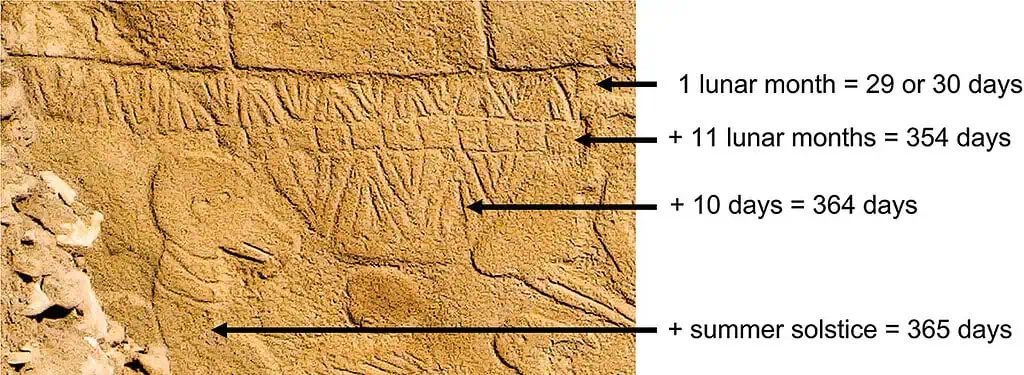
The analysis of the symbols carved into the stones of Göbekli Tepe reveals a possible relationship with astronomy. In particular, V-shaped symbols carved on the pillars seem to represent days.
Researchers discovered that one of the pillars contains a solar calendar of 365 days, composed of 12 lunar months and 11 additional days, a primitive form of a lunisolar calendar.
This calendar would allow the inhabitants of Göbekli Tepe to track time accurately, marking seasonal events such as the summer solstice.
One of the most intriguing symbols is a V carved around the neck of a figure resembling a bird, which, according to researchers, would represent the constellation associated with the summer solstice.
This discovery suggests that the builders of Göbekli Tepe possessed advanced knowledge of the movement of celestial bodies, far beyond what was thought possible for Neolithic societies.
Additionally, other nearby statues display similar markings, possibly representing deities or important figures linked to astronomical rituals.
These sculptures and their connection to the sky suggest that Göbekli Tepe may house the oldest known lunisolar calendar in humanity, predating all previous examples by thousands of years.
The Impact of a Comet and the Transformation of Civilization
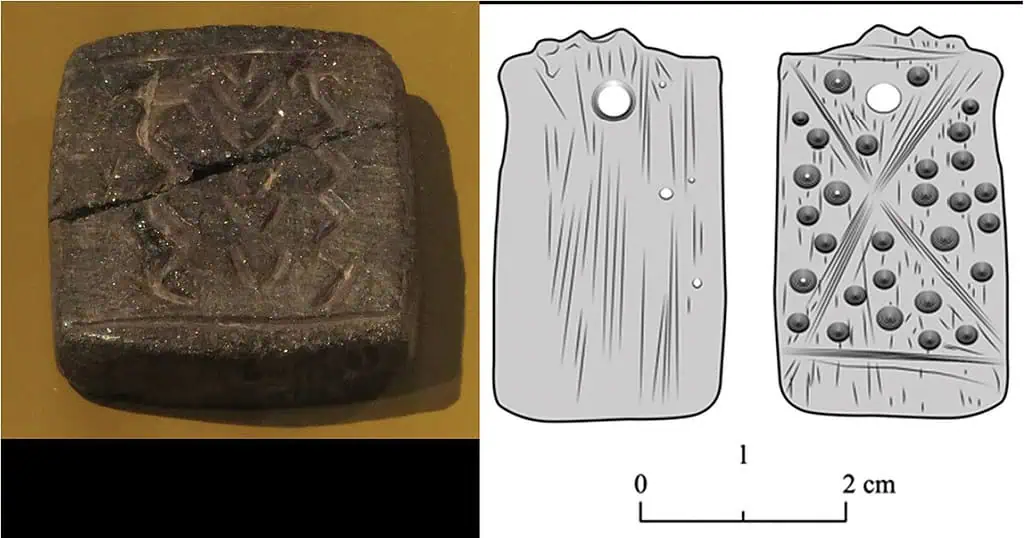
A particularly intriguing aspect of the research is the theory that Göbekli Tepe may have been built as a memorial to a comet impact that occurred about 13,000 years ago, around 10,850 B.C.
Evidence of this impact, such as high levels of iridium and platinum, as well as nanodiamonds and microcharcoal found in sediment layers, indicate that a catastrophic event caused widespread fires and severe climate changes.
The impact of this comet would have triggered a mini ice age known as the Younger Dryas, which lasted over 1,200 years. This extreme cooling period resulted in the extinction of several large animal species and forced early human societies to adapt to drastic environmental conditions. Researchers believe that this event may have been the catalyst for the development of agriculture and the emergence of new forms of social organization, eventually leading to the birth of civilization in the Fertile Crescent.
Göbekli Tepe, with its sculptures and symbols, may represent an attempt by the people of that time to record the impact of this astronomical event.
The connection between the sculptures and the constellations associated with comets and meteors suggests that the inhabitants were using precession — the wobble of Earth’s axis that affects the movements of the constellations — to record the passage of time, a knowledge that would only be formally documented thousands of years later by Greek astronomers.
The Legacy of the Göbekli Tepe Archaeological Site
Findings at Göbekli Tepe suggest that this ancient civilization had an advanced understanding of astronomy and the need to record astronomical events.
The carved stone calendar demonstrates the importance of lunar and solar cycles for agricultural planning and religious rituals, essential for the survival and social development of early Neolithic communities.
In addition to Göbekli Tepe, another nearby site, Karahan Tepe, features structures and sculptures that follow the same calendar system, suggesting that astronomical knowledge was shared among different Neolithic communities.
This continuity of knowledge indicates that these ancient people had a network of cultural and scientific exchanges, allowing advancements in astronomical observation and the development of calendars.





Eram os deuses astronautas?