Portuguese
  Spanish


The discovery of ancient tram tracks in São Paulo rekindled the memory of a capital once marked by electric rail transport, before avenues, overpasses, and cars dominated the urban landscape.
When the ground was opened under the Minhocão, it wasn’t just another urban project in the center of São Paulo. From the midst of the concrete, tram tracks emerged that had been hidden for decades, as if a part of the old city had been buried waiting for the moment to resurface.
The find occurred on Rua Amaral Gurgel, under the Elevado Presidente João Goulart, one of the most well-known symbols of São Paulo taken over by cars, viaducts, and avenues. But what appeared there tells another story: that of a capital that once moved on tracks, before burying much of its own urban memory.
The concrete opened and the tracks appeared
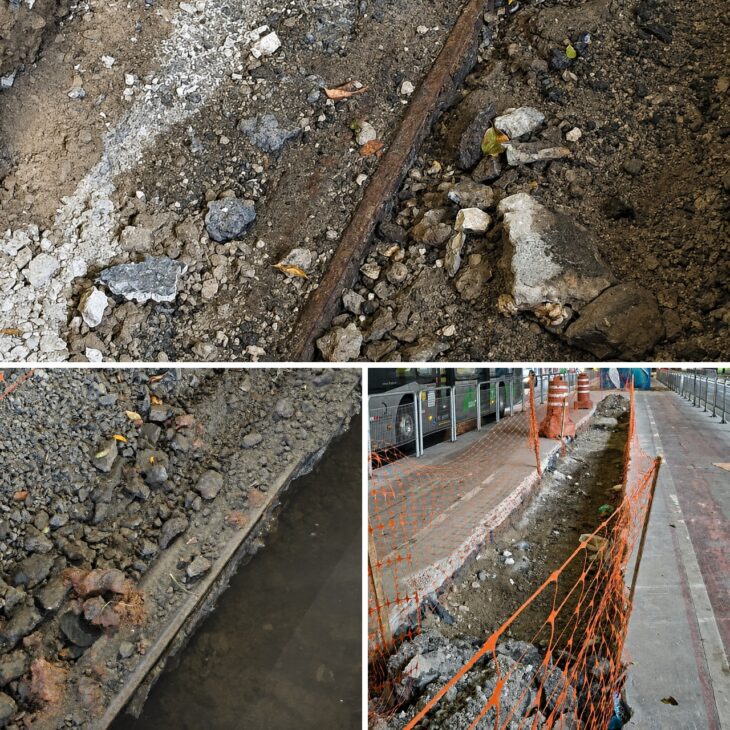
The tracks were noticed on January 15, 2026, by researcher Matheus Lima, 32, while passing through the Praça Marechal Deodoro area. The scene caught attention because the objects were amidst the excavations of a project that did not aim to reveal the past.
-
Giant 3,600-ton Crane Breaks Two World Records by Installing World’s Largest Single-Piece Forged and Welded Hydrogenation Reactor, Weighing 3,037 Tons, in Chinese Petrochemical Plant in Just Six Days

-
$80 Million Bridge in Brazil Cuts Travel Time from 30 Minutes to 1 Minute, but Audit Reveals Major Flaws
-
Man Builds Stone Bed with Granite Rocks and Hand-Sawn Cedar Beams, Home Extension Garners Over 437,000 Views on Bonus Bolts Channel

-
Brazilian Researcher Develops Color-Changing Roof Tile to Reduce Air Conditioning Use by Up to 15%




The intervention was part of the requalification of Avenida Amaral Gurgel, with the installation of rain gardens, flower boxes, climbing plants on the elevated pillars, maintenance of the bike lane, and space for bicycle rental. The project covered four blocks between Cunha Horta and Jaguaribe streets, with an initial forecast of 30 days.
But instead of just earth, stone, and concrete, marks of a São Paulo that once operated differently emerged. Beneath an overpass built to give way to automobiles were the remains of an old transport system that carried thousands of people through the city.
The old Light returned to the scene beneath the overpass
The technical confirmation came later: the findings were remnants of the old electric tram network of Light, implemented from 1900. The information turns the case into something more than just a simple curiosity of construction.
The suspicion is that the tracks may have belonged to the line that connected the center to Lapa, deactivated in the 1960s. This point, however, should be treated with care, as it appears as a probable possibility, not as a definitive identification.
Even so, the historical impact is enormous. São Paulo’s capital had animal-drawn trams since 1872 and entered the electric era on May 7, 1900. In the 1930s, the network reached 160 km of tracks, an impressive number for a city that was rapidly growing and relied on trams as one of the main means of transportation.
The federal agency requested the interruption of the work
The case gained administrative weight when Iphan requested, on January 18, 2026, the immediate halt of the work and the hiring of an archaeologist to monitor the situation. Details about the intervention were also requested, such as start date, objective, engineering project, expected depth, and schedule.
On February 13, 2026, the confirmation of the tracks as part of the old tram network reinforced the sensitive nature of the finding. The work ended up being reported as completed, while the process remained in the technical analysis phase.
This type of discovery changes the way an urban excavation needs to be treated. When historical traces appear underground, the discussion shifts from being solely about construction to involving archaeological heritage, preservation, and public memory.
The city of trams was buried under the city of cars
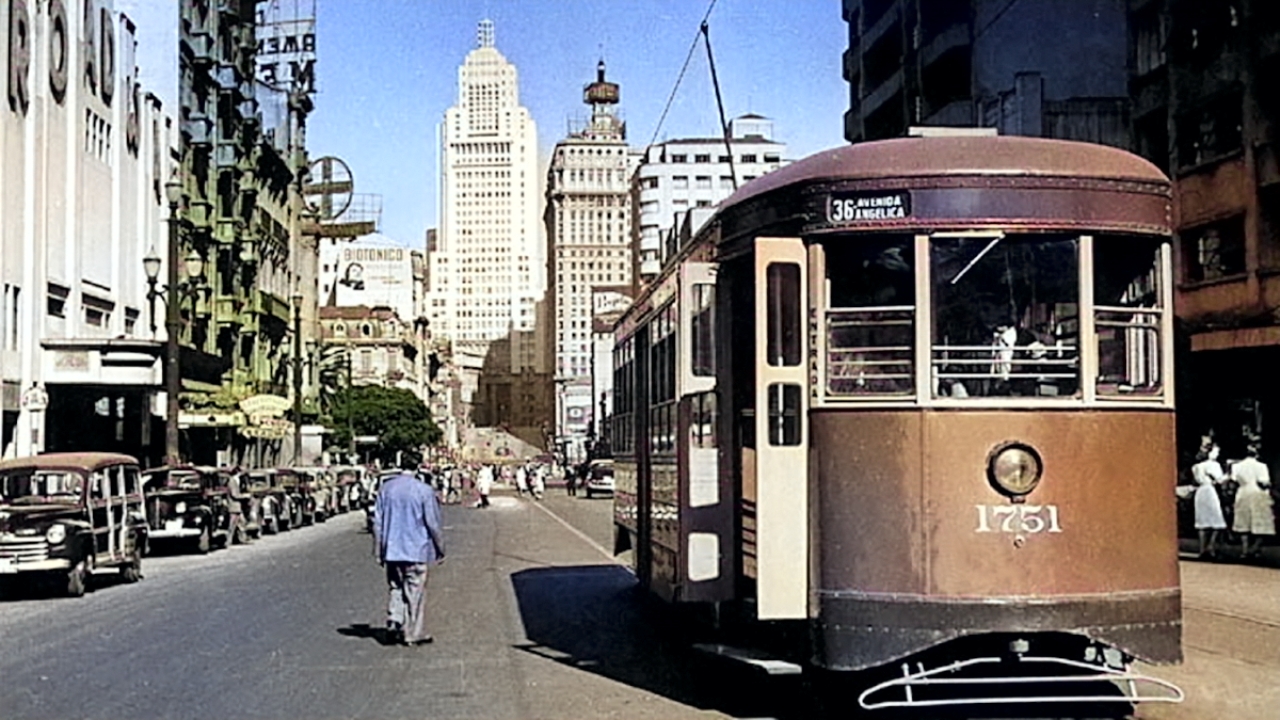
The strongest point of the discovery lies in the contrast. The Minhocão was inaugurated in 1971, a few years after the end of São Paulo’s trams. The last tram trip in São Paulo occurred on March 27, 1968, on the line that connected Praça da Sé to Santo Amaro.
In other words, in a short period, the city left behind a rail-based public transport and erected an overpass aimed at automobile flow. Now, decades later, the work under the viaduct revealed exactly what the new urban logic had covered.
It’s as if the subsoil of Amaral Gurgel reminds us that São Paulo once had another possible future. Before the massive traffic jams, before the city was cut by avenues, there were trams crossing neighborhoods, connecting regions, and being part of the routine of workers, merchants, and residents.
Why This Discovery Matters Now
The tram tracks found under the Minhocão are not just old pieces of metal. They are physical evidence that the city holds layers of history beneath the asphalt, often invisible until construction work opens the ground.
This type of find also reignites an uncomfortable question: how many other parts of São Paulo’s memory remain buried under sidewalks, avenues, squares, and viaducts?
In the case of Amaral Gurgel, the surprise came right under one of the capital’s most controversial symbols. The Minhocão, known for dividing opinions on urbanism, mobility, and quality of life, ended up revealing a powerful irony: beneath the structure that represents the city of cars, the tracks of the city of trams still resisted.
And that is why the episode draws so much attention. It’s not just a discovery in the center. It’s about a forgotten São Paulo that reappeared in the middle of the construction, reminding us that the city’s urban future might need to look more carefully at what was buried in the past.