Portuguese
  Spanish


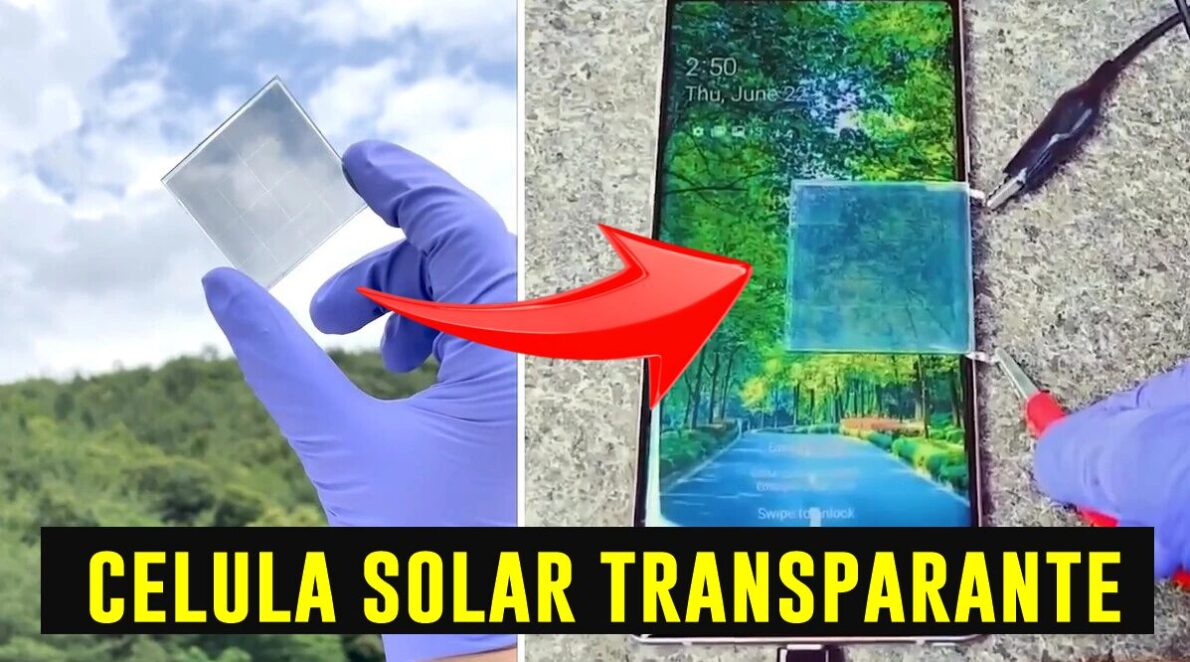

A Team of Researchers Successfully Developed a Silicon Solar Cell Similar to Glass Capable of Charging Smartphones Through Their Screens
Innovation in the field of solar energy through solar cells is rapidly evolving, and one of the most promising developments is the creation of transparent solar cells. These cells offer a unique opportunity to integrate photovoltaic electricity production into a variety of surfaces, such as smartphones, for example.
Recently, a team of researchers from the School of Energy and Chemical Engineering at the Ulsan National Institute of Science and Technology (UNIST), in South Korea, revealed a remarkable breakthrough: a transparent solar cell capable of charging smartphones directly through their screens.
The Revolution of Transparent Solar Cells
Traditional solar panels, which utilize monocrystalline silicon, remain the standard in the photovoltaic industry due to their proven efficiency.
-
Solar Energy Booms in Brazil: Over $60 Billion Invested, 68.8 GW Capacity, 2 Million Jobs Created, Now Second in National Power Grid

-
Giant Batteries Take Center Stage in Chile Auction as Company Offers 960 GWh of Solar Energy for Nighttime Use, Aiming to Stabilize Solar Power Supply
-
World’s Largest Engie Solar Plant in Brazil Highlights Billion-Dollar Energy Waste Issue: Company Considers Batteries and Bitcoin Mining to Avoid Wasting Production

-
Over 60 Tractors Take to the Streets in Lopera as Solar Parks Compete with Olive Groves, Affecting 13,000 to 100,000 Trees According to Conflicting Reports




However, research in recent years has explored new technologies and materials to further enhance solar energy utilization. Among these technologies, transparent solar cells are emerging as a revolutionary option.
They promise to expand the use of solar energy beyond rooftops and terraces, allowing surfaces such as windows and mobile device screens to also generate electricity.
The transparent solar cell developed by the UNIST team is a significant advancement in this field. Published in the scientific journal Proceedings of the National Academy of Sciences (PNAS), this innovation employs a new approach called all-back-contact (ABC) technology.
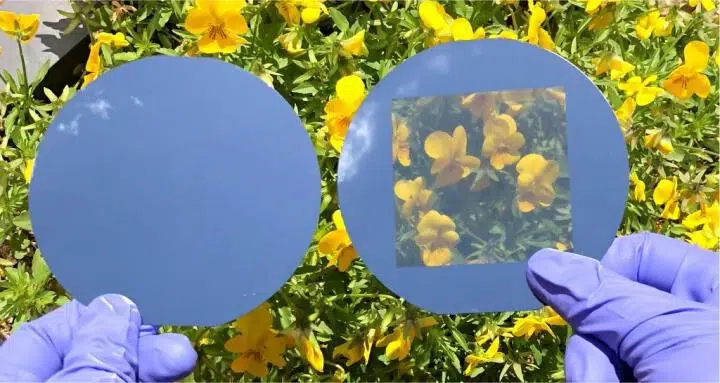
In this technique, all components of the cell are installed on the back, eliminating the need for opaque metal wires that typically hinder transparency. As a result, the cell becomes virtually indistinguishable from a regular sheet of glass, allowing its application in a wide range of products and surfaces.
Excellence in Efficiency and Design
The tests conducted by UNIST scientists with the new transparent photovoltaic module, which measures 16 cm², indicated an energy conversion efficiency of approximately 15.8%. Furthermore, the transmittance – the ability of light to pass through the material – was 20%, a significant value for a transparent material.
This combination of high efficiency and excellent transmittance positions this solar cell as a promising candidate for various practical applications.
Most impressively, the researchers were able to use this module to charge a smartphone’s battery. This demonstrates that the technology is viable for integration into mobile device screens, turning them into energy sources.
Imagine a future where your cellphone automatically recharges while you use it outdoors, simply harnessing ambient light!
Applications in Diverse Sectors
The possibilities offered by transparent solar cells are vast. In addition to smartphone screens, UNIST researchers suggest that this technology can be applied in several other areas.
For example, transparent silicon cells could replace glass in vehicles, creating cars that generate solar electricity while parked or in motion.
Likewise, they could be integrated into building windows, allowing large skyscrapers to become sources of sustainable energy without compromising architectural design.
Another potential application is in small household appliances, such as clocks and home automation devices, where transparent screens capable of energy generation could eliminate the need for batteries or constant charging.
Professor Kangmin Lee, one of the research leaders, emphasized that this innovation could have a significant impact on sectors such as automotive, construction, and consumer electronics.
The Path to Commercialization
Although still in the research phase, this transparent solar cell technology has already opened doors for its future commercialization.
According to Professor Seo, also involved in the project, his team is committed to continuing the development of modularization of these cells, making them more accessible and ready for large-scale use.
The expectation is that, in the coming years, these transparent solar cells will become an essential part of the energy industry, contributing to green energy generation across various applications.
In summary, the transparent solar cell developed by UNIST represents a significant advancement in the field of photovoltaic energy.
With its ability to charge mobile devices and potential for application in various sectors, this innovation could transform the way we interact with solar energy, making it more accessible and integrated into our daily lives.