Portuguese
  Spanish


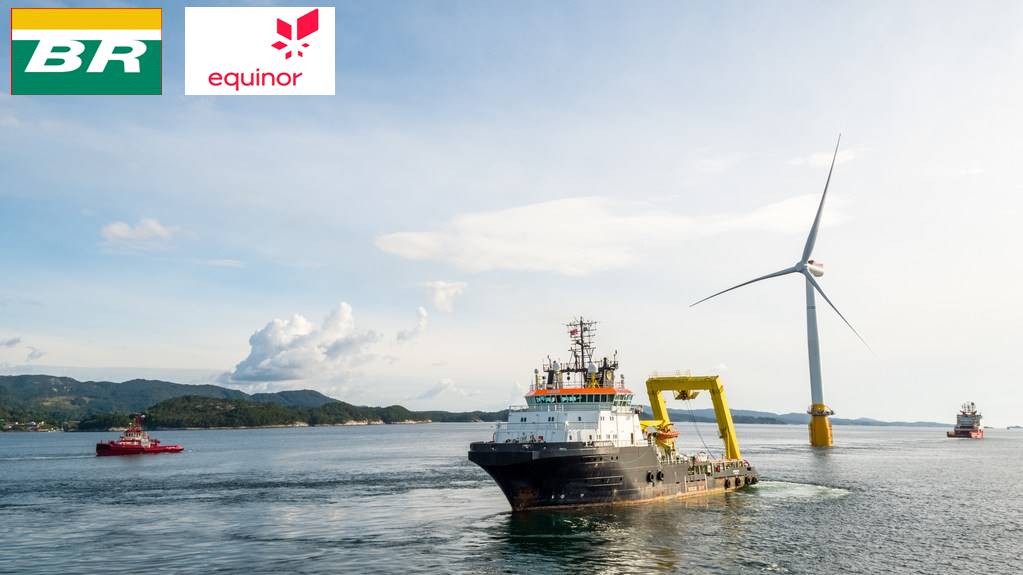

The Companies Will Work Together Using Their Experiences and Knowledge to Identify the Feasibility of Potential Projects in the Next Two Years
Petrobras and the Norwegian company Equinor signed a Memorandum of Understanding (MoU) on Wednesday (26) to expand their strategic partnership. The goal is to promote the development of initiatives focused on renewable energy in line with the business model of both companies. The agreement specifies that the companies will conduct studies aimed at developing a potential offshore wind project in Brazil.
“We are happy to sign another MoU with Petrobras, further strengthening our strategic partnership. Brazil has great potential in renewable energy. We want to understand how our expertise can contribute to offshore wind energy generation in the country, as we already do in Europe,” said Anders Opedal, president of Equinor in Brazil.
Brazil, due to its good wind conditions, is a country with significant potential for offshore wind energy generation.
-
Brazil to Issue “Panda Bonds” in China, Aiming to Raise Up to 5 Billion Yuan at Lower Interest Rates Than Dollar Debt
-
Brazil to Issue “Panda Bonds” in China, Aiming to Raise Up to 5 Billion Yuan at Lower Interest Rates Than Dollar Debt
-
Over 2,000 Tons of Discarded Fishing Nets Since 2020 Repurposed into Durable Caps, Fins, and Parts

-
Seals and Sea Lions Lose Habitat and Food as Climate Change Advances, Impacting Ice, Prey, and Coastal Communities


Equinor is one of the leading global companies in offshore wind energy generation, operating the world’s first commercial offshore wind farm using floating turbines: Hywind Scotland, located off the coast of the United Kingdom. In the same region, Equinor operates two other large-scale offshore wind farms, both with fixed turbines on the seabed (Sheringham Shoal and Dudgeon). The three facilities provide renewable energy to over 650,000 British households. Other large-scale offshore wind energy projects are also being developed in other regions of the United Kingdom, Germany, Poland, and the United States.
“We leverage our extensive offshore experience and combine oil and gas technology with existing technologies in the wind field, so that offshore wind energy generation becomes possible. Engineers accustomed to working with oil and gas are now using their knowledge to develop offshore wind farms,” adds Opedal. Equinor expects that a significant portion of global electricity will be supplied by onshore and offshore wind farms by 2050.
Equinor’s plans with Petrobras are to develop a profitable business model for renewable energy generation, starting with offshore wind and then increasingly moving to other sources, such as solar. The company believes that energy should not only be safe and sustainable but also competitive, and plans to allocate 15% to 20% of its investments to renewable energy projects by 2030.
In Brazil, Equinor holds a 43.75% stake in Apodi, a solar project under construction in Quixeré, Ceará, operated by Scatec Solar. This is the first investment made by Equinor in solar energy worldwide. With 162MW, Apodi will supply electricity to 160,000 homes by the end of this year.
Equinor and Petrobras also have a strategic partnership in the Roncador field aimed at increasing oil recovery factors. The companies share technology, skills, and expertise to maximize the value of the field and extend its productive life.