






 Portuguese
  Spanish
  4 min of reading
  0 comments


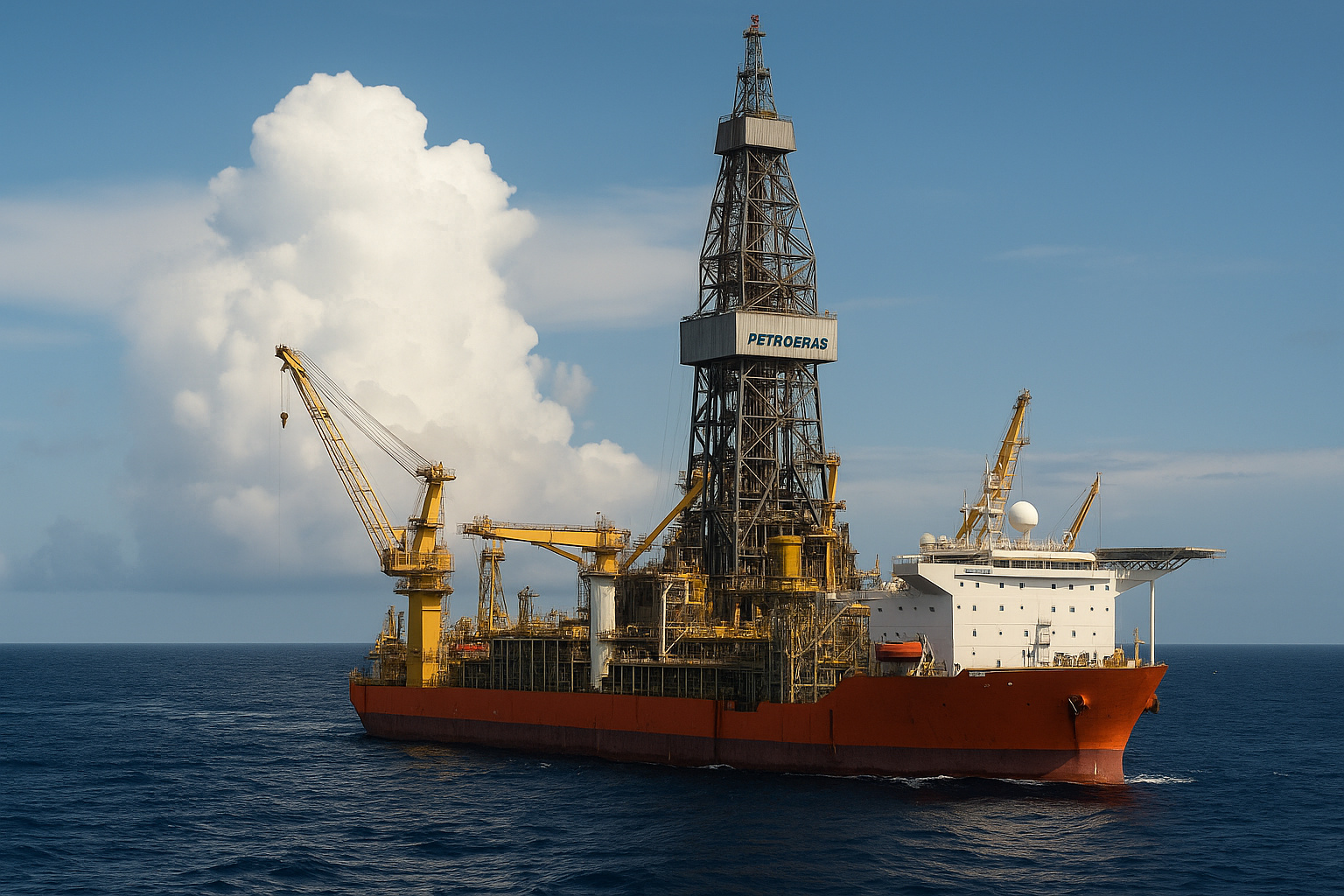
Decision Must Be Made Before Climate Conference in November
The Ibama is analyzing whether to release the Petrobras to begin exploratory drilling in the Equatorial Margin, an area that extends between Amapá and Rio Grande do Norte.
The decision is expected in October 2025, a few weeks before the COP-30, the United Nations climate conference that will take place in November in Belém (PA).
The issue divides the government, the energy sector, and environmentalists, who view the case as a symbol of the conflict between economic growth and environmental preservation.
Political Pressure Increases on the Federal Government
Since August 2025, Petrobras has conducted the Pre-Operational Assessment (APO), a crucial step in the environmental licensing process.
On September 24, Ibama approved the test but imposed additional conditions to correct technical flaws and improve safety protocols.
A few days later, President Luiz Inácio Lula da Silva urged Minister Marina Silva to expedite the issuance of the license.
The goal would be to announce the progress of the project before COP-30, strengthening the government’s image on an issue with economic and environmental impact.
Meanwhile, Northeast lawmakers are reinforcing the lobby for the release, claiming that exploration could generate jobs and boost local economies.
On the other hand, environmental organizations and Ibama technicians advocate for more caution, warning of risks to marine biodiversity and Amazons reefs.
These areas are considered high-sensitivity ecosystems with great scientific and ecological importance for the Amazon region.
Block FZA-M-59 and the Environmental Challenge
The FZA-M-59 block is located about 170 kilometers off the coast of Amapá and is the main focus of Petrobras operations.
The state-owned company sees the Equatorial Margin as a new strategic frontier for oil production, essential for expanding reserves and reducing dependence on mature fields.
However, the site raises environmental concerns among scientists and regulatory bodies.
In May 2023, Ibama denied Petrobras’ first license request, citing flaws in the contingency plan and lack of data on marine fauna.
Since then, the company has revised the project and included safety measures and environmental mitigation actions.
Still, experts warn that a potential oil spill could affect sensitive areas like the Cabo Orange National Park.
The risk underscores the need for effective emergency plans and continuous monitoring during drilling operations.
-
Oil production grows in Rio, but reserve replacement raises a warning sign

-
Petrobras is expected to complete the drilling of the Morpho well in the Foz do Amazonas in August 2026, the first well in the Equatorial Margin, an oil frontier that the ANP estimates at more than 30 billion barrels and could redraw the map of Brazil.

-
Oil returns to the center of concerns with tension between the US and Iran

-
IEA reduces forecast for global oil demand in 2026 after impacts of the Middle East crisis



Timeline and Next Steps Until COP-30
In August 2025, Petrobras conducted the mandatory simulation, which tests emergency response capabilities for maritime emergencies.
On September 24, Ibama validated the procedure but recommended additional technical adjustments before final approval.
Shortly thereafter, on October 8, the Federal Public Ministry (MPF) in Amapá issued a recommendation against immediate release.
The MPF requested a new round of tests to ensure the environmental safety of the operation.
Despite the contestation, sources close to Petrobras state that the company intends to obtain the license before COP-30, scheduled for November 2025 in Belém.
If the authorization is granted, the company may begin drilling the first exploratory well in the FZA-M-59 block.
This progress will reignite the debate between energy security and environmental responsibility, central themes of this year’s climate conference.
Dispute Between Ministries and Ibama’s Response
Within the federal government, the Ministries of Mines and Energy and Environment maintain divergent positions on the pace of exploration.
Minister Alexandre Silveira advocates for expansion, arguing that Brazil needs to increase energy self-sufficiency and leverage the potential of the Equatorial Margin.
On the other hand, Minister Marina Silva argues that environmental licenses cannot be politicized and must follow a technical and transparent process.
Ibama states that the final decision will depend on the submission of supplemental reports by Petrobras, expected in October 2025.
The agency promises to evaluate all documents technically and scientifically, ensuring environmental compliance before any release.
Meanwhile, Petrobras continues dialogue with the government and Ibama to adjust reports and meet requirements.
Balance Between Development and Preservation
The progress of the project could strengthen Petrobras in the international landscape and boost the national economy in the coming years.
However, it also increases the pressure on Brazil at a time when the country seeks to establish itself as a leader in global sustainability.
The federal government ensures that the process will follow strict technical criteria and respect Brazilian environmental laws.
For their part, environmentalists demand more solid guarantees for protection of the Blue Amazon and constant monitoring of operations.
Thus, the Equatorial Margin becomes the epicenter of a dispute that symbolizes the contemporary dilemma: how to grow without destroying the environment.








-

2 people reacted to this.