





 Portuguese
  English
  Spanish
  3 min of reading
  0 comments


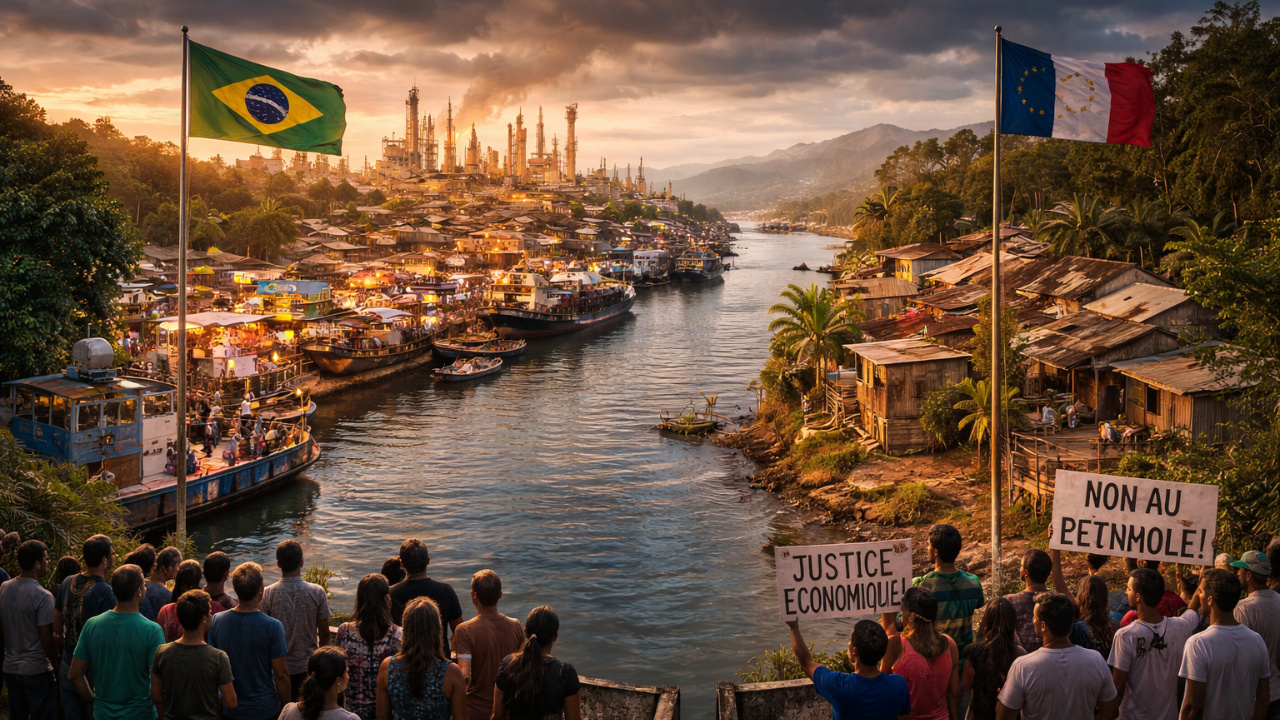
Oil Exploration in Brazil Transforms Oiapoque, While Cities in French Guiana Face Stagnation. Contrast Fuels Political Debate in Paris and Divides Opinions.
The Brazilian oil has become a source of comparison, discomfort, and political debate at the border between Brazil and French Guiana.
Separated by just 15 minutes by canoe, the cities of Oiapoque, in Amapá, and Saint Georges de l’Oyapock live increasingly distinct realities since Petrobras began oil exploration in deep waters.
The contrast is visible to the naked eye. While Oiapoque is experiencing rapid growth, Saint Georges remains stagnant. For many residents on the French side, the difference has become a symbol of missed opportunities and questionable political decisions.
-
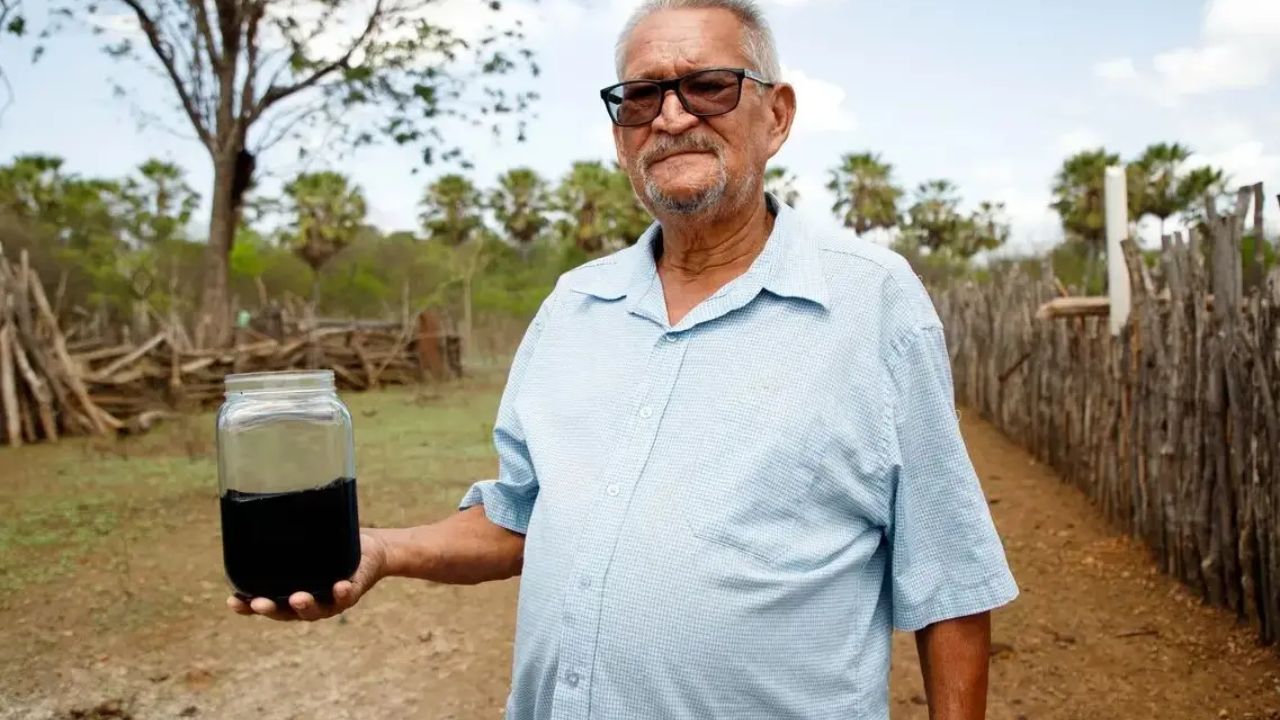
Farmer drills well in Ceará in search of water, accidentally finds crude oil and sees million-dollar discovery hindered by a rule that completely changes the future of the site.

-
Family finds oil on a 49-hectare site in Ceará, but exploration has no timeline or guarantee of happening

-
When drilling an artesian well, a farmer wanted water but found oil: ANP confirms that the dark liquid found by a farmer on a site in Ceará is crude oil.

-
European stocks rise with oil drop after Trump’s remarks on Iran as investors monitor global tension



“There Is Nothing Here”: Testimony Unveils Inequality
Steve Norino, a farmer from Saint Georges, summarized the situation in few words when interviewed by AFP. “In Oiapoque there is everything, in Saint Georges there is nothing.” The phrase circulated among authorities and came to illustrate the local sentiment of frustration.
Although Petrobras is still in the oil exploration phase along the Brazilian coast, indirect effects are already being felt. On the French side, the economy revolves around a small hotel and two markets, serving a population of about 4,000 inhabitants.

On the other side of the Oiapoque River, about 30,000 people live in a city that has become a regional hub for commerce and services.
Every weekend, residents of French Guiana cross the border to buy cheaper products, stroll, or use services in Oiapoque.
Saint Georges, in turn, has become a parking point for those who prefer to leave their cars on French territory before crossing into Brazil.
This constant flow reinforces the perception that oil is driving Brazilian development, while the French side observes from afar. The comparison has fueled an increasingly intense debate about the region’s economic future.
Oil Enters the Political Agenda in Paris
Local dissatisfaction has reached the center of French power. On Thursday (29), the French Parliament is expected to analyze a bill presented by Guiana deputy Georges Patient.
The text seeks to reauthorize the exploration and production of hydrocarbons in the overseas territories, an activity prohibited since 2017 by the so-called Hulot law.
The current legislation prohibits any hydrocarbon prospecting on French soil or sea. For advocates of the change, the ban prevents French Guiana from leveraging its energy potential and reducing regional inequalities.
Jean Luc Le West, vice president of the Territorial Collectivity of Guiana (CTG), publicly advocated for the resumption of exploration. “We did not carry out industrial gold mining, but we can engage in oil activities,” he stated.

He also suggested the construction of a refinery that could process, according to European standards, oil from neighboring countries.
However, previous attempts did not progress. Total’s license, now TotalEnergies, to explore oil off the coast of French Guiana expired on June 1, 2019, without conclusive results, temporarily ending any prospect of a local industry.
NGOs React and Warn of Environmental Risks
The proposal faces strong resistance from environmental organizations. NGOs such as Friends of the Earth France, Surfrider Foundation Europe, Réseau Action Climat, and Greenpeace classified the project as a “climate contradiction” and an “economic absurdity.”
In a joint statement, the entities warned: “If the economic and social situation of the overseas territories is alarming, particularly in Guiana and Mayotte, presenting the exploitation of fossil fuels as a solution constitutes a misleading and irresponsible promise.”
The clash exposes a growing dilemma. On one side, the example of Brazilian oil and its visible impacts. On the other, the fear of environmental damage and unfulfilled climate commitments.
What do you think of the dissatisfaction expressed by the French Guiana government? Is it justified or could it affect the development of Brazilian oil?





-

1 person reacted to this.