Portuguese
  Spanish


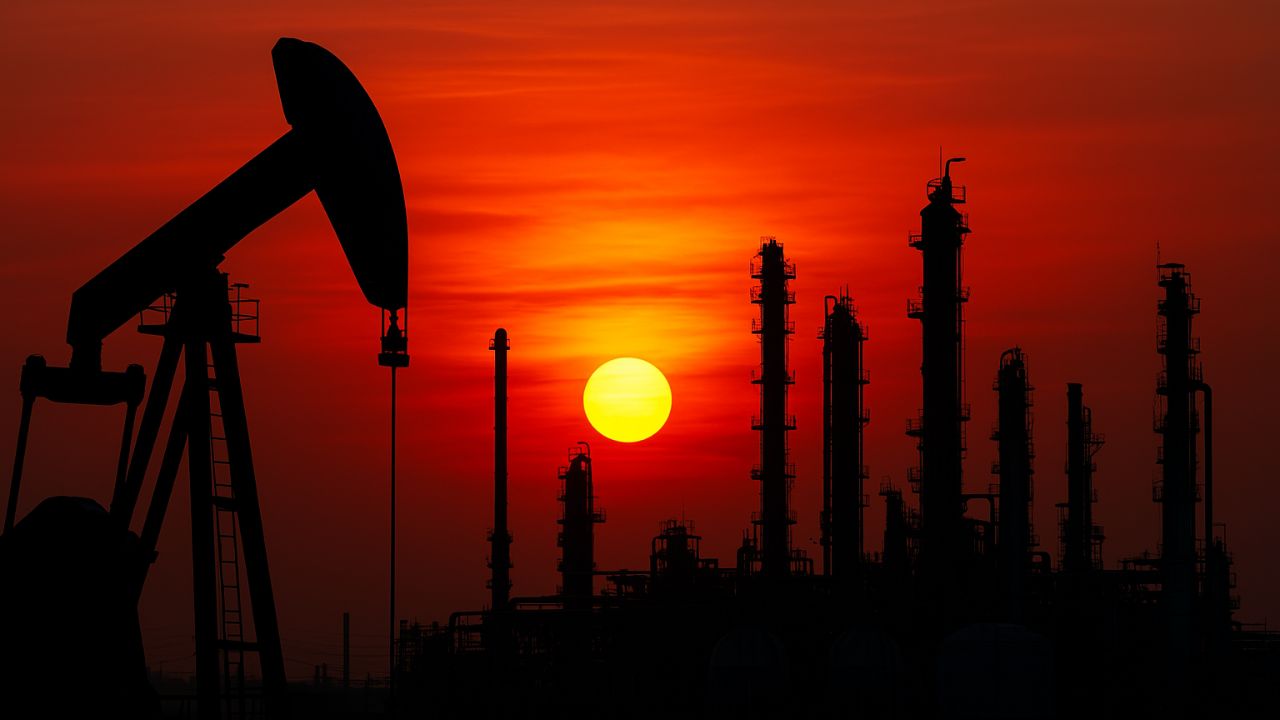

Trade War Between The Two Largest Economies In The World Causes Sharp Drop In Barrel Value And Increases Risk Of International Economic Crisis
Oil prices dropped more than 3% on Monday, reaching their lowest levels since April 2021, amid escalating trade tensions between the United States and China. China’s decision to impose new tariffs on American products intensified fears of a global recession, which directly impacted expectations for oil demand in the international market. The climate of economic instability led major financial institutions to revise their projections and alert to a scenario of more intense slowdown.
Trade Shock Increases Risk Of Global Recession
The crisis intensified after China announced additional tariffs of 34% on U.S. products in response to the U.S. government’s trade protection measures led by Donald Trump. This new chapter in the trade war between the two largest economies in the world raised the level of uncertainty among investors and analysts. For the oil market, the impact is direct: a possible global recession could mean lower energy consumption, further driving down commodity prices.
Financial Market Reacts Cautiously
Institutions such as Goldman Sachs and JPMorgan Chase revised their projections in light of the current scenario. Goldman raised the chance of a recession in the United States to 45% in the next 12 months, while JPMorgan estimates an even higher probability: 60% of economic contraction in the U.S. and globally. Both also lowered their price estimates for oil, which has already been under pressure due to geopolitical volatility.
-
Petrobras Secures $2.2 Billion Contract to Build and Operate Four Support Vessels for Brazil’s Offshore Oil Fields

-
Oil production grows in Rio, but reserve replacement raises a warning sign

-
Petrobras is expected to complete the drilling of the Morpho well in the Foz do Amazonas in August 2026, the first well in the Equatorial Margin, an oil frontier that the ANP estimates at more than 30 billion barrels and could redraw the map of Brazil.

-
Oil returns to the center of concerns with tension between the US and Iran





OPEC+ Observes Market, But Signals Increase In Oil Supply
Even with the drop in prices, OPEC+ plans to increase oil supply in the market. The organization, however, emphasized the importance of complying with current production quotas and requested countries that exceeded their limits to present compensation plans by mid-April. The increase in production, combined with the drop in demand, could further intensify downward pressure on prices.
Declining Oil Trend Concerns Exporters
The drop in oil prices concerns not only markets but also exporting countries that heavily rely on revenue from the commodity. If the barrel continues on a downward trajectory, governments of producing countries may be forced to revise their budgets and fiscal policies, in addition to facing currency devaluation and reduced foreign investments.
Experts warn that the unfolding of the trade conflict between the U.S. and China will be determinant for the future of oil. The combination of economic slowdown and abundant supply outlines a scenario of prolonged lows for commodity prices. Until there is a de-escalation of tensions or recovery in demand, the market is expected to remain pressured and sensitive to any new geopolitical developments.