






 Portuguese
  Spanish
 3 min of reading



PetroRio Received From Repsol Sinopec Waiver Corresponding To A Portion Of 10% Of The Albacora Leste Field
PetroRio (PRIO3) announced on Monday (the 30th) that it received from Repsol Sinopec the waiver of the right of acquisition for a 90% stake in the Albacora Leste field. In addition, the oil company also published the reserve certification for the asset, responsible for more than doubling the company’s volumes.
In April of this year, PetroRio entered into a consortium with Repsol to purchase the Albacora Leste field, owned by Petrobras and located in the Campos Basin. The venture was signed for the amount of US$ 2.2 billion and will allow the oil company, the largest independent oil and gas company in the country, to practically double in size, both in production and in revenue and EBITDA. At the time of the purchase, PetroRio was producing 34 thousand barrels/day, while the acquisition is capable of adding another 27 thousand.
PetroRio Holds 90% Stake In The Field, With The Remaining 10% Owned By Repsol Sinopec
As per the terms of the agreement, PetroRio is the operator of 90% of the business, and Repsol Sinopec Brasil (RSB) represents the remaining 10% stake.
-
Petrobras is expected to complete the drilling of the Morpho well in the Foz do Amazonas in August 2026, the first well in the Equatorial Margin, an oil frontier that the ANP estimates at more than 30 billion barrels and could redraw the map of Brazil.

-
Oil returns to the center of concerns with tension between the US and Iran

-
IEA reduces forecast for global oil demand in 2026 after impacts of the Middle East crisis

-
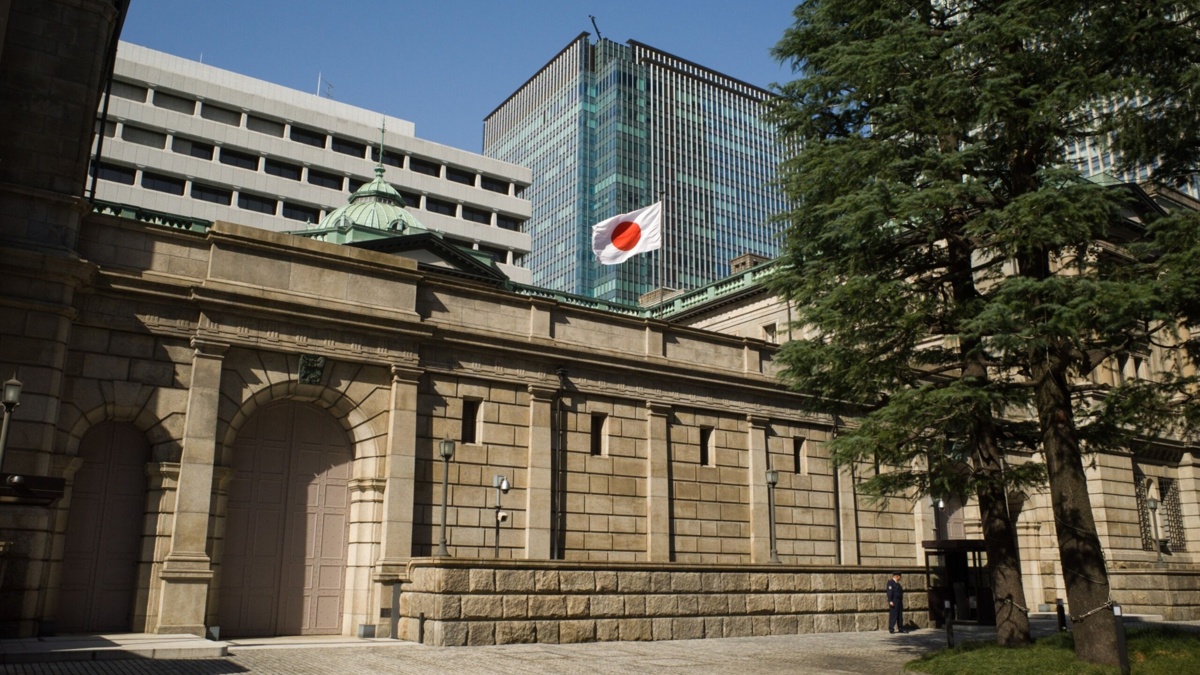
Bank of Japan raises interest rates to 1%, reaching the highest level in over three decades


Regarding the waiver received from Repsol, PetroRio stated that the completion of the transaction still needs to be approved by the Administrative Council for Economic Defense (Cade), for which the request was filed on May 27, and by the regulatory agency ANP.
Moreover, the oil company also disclosed the certification of reserves for the field, prepared by DeGolyer & MacNaughton, with a reference date of October 1st of this year.
PetroRio states that its proven reserves (1P) now reach 431.4 million barrels, including 243.5 MMbbl from the acquisition of 90% of Albacora Leste. The proven and probable reserves (2P), in turn, amount to 643 MMbbl, including 355 MMbbl from Albacora Leste, while the proven, probable, and possible reserves (3P) of the oil company total 906 MMbbl, with 459 MMbbl from Albacora Leste.
About Albacora Leste
Discovered in 1986, the Albacora Leste field spans an area of 511 km². Its production is carried out through the FPSO P-50, with an oil processing capacity of 180 Kbbl/day and 6 MMm³/day of gas.
During the first 18 months of operation at the site, PetroRio will focus on investments of approximately US$ 150 million aimed at FPSO P-50, in order to ensure the highest levels of asset integrity and, thus, achieve safety and operational efficiency standards comparable to other operations.
Additionally, the oil company will also capture synergies and implement its operational methodology, so as to achieve a cost level compatible with the operation of the FPSO P-50, which would be close to US$ 90 million annually.
Subsequently, the redevelopment campaign for the Albacora Leste field will commence, involving the connection or drilling of 17 production wells and 5 injection wells over a period of 5 years. The development will be carried out in two phases:
In the first phase, the connection of 3 already drilled production wells, 8 new production wells, and 1 injection well will be promoted. In the second phase, 6 new production wells and 4 injectors will be included.
Finally, PetroRio should also carry out the early decommissioning (by 2027) of 5 production wells and 1 injector, already included in the amount paid for the field. The oil company anticipates a CAPEX of about US$ 15 million per well. The final abandonment of the field, in turn, is estimated to occur after 2050, at a cost of US$ 800 million.




Be the first to react!