Portuguese
  Spanish


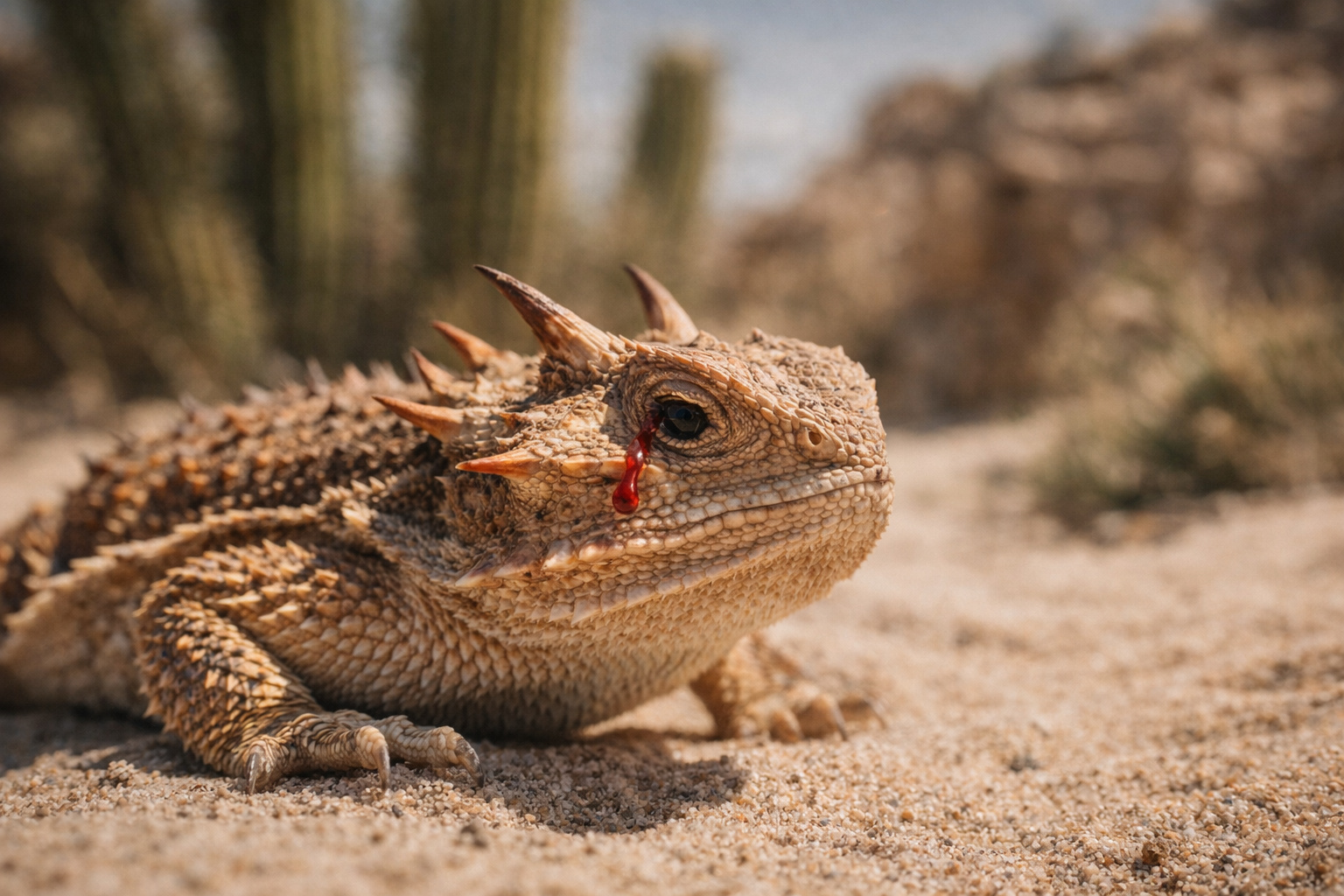


The Phrynosoma Solare, Desert Horned Lizard, Has An Extreme Defense: It Ejects Blood From Its Eyes With Irritating Substances, A Unique Adaptation Among Reptiles.
The Phrynosoma solare does not spit fire, does not possess potent venom, nor does it run long distances to escape predators. Still, it has become one of the most impressive reptiles on the planet for an almost unbelievable reason: it can eject blood from its own eyes as a form of defense. This rare behavior, documented for decades by herpetology, challenges common logic about animal survival and reveals how far evolution can go in extreme environments.
Commonly known as the horned lizard, the Phrynosoma solare inhabits arid regions of the southwestern United States and northern Mexico, where high temperatures, water scarcity, and specialized predators have shaped unique defensive strategies.
Who Is The Phrynosoma Solare And Where Does It Live
The Phrynosoma solare belongs to the family Phrynosomatidae and measures, on average, 7 to 10 centimeters in length, with a flattened body covered by rigid scales and spines. Its appearance resembles a small biological tank, perfectly camouflaged in the sandy and rocky soils of the deserts.
-
Brazil Unveils Innovative Monitoring System to Prevent Abandonment of Public Works, Boosting Efficiency and Reducing Waste in Infrastructure Projects

-
AI Video Generator Automatically Creates Subtitles and Animated Captions

-
São Paulo Unveils Latin America’s Largest Underground Reservoir, Holding 900 Million Liters, in the Greater São Paulo Area

-
Chinese Teen Wins Gold in Germany for Invention Turning Air Moisture into Underground Irrigation in Drought-Stricken Areas





It mainly lives in areas such as the Sonoran Desert and the Chihuahuan Desert, environments characterized by:
- temperatures above 40 °C,
- sparse vegetation,
- highly efficient visual predators, such as birds of prey and canids.
Its diet is highly specialized, based almost exclusively on ants, including species with defensive toxins that few predators tolerate.
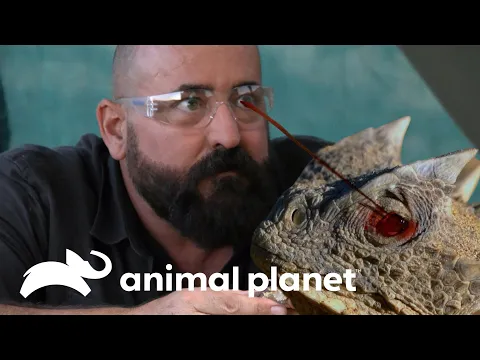

The Strangest Mechanism in Herpetology: Blood From The Eyes
The most famous behavior of the Phrynosoma solare is ocular autohemorrhaging, scientifically called autohaemorrhaging. When the lizard feels cornered and realizes escape is not possible, it activates an extreme physiological mechanism.
The process occurs as follows:
- special muscles around the eyes contract rapidly,
- local blood pressure increases in a controlled manner,
- small vessels in the ocular sinuses rupture,
- jets of blood are projected out of the eyes, reaching up to 1.5 meters away.
This blood is not ordinary: it contains unpleasant and potentially irritating chemical compounds, derived from the diet rich in toxic ants.
Who Does This Defense Work For — And Who Does It Not Work For
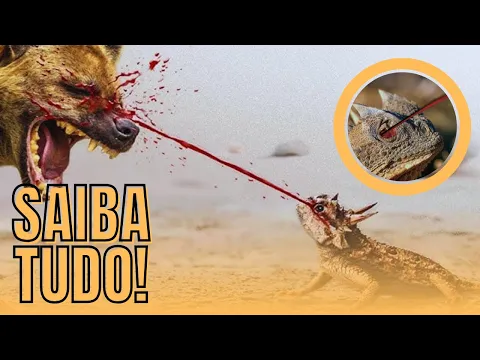
Studies published in journals like Herpetologica show that this defense is especially effective against canids, such as coyotes and foxes. These predators have sensitive smell and taste and often retreat immediately after contact with the blood.
Interestingly, the strategy does not work as well against birds of prey, which rely less on taste. Therefore, the Phrynosoma solare combines several defenses:
- perfect camouflage on the ground,
- prolonged immobility,
- spiny body that is difficult to swallow,
- and blood ejection as a last resort.
In other words, the “bleeding” is a final defense, used only when all other options have failed.

Does The Blood Cause Damage To The Lizard Itself?
Although it seems extreme, the process does not cause permanent damage to the animal. The blood loss is small and controlled, and the vessels regenerate quickly. After the event, the lizard usually enters a resting period, reducing activity until it fully regains physiological balance.
From an evolutionary standpoint, this shows that the energetic cost of the defense is less than the risk of predation, making the mechanism advantageous over millions of years.
An Adaptation Shaped By The Desert
The Phrynosoma solare is a classic example of how hostile environments produce radical biological solutions. In the deserts of North America, where:
- there are no abundant shelters,
- vegetation does not provide constant protection,
- predators can see great distances,
survival requires unconventional defenses.
While other reptiles rely on speed or venom, the horned lizard took a different path: direct chemical repulsion, turning its own blood into a weapon.
Scientific Importance And Conservation Status
The Phrynosoma solare is frequently cited in studies about:
- evolution of extreme defenses,
- ocular physiology in reptiles,
- relationships between diet and chemical defense mechanisms.
Although it is not currently among the most threatened species, it is facing increasing pressure from:
- habitat loss,
- urbanization,
- declines in native ant populations,
- intensive pesticide use.
The decline of ants affects not only feeding but directly compromises the effectiveness of its chemical defense.
One Of The Weirdest Mechanisms Ever Documented In Nature
Few animals in the world have transformed their own body into such an unlikely weapon as the Phrynosoma solare. Ejecting blood from the eyes is not just a curiosity, but a clear reminder that evolution does not follow aesthetic or intuitive boundaries — only the relentless logic of survival.
On a planet where most defenses involve teeth, claws, or speed, the horned lizard proves that sometimes, what seems impossible is exactly what works.