






 Portuguese
  Spanish


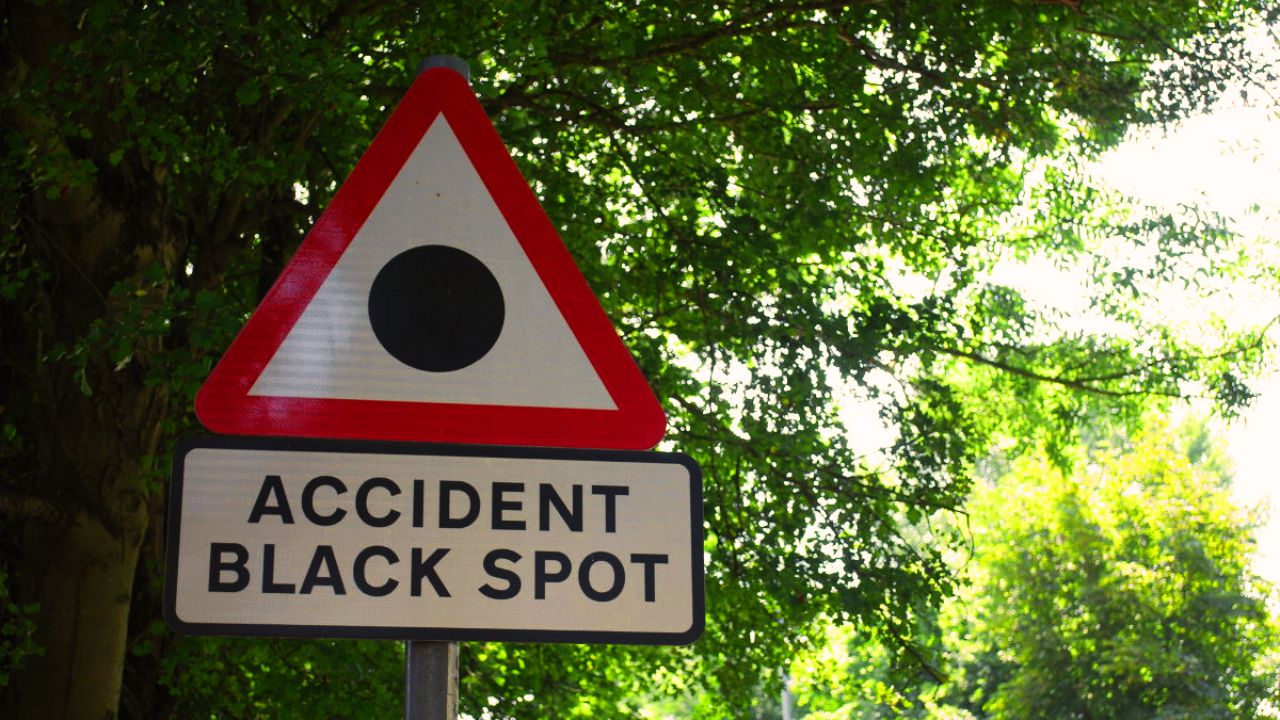


Have You Seen a White Triangular Traffic Sign with a Black Circle in the Center? Know What It Means, Why It Does Not Exist in Brazil, and What Drivers Should Learn from This Alert.
In the United Kingdom and Ireland, drivers on the roads may encounter a triangular traffic sign that is white with only a black dot in the center — a sign that alerts to a black spot of accidents, meaning a road where serious or fatal collisions are frequent.
This strange symbol, which is almost nonexistent in Brazil, gains importance because it does not exist in Brazil, but its warning is universal and relevant for any driver.
The sign is not part of the national signaling system, but it carries a message that every driver should know: be extra cautious.
-
Workers renovating a playground in northern England uncover 176 World War II bombs buried underground; training artifacts still contained explosives.

-
Brazilian Architect Transforms Waste into Sustainable Homes with Solar Power and Rainwater Systems for 40 Years

-
Security Guard Becomes Doctor at Louisiana Hospital Where He Once Worked, Studied Chemistry Between Shifts

-
Woman Rescued from Luxury Complex in Brazil Worked Without Pay for 55 Years, May Be Entitled to Over $300,000




What Is This White Triangular Traffic Sign with a Black Dot in the Center and Where Does It Appear?
This traffic sign carries the original English name “Accident Black Spot.”
It appears in the United Kingdom (especially in England and Scotland) and Ireland.
The proposal is simple: to highlight road areas identified by authorities as high-risk, so that drivers are more aware when passing through.
Why Does This Traffic Sign Not Exist in Brazil?
In Brazil, the agency responsible for vertical signaling is the National Traffic Council (Contran), and the signs follow the Brazilian Manual of Traffic Signaling.
The triangular sign with the black center is not included in this manual or in the national signaling routine.
So, while the idea is valid — to alert to risky areas — the sign itself is not in use in Brazilian territory.
How This Signaling Appeared
The British symbol dates back to 1955 when a national road safety campaign was launched in the United Kingdom that used this sign to indicate critical stretches.
The visual choice — simple, discreet — aimed to cross linguistic barriers and draw attention to the fact: someone has been hurt here.
The sign is therefore not decorative but aimed at alerting and provoking a change in behavior.
Warning Sign
Even though the signaling does not exist in Brazil, the lesson remains: when you enter a marked (or known) high-risk stretch, you must be extra careful.
This means, for example:
- reducing speed;
- avoiding overtaking and risky maneuvers;
- maintaining a safe distance;
- observing road conditions — visibility, maintenance, curves, shoulder.
The usefulness of a traffic sign in this context is precisely to make the driver aware that the location has a history of accidents. Even without the symbol, the concept applies.
In Brazil, the traffic signs used to warn of dangers are from the category of Warning Signs — generally yellow or other standard shapes — indicating dangerous curves, slippery roads, risky intersections, etc.
These signs also serve to anticipate danger and reinforce caution, in a manner equivalent to the foreign sign, although without the use of the specific black spot symbol.
Why Is It Important to Know This Difference?
First, understanding that a certain traffic sign is not Brazilian helps avoid confusion or rumors that circulate as truth.
For example, there have been publications reporting new foreign signs as if they were in effect in Brazil — which is misinformation.
Second, recognizing dangerous stretches is an aspect of road safety that is independent of shape or country: the traffic sign serves as a visible alert, but the behavior, attention, and skills of the driver are universal.
What Should Drivers Practice on Brazilian Roads?
If you drive in Brazil, it is worth applying the concept: when encountering stretches that seem to record incidents frequently — whether due to signaling or road conditions — treat them as if they were black spots.
Even without a specific physical sign, practice:
- slowing down and observing the surroundings;
- keeping lights and tires in order;
- avoiding distractions;
- prioritizing safety over speed. The awareness that a traffic sign exists or not there matters less than taking preventive action.
In summary, this curious traffic sign triangular with a central black dot, used in the United Kingdom and Ireland, reminds us that we do not always need the signage to be identical for the message to get through: be extra careful in risky stretches.
In Brazil, although it is not in use, the concept is valid — and learning about it strengthens everyone’s safety on the road.
With information from the website Xataka.


