Portuguese
  Spanish



Understand Why Oil and Gas Technology Remains Essential for Energy Production, Sustainable Development, and the Future of the Global Energy Matrix.
Without a doubt, oil and gas technology is at the center of one of the world’s most strategic industries.
From the first artisanal wells to complex offshore exploration systems and data analysis with artificial intelligence, technological evolution has made it possible to extract, refine, and distribute oil and gas increasingly efficiently and safely.
But, how did we get here? And why, despite advances in renewable energy, does oil and gas technology remain so essential?
-
Oil Prices Rise as U.S.-Iran Tensions Heighten Concerns Over Global Supply and Energy Market Stability

-
Explosion at QatarEnergy Plant in Ras Laffan Kills 13 and Injures 66; Investigation Rules Out Sabotage

-
Brazil’s Búzios Oil Field Sets Record with 1.2 Million Barrels Per Day, Strengthening Global Leadership in Deepwater Production
-
Petrobras and Equinor Reach Agreement for 50% Stake in Itaimbezinho Block in Brazil’s Pre-Salt Campos Basin


Throughout history, technological development has not only kept pace with the industry but has often driven the expansion of production and the meeting of growing energy demand.
This energy is one of the pillars of economic and social development worldwide.
The Origin of the Industry and the First Technological Advances
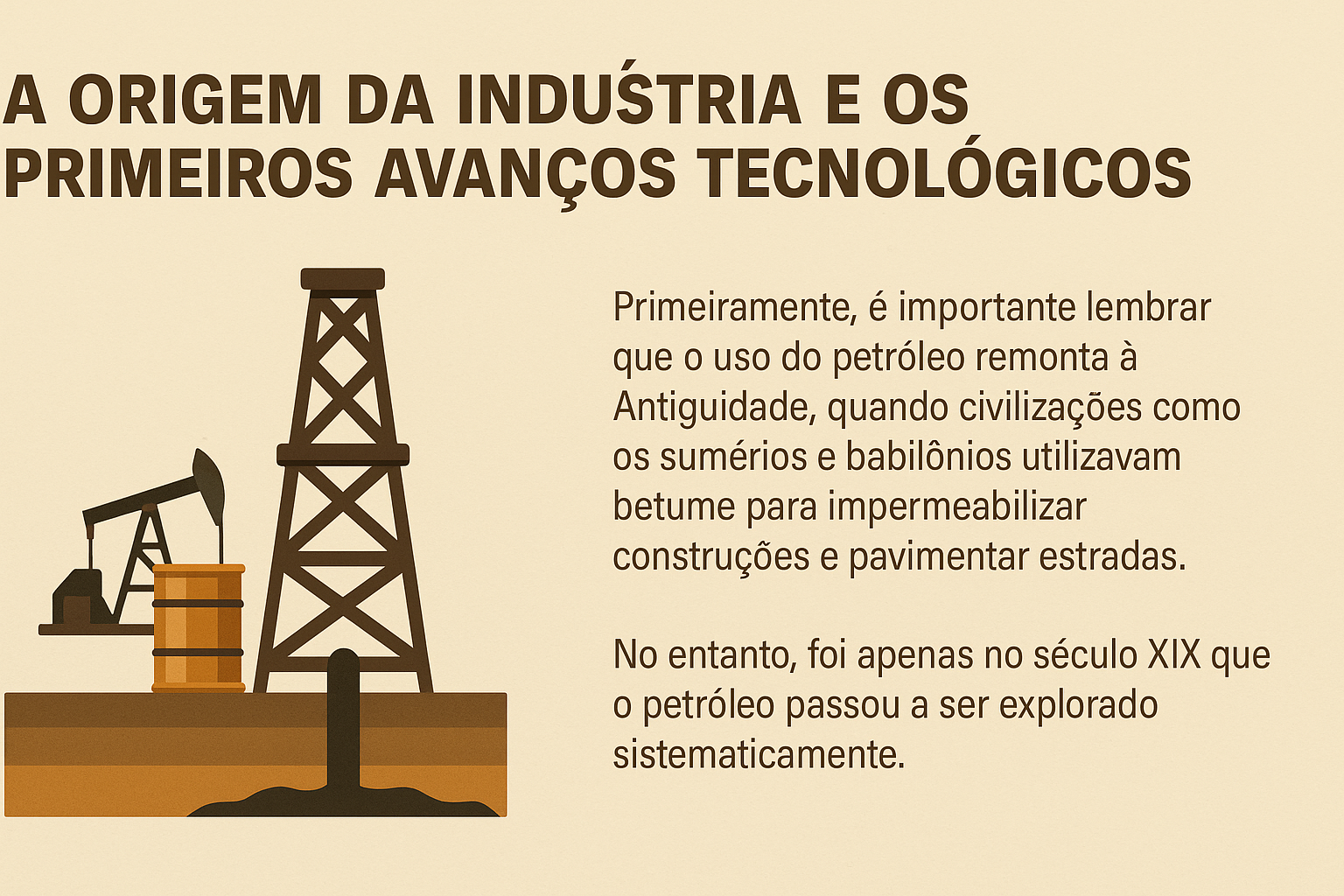
Firstly, it is important to remember that the use of oil dates back to antiquity when civilizations like the Sumerians and Babylonians used bitumen to waterproof buildings and pave roads.
However, it was only in the 19th century that oil began to be systematically explored.
The most well-known milestone was the well drilled by Edwin Drake in 1859 in the United States, regarded as the beginning of the modern oil industry.
According to the U.S. Energy Information Administration (EIA), this event marked the start of commercial oil exploration.
From there, the need for new technologies became evident. The first drilling was done manually using rudimentary tools.
However, over time, engineers created more robust drilling rigs, more efficient pumping systems, and refining methods that transformed crude oil into useful products like kerosene, gasoline, and lubricants.
In the 20th century, especially during and after the World Wars, oil began to be considered a strategic resource.
Thus, governments and companies heavily invested in technological innovation to ensure energy supply and dominance.
The first offshore drilling systems, more modern refineries, and transportation methods like pipelines and tankers emerged.
Moreover, technology not only expanded production capacity but also allowed for the exploration of reserves in previously inaccessible locations, such as the Arctic and deep sea areas.
This expansion occurred due to advancements in engineering, materials, and geological analysis methods.
According to a report by the International Energy Agency (IEA), published in 2023, advanced offshore technology has enabled a significant increase in global production, especially over the past two decades.
Sustainability and Technological Innovation in the Industry
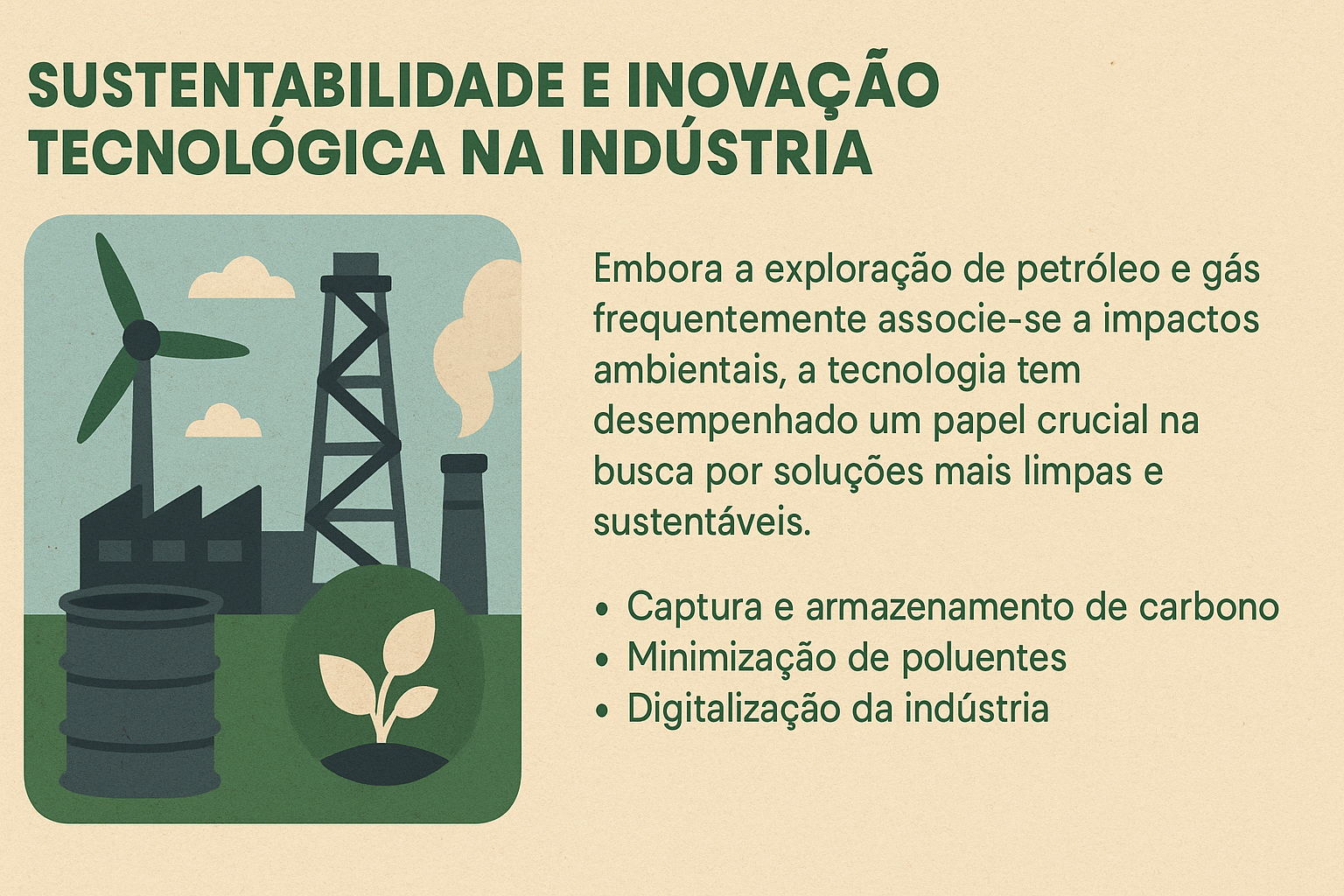
Although oil and gas exploration is often associated with environmental impacts, technology has played a crucial role in the search for cleaner and more sustainable solutions.
Today, companies apply processes such as carbon capture and storage (CCS) to reduce emissions generated by extraction activities.
Additionally, the refineries themselves use more advanced technologies to minimize pollutants and recycle by-products.
The reuse of water used in drilling and the reduction of chemical use are also part of an ongoing effort to decrease environmental damage.
Furthermore, the digitalization of the industry, with the use of big data and artificial intelligence, allows for precise analysis of operational data.
This results in smarter decisions, less waste, and greater control over environmental impacts.
Moreover, the industry invests in technologies for the development of biofuels and in improving processes to reduce energy consumption in its operations.
These initiatives show that oil and gas technology is not static, but is constantly adapting to align with global sustainability challenges.
According to a report by the United Nations Environment Program (UNEP), released in 2022, the adoption of clean technologies by the oil and gas industry is crucial for achieving global emission reduction targets.
The Importance of Oil and Gas Technology in the Current Energy Context
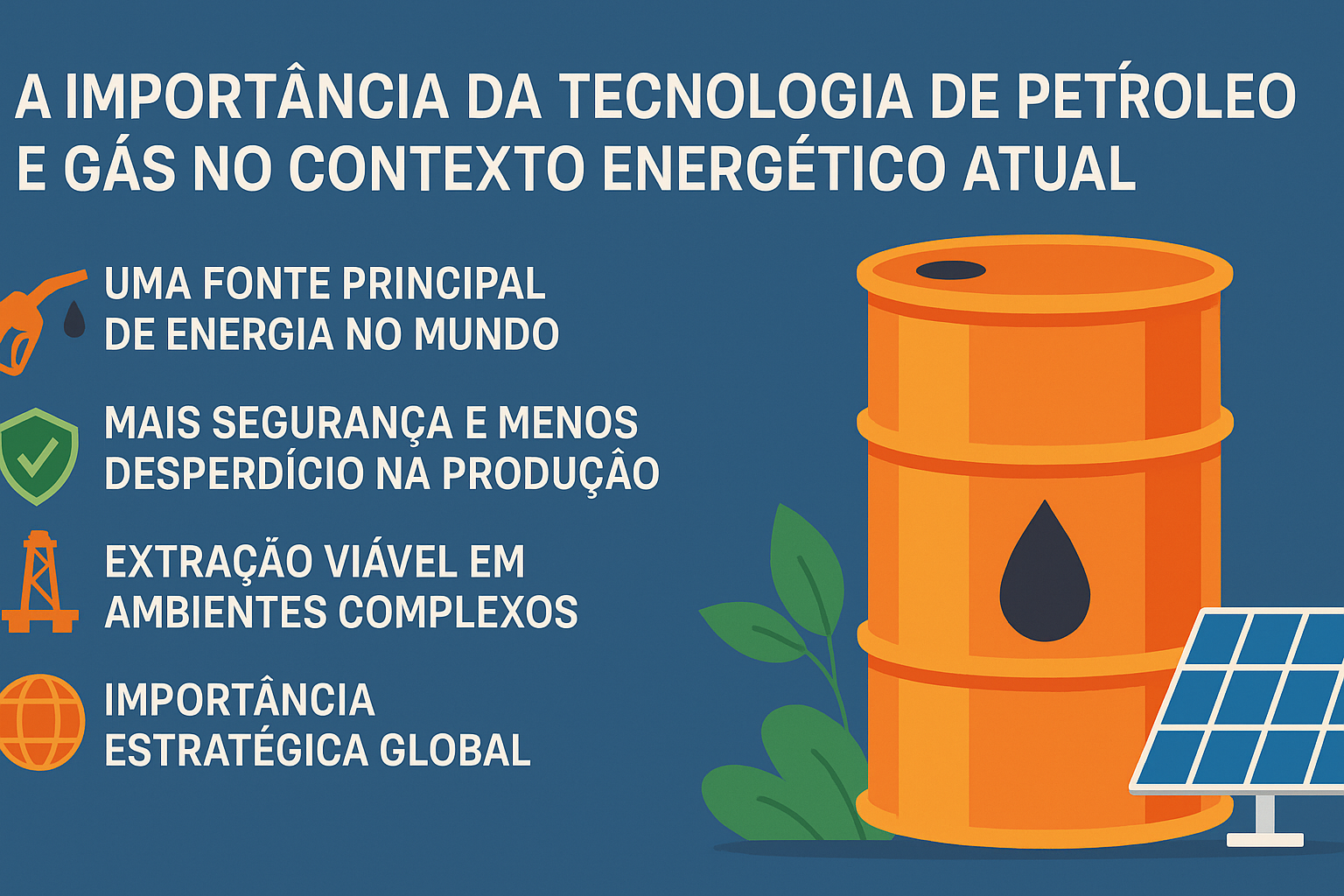
Even with the growth of renewable energy sources such as solar and wind, oil and gas remain the primary source of energy in the world.
They fuel vehicles, generate electricity, and provide essential raw materials for the chemical, pharmaceutical, plastics, and fertilizers industries.
In this scenario, oil and gas technology remains fundamental.
It ensures that production occurs more safely, with less waste and in compliance with environmental regulations.
In regions like Brazil, for example, where pre-salt exploration represents one of the largest reserves on the planet, the application of cutting-edge technology makes extraction feasible in highly complex environments over 7,000 meters below sea level.
According to data from Petrobras, updated in 2024, the technology used in pre-salt exploration has significantly increased national production and reduced operational costs.
Furthermore, global geopolitics still revolves around oil.
Countries that dominate exploration and production technology not only meet their energy demand but also influence the international market.
This reinforces the strategic importance of continuous technology development in this sector.
Another point to consider is the importance of oil and gas for developing economies, where accessible and reliable energy can mean advances in health, education, and infrastructure.
In this context, technology helps maintain a stable and resilient supply, even during times of political or economic instability.
Future of the Industry and the Role of Technology in the Energy Transition
The future of the oil and gas industry is not necessarily opposed to the advancement of renewable energy.
On the contrary, many companies in the sector invest in research to diversify their energy matrix.
The technology developed for oil and gas can also adapt to new sources.
The trend is that technology will continue to connect the present and the future of energy.
Tools used today to find and extract oil can also support geothermal energy projects, for example.
Digital platforms and sensors monitor wind and solar parks, leveraging the technological expertise of the traditional industry.
Moreover, the energy transition does not happen overnight.
It requires planning, investment, and supply security.
During this period, oil and gas will continue to play a prominent role.
The more efficient and sustainable their production, the more balanced this transition will be.
Furthermore, the experience gained in managing large complex projects, common in the oil and gas industry, accelerates the implementation of green and renewable technologies.
This demonstrates that technology, far from being a barrier, is a bridge between the present and the future of energy.
Therefore, oil and gas technology is essential today because it ensures the functioning of an energy chain that still drives the world.
Understanding the role of technology in this sector is understanding how humanity has sought, over time, more efficient ways to leverage natural resources.
It faces economic, environmental, and social challenges.
Thus, oil and gas technology is not just a tool of the present but a bridge to the future of energy.