






 Portuguese
  Spanish
  3 min of reading
  0 comments


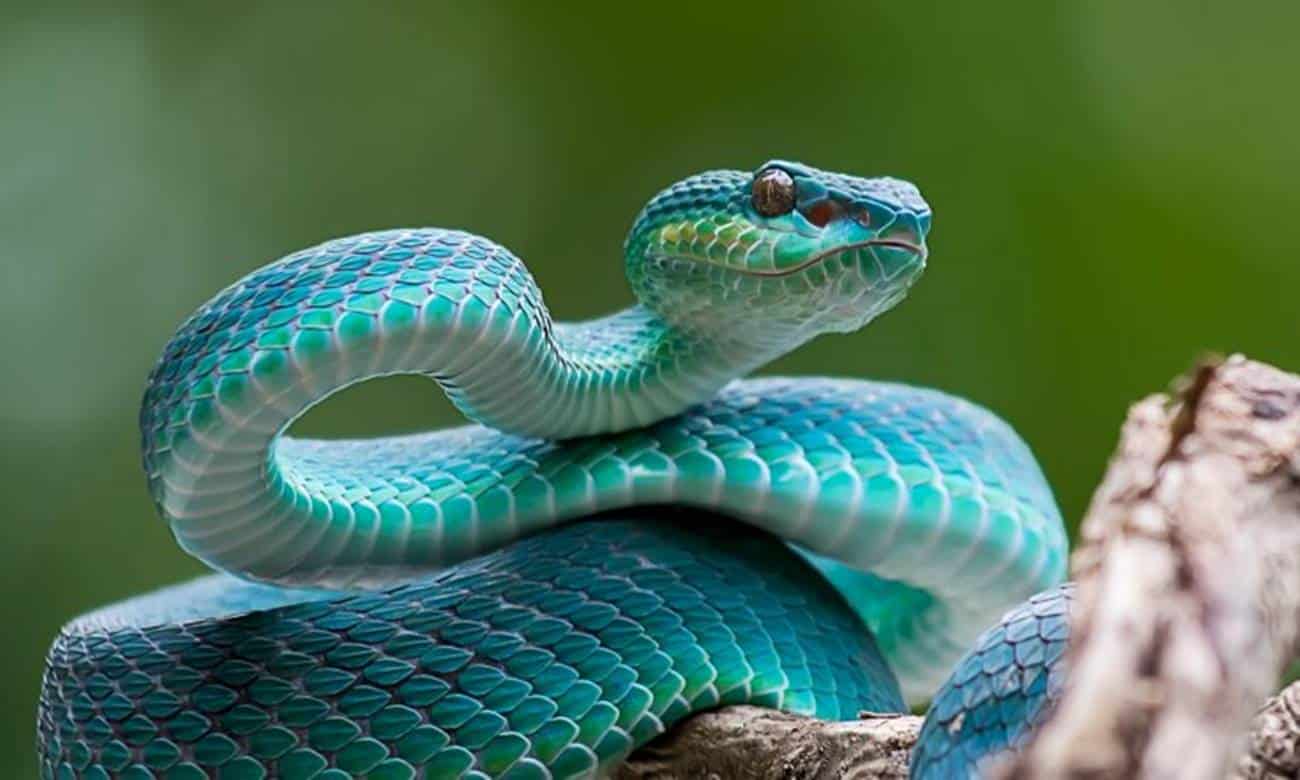
Ireland Has No Snakes! Discover Why. Is It Just a Religious Legend or Are There Scientific Reasons for This Phenomenon?
Imagine a lush place, with breathtaking landscapes and a rich culture, but without one type of reptile that sends shivers down the spine of many: snakes. That’s right!
Ireland is famous for many things, but the absence of snakes on its territory is one of the most curious and persistent facts circulating around the world. Get ready to unveil one of the most interesting enigmas of the Emerald Isle.
The Legend and the History: Did Saint Patrick Drive the Snakes Out of Ireland?
When asked why there are no snakes in Ireland, the first answer that pops into the minds of many is the religious legend of Saint Patrick.
-
Father said it was impossible, and a storm buried the first crop overnight, but today a young Chinese man harvests alfalfa up to six times a year on 1,530 hectares of the Taklimakan Desert.

-
Woman starts her own home project on the land, builds an 8×8 meter deck, faces hard soil, improvises a campsite, and sees construction stop after running out of wood halfway through the job.

-
Science still cannot explain how a two-year-old child with an IQ of 146 absorbed more knowledge than most adults and became the youngest person in history to enter the world’s largest academy for the gifted.
-
One of the most respected economists in Brazil was devastated because he forgot everything he read in two months. He created a secret handwritten method in 1979 that no app can imitate, and today he has 60 notebooks that prove memory is not a gift, it’s discipline.



According to tradition, the patron saint of Ireland supposedly drove all the snakes from the island into the sea in the 5th century after they attacked him during a fast.
This mystical narrative, symbolizing the victory of Christianity over paganism in Ireland, is one of the most popular tales associated with Saint Patrick.
Despite being a captivating story deeply rooted in Irish culture, science has a different explanation for the absence of these reptiles.
The truth is that the reasons behind the lack of snakes in Ireland are much older and more complex than the intervention of a saint.
The True Reasons: A Legacy of the Ice Age
The real reasons for the absence of snakes in Ireland are deeply linked to the geological history of the planet and the climatic conditions post-Ice Age.
About 10,000 years ago, much of the Northern Hemisphere was covered by vast layers of ice due to the last Ice Age.
Ireland, like other British Isles, was completely frozen, making it impossible for any type of cold-blooded reptile, including snakes, to survive.
The extreme cold prevented these animals, which depend on ambient heat to regulate their body temperature, from establishing themselves.
As the ice began to melt, sea levels rose, isolating Ireland from continental Europe and Great Britain.
The formation of a water channel (the Irish Sea) before the climatic conditions became favorable for snakes to migrate to the island was the decisive factor.
In other words, Ireland became an island before the climate warmed enough to allow snakes to reach there and survive.
Meanwhile, Great Britain, having been connected to the continent for longer after the thaw, allowed the colonization of three species of snakes before it too was isolated by the sea. Thus, unlike Ireland, there are snakes in Great Britain.
A Natural Phenomenon and a Global Curiosity
The absence of snakes in Ireland is, therefore, a fascinating example of how geology and climate shape the biodiversity of a region.
This is not about a religious legend coming to life literally, but rather a set of natural reasons that defined the fauna of the island.
This singular fact continues to be one of the most popular curiosities about Ireland, serving as a fun starting point to explore the rich natural and cultural history of the country.
The next time someone asks why there are no snakes in Ireland, you’ll have the full story – a tale that blends millennia of geological history with the persistence of a charming religious legend.








Be the first to react!