






 Portuguese
  Spanish
  4 min of reading
  3 comments


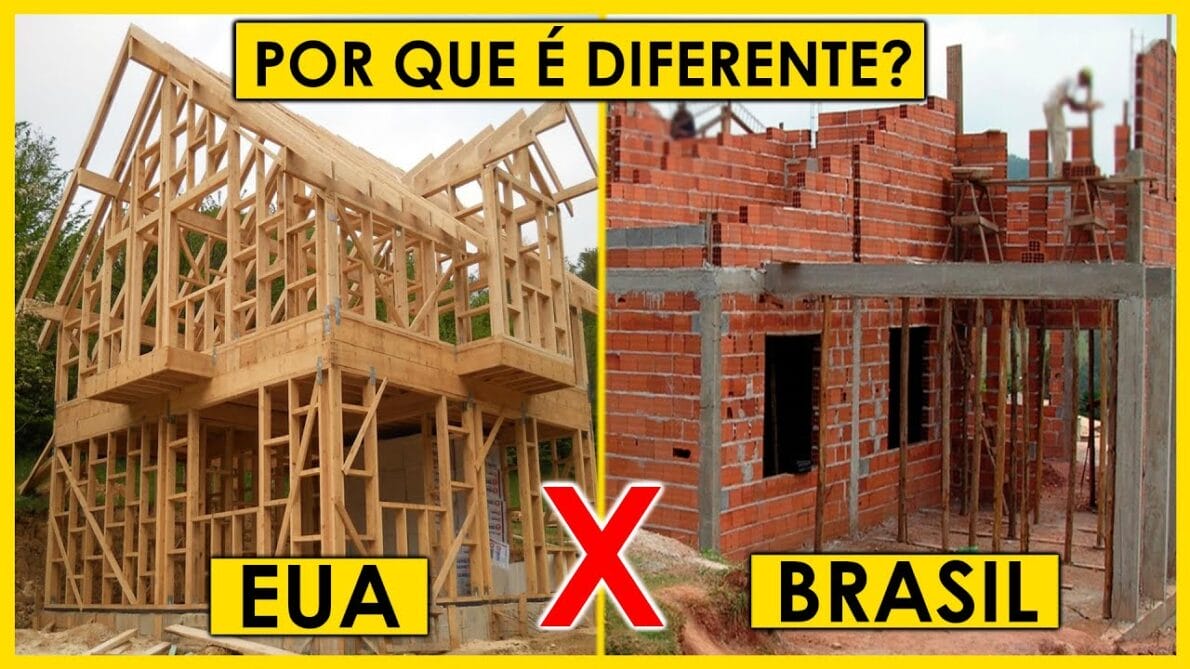


Why Are Wooden Houses More Common in the USA? Understand the Predominance of Masonry in Brazil: Discover Why Wooden Houses Are More Common in the USA and Why Masonry Predominates in Brazil. Historical and Geographical Factors Influence These Choices.
Wooden Houses in the USA: Understand the Difference Compared to Brazil – You may have noticed the construction pattern of houses in the United States, often portrayed in movies and series as being made of wood. These constructions contrast with the masonry houses common in Brazil. But why do wooden houses in the USA tend to be more common while masonry predominates in Brazil? In this article, we will explore the historical, geographical, and cultural factors that influence these choices.
In the USA, the abundance of wood and the speed of construction are factors that have historically favored the use of this material. On the other hand, in Brazil, the availability of materials such as bricks and concrete, along with climatic and cultural issues, have made masonry the predominant choice. Keep reading to understand the reasons behind these differences and how they have shaped construction styles in each country.
Understand Why Wooden Houses Are More Common in the USA

In the United States, there is an abundance of high-quality wood, especially in regions like the northwest of the country, where vast pine forests prevail. This reveals why wooden houses are more common in the USA, as it is easily accessible and relatively cheap.
-
Giant concrete tubes become futuristic micro-apartments in Hong Kong, with a diameter of 2.5 meters, 9.29 m² of internal space, and a proposal to fit homes where the city almost has no more space to live.

-
The La Galerie Nortis, a real estate launch by developers Cyrela and Nortis in Moema, São Paulo, arrives with apartments featuring 4 suites ranging from 283 to 416 square meters, an estimated gross development value of R$ 765 million, and the proposal to redefine the high standard in the region.

-
Transnordestina sets record by installing 1.69 km of tracks in a single day, reaches 81% completion, and plans to deliver an additional 100 km of railway by the end of June 2026.
-
Instead of plastering the wall, Argentine architects left ordinary bricks exposed, without traditional mortar, without finishes, without paint, and created a perforated pavilion that looks like an art installation.





In Brazil, on the other hand, although there are extensive forested areas, the historical focus has primarily been on extracting wood for other purposes, such as producing paper and pulp. Moreover, masonry houses are more common in Brazil due to the availability of materials such as bricks, mortar, and cement.
Climate conditions also play a significant role in the choice of construction materials. In the United States, especially in areas with harsh winters, wood is preferred for its thermal insulation properties, helping to keep houses warm.
Wooden houses in the USA are flexible enough to expand and contract with temperature changes, which can be an important consideration in climates with large seasonal variations. In Brazil, where many regions have a warmer climate year-round, masonry may be preferred for its ability to retain heat during the day and gradually release it at night, keeping the interiors of homes cooler.
Cultural Traditions Also Influence Owners When It Comes to Construction
Cultural traditions and construction practices also influence material choices, revealing why wooden houses are more common in the USA. In the United States, particularly in areas where European colonization had a significant influence, such as New England, the tradition of wooden construction was established from the early settlements.
In Brazil, the Portuguese influence and, later, the migration from other regions of Europe brought with them masonry techniques that became predominant in civil construction. The availability of technology and construction techniques also play a significant role in understanding why there are masonry houses in Brazil and wooden houses in the USA.
In the United States, wooden construction is highly developed, with advanced cutting, treatment, and assembly techniques, making wood construction a viable and effective option.
In Brazil, while masonry is predominant, there have also been significant advancements in wooden construction techniques, but these may not be as widely adopted due to tradition and material availability.
Which Type of House Construction Is More Financially Accessible?
Determining which type of construction is cheaper, whether in wood, as in the United States, or in masonry, as in Brazil, depends on a variety of factors beyond the initial cost of materials. Generally, wood tends to be cheaper than masonry materials, such as bricks, cement, and mortar. Therefore, wooden construction can be more cost-effective at the time of construction.
The cost of labor can vary depending on the region and the availability of skilled workers. In some areas, it may be cheaper to build in wood due to the simplicity of construction techniques and the availability of workers familiar with them.
However, in other regions where masonry is more common, there may be an abundance of skilled masonry workers, which can make this type of construction more economical. Another point is that wooden houses in the USA may require more maintenance over time than masonry.
Masonry, on the other hand, is generally more durable and requires less maintenance. Wood can be less efficient in thermal insulation compared to masonry, especially in climates with extreme temperatures.
Therefore, cooling costs may be higher in a wooden house, which can increase operational costs over time. In terms of durability, masonry generally tends to be more durable than wood, especially when built with bricks or concrete blocks.





Termicamente a casa de woodframe com seus revestimentos é muito superior tanto termicamente como acusticamente falando, alem de tempo muito menor para construcao e pouquissimo desperdicio de material.
É porque os americanos não viu a historia dos 3 porquinhos
Eu soube que nos EEUU, o IPTU sobre as casas de alvenaria é muito elevado em relação às casas de madeira! Por isso há um estímulo financeiro influenciando na escolha!