






 Portuguese
  Spanish


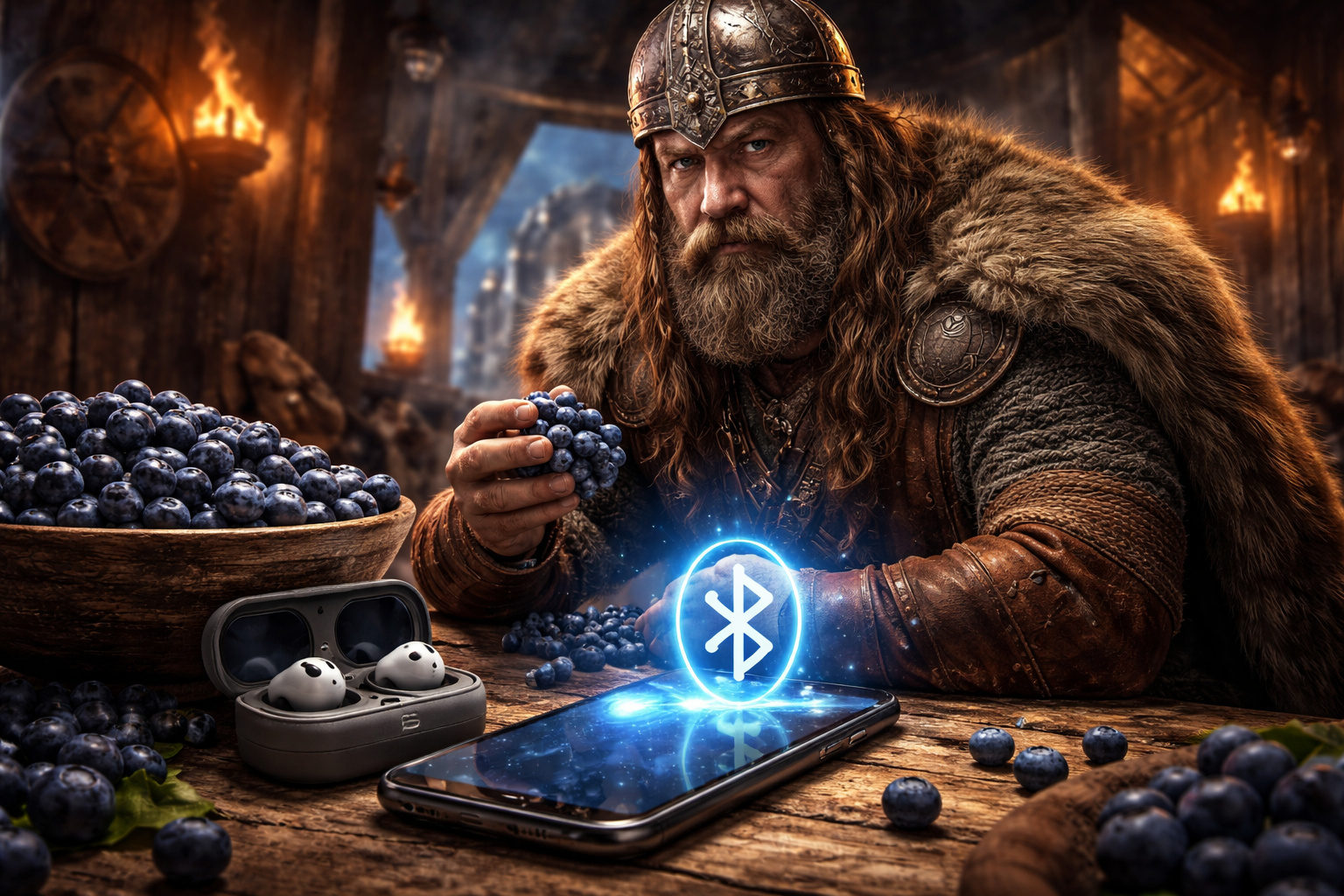


The Story of a Scandinavian King Helps to Understand the Logic of Bluetooth Technology and Its Mission to Unite Different Systems into a Unique Standard
A historical curiosity of great technological impact gained prominence in the 1990s, when engineers were searching for a symbolic name for a new form of wireless communication.
The term bluetooth was chosen as a direct reference to Harald Bluetooth, a Scandinavian monarch who lived in the 10th century and ruled around 958 A.D.
During his reign, Harald became known for unifying rival tribes of Scandinavia, creating a more integrated territory.
This concept of unity ended up serving as a perfect metaphor for a technology created to connect devices from different manufacturers.
The Historical Origin That Inspired Wireless Technology
The choice of the name was not random, as it aimed to precisely represent the project’s proposal.
According to records from the Bluetooth SIG, responsible for standardizing the technology, the historical inspiration emerged during the initial development in 1996.
At that moment, bluetooth was just a temporary codename.
However, as it clearly symbolized the idea of integration, it was officially adopted shortly thereafter.
Moreover, historical accounts indicate that the king’s nickname “Bluetooth” was linked to his habit of consuming blueberries, which darkened his teeth.
The Bluetooth Symbol and Its Connection to Viking Heritage
In addition to the name, the technology’s logo also carries a profound historical meaning.
The symbol combines two letters from the Scandinavian runic alphabet, used centuries before the digital age.
It is the combination of the runes Hagall (ᚼ) and Bjarkan (ᛒ), corresponding to the initials of Harald Bluetooth.
This choice reinforces the idea of historical continuity, connecting ancient tradition and technological innovation in a single icon.
-
Pennsylvania Mine Creates Ice in Summer Heat and Melts in Winter, Turning a Mountain Crevice into a Reverse Natural Refrigerator

-
China Accelerates Global Expansion of Robotics: From Smart Vacuums to Industrial and Humanoid Machines, Millions Exported to Over 150 Markets
-
Polar Air Mass to Hit Brazil: Temperatures to Plummet in Nine States, Near Freezing in the South with Frost Risk Until Monday
-
Chinese “dark factories” produce electric cars 24/7 with minimal human intervention, as Zeekr assembles 800 units daily, raising concerns in Brazil.





Companies and Technical Decisions That Consolidated the Bluetooth Standard
The development of bluetooth gained momentum with the participation of major companies in the tech sector.
In the 1990s, Intel, Ericsson, and Nokia led joint efforts to create a global standard.
The goal was to enable phones, computers, and accessories to communicate wirelessly.
Thus, the technology began to address a growing issue in the industry: the lack of compatibility between devices.
The Evolution of Connectivity Over Generations
Since the launch of the first versions in the late 1990s, bluetooth has undergone various updates.
Despite that, the central principle remained unchanged.
The technology evolved to offer higher speed, greater range, and lower energy consumption, maintaining the focus on integration among different brands.
This evolution allowed for the popularization of wireless headphones, smartwatches, and connected automotive systems.
The Historical Legacy Present in Digital Daily Life
Today, whenever a user connects headphones, a keyboard, or another accessory, they are making a direct reference to a king who lived more than a thousand years ago.
The idea of uniting distinct systems, initiated in medieval Scandinavia, remains alive in modern technology.
This link between past and present demonstrates how historical metaphors can strengthen technical solutions.
In light of this, the history of bluetooth reveals how tradition and innovation continue to walk hand in hand in the digital age.
Given this connection between history and technology, do you believe that cultural references help make technical innovations more understandable and enduring for the audience?





