Portuguese
  Spanish





The Electrical Wiring in Brazil Remains Exposed on Overloaded Poles, Creating Risks to Safety, Instability in Power Supply, and Visual Pollution, While Cities Like Paris and New York Buried Their Networks Decades Ago to Improve Urban Infrastructure.
In peripheral neighborhoods of major centers like São Paulo and Rio de Janeiro, the urban landscape is dominated by tangled wires. In addition to electrical energy, the poles hold telecommunication cables, internet, fiber optics, and even clandestine connections. The disorganization intensifies with the accumulation of old cables that are not removed.
According to data released by IstoÉ magazine, less than 1% of the electrical network in Brazil is underground. Meanwhile, global cities have prioritized burying infrastructure for decades to reduce risks, improve aesthetics, and ensure safety for the population.
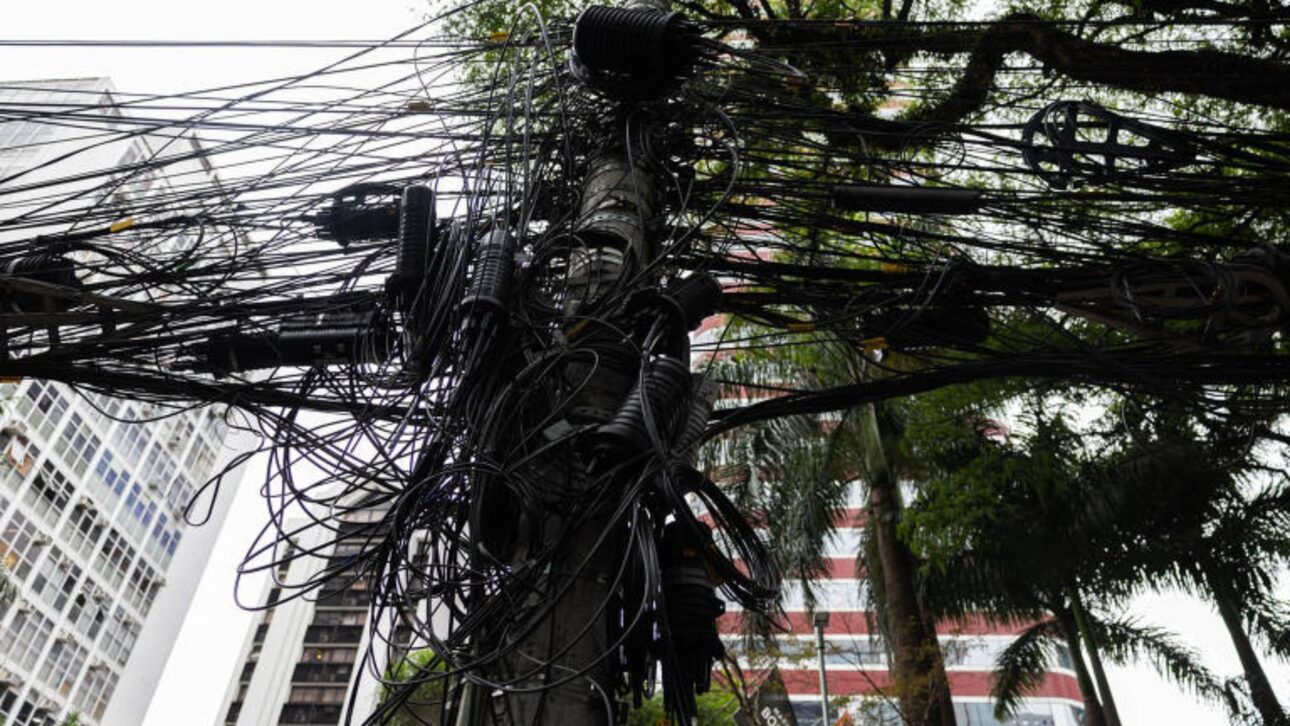
The most visible difference is in the streets: while European neighborhoods present clean and pollution-free environments, the Brazilian scenario reflects abandonment and lack of technical and urban planning.
-
Brazilian Airport to Receive $2.8 Million Investment, Completion Expected Within a Year

-
UN Warns of AI’s Environmental Impact and Calls for Greater Corporate Transparency

-
Former Atacadão Employee Turns Online Cake-Baking Lessons into a Confectionery Brand with Factory, Store, Delivery, and Nearly $400,000 in Revenue
-
Brazilian Startup Sells Nearly 9 Million Surprise Bags of Near-Expiry Food, Prevents Thousands of Tons of Waste, Aiming for $42 Million Revenue by 2026




Global Cities Set an Example Over a Century Ago
New York buried its first cables in 1888, after a heavy snowstorm. Today, 86% of the city’s network is underground, with over 150,000 kilometers of cables, according to the local utility company. Paris began its project in 1910 and completed the transition over 60 years ago.
London is also speeding up the process: in 2020, it signed a £1 billion contract to remove poles in the southern area. Buenos Aires banned new aerial wiring since 2005. In contrast, Brazil remains almost stagnant.
These international examples demonstrate that burying wiring is not an aesthetic whim but an urban necessity, combining safety, efficiency, and the enhancement of public spaces.
Cost and Complexity Are Structural Bottlenecks
The main obstacle to modernizing the Brazilian network is the high cost of underground installation. It is estimated that burying 1 km of electrical network costs up to 8 times more than overhead lines. While the suspended network costs about R$ 100,000 per km, the underground version can exceed R$ 840,000.
Additionally, technical complexity increases the challenges. Cables must be protected from moisture, pressure, heat, and corrosion, requiring expensive materials and skilled labor. The works require nighttime excavations and face obstacles underground, such as unmapped pipelines and even archaeological sites.


The lack of historical urban planning also complicates interventions, especially in metropolises like São Paulo, where unplanned growth compromises any large-scale project.
Bureaucracy Hinders Laws and Halts Progress
In 2005, the city of São Paulo enacted a law requiring the burial of 250 km of wires per year. However, the Energy Industry Union appealed, and in 2015, the Federal Court suspended the measure, claiming that municipalities do not have jurisdiction over energy concessions.
The decision set a precedent, halting similar initiatives in Rio de Janeiro and other capitals. Federal Law 13.116/2015 reinforced that only the Union can legislate on telecommunication and energy networks, creating a deadlock between municipalities and utility companies.
As a result, responsibility is diluted among municipal, state, and federal agencies, resulting in institutional inertia and stalled projects.
Technical Delays, Lack of Incentives, and Risks to the Population
Even in isolated projects, the results are slow. The program SP Sem Fios, launched in 2017, promised to bury 65 km of cables. In six years, only 37 km have been completed. At the current pace, it would take over 3,000 years to bury the entire network of the São Paulo capital.
The lack of incentives for utility companies and politicians also contributes. Since there is no immediate return or financial gain, the work is considered “invisible.” Politicians avoid projects that extend beyond their mandates, and shareholders prioritize short-term expansion and profit.
Meanwhile, the hanging wires continue to cause tragedies. Between 2009 and 2024, there were over 36,000 occurrences and more than 4,000 deaths caused by accidents involving wiring.
Consequences and International Comparison
The aerial model proves to be extremely vulnerable. In October 2024, winds of 107 km/h in São Paulo left 2 million people without power. The losses exceeded R$ 1.5 billion, and neighborhoods remained in the dark for days.
Meanwhile, in Europe, the average consumer is without power for 12.2 minutes per year, according to the European Union. In Brazil, the average exceeds 10 hours. This demonstrates the impact of outdated infrastructure on the quality of life and productivity in cities.
Besides efficiency, buried networks help enhance property values, attract tourism, and preserve green areas, eliminating aggressive pruning of trees and improving urban aesthetics.
This information was released by the channel Global Knowledge, based on data from entities such as Anatel, Celesp, IstoÉ magazine, BBC, European Union, as well as municipal and federal laws cited throughout the content.
And you, do you believe that Brazil should invest more in underground networks or are there more urgent priorities in cities? Share your opinion in the comments.