






 Portuguese
  Spanish


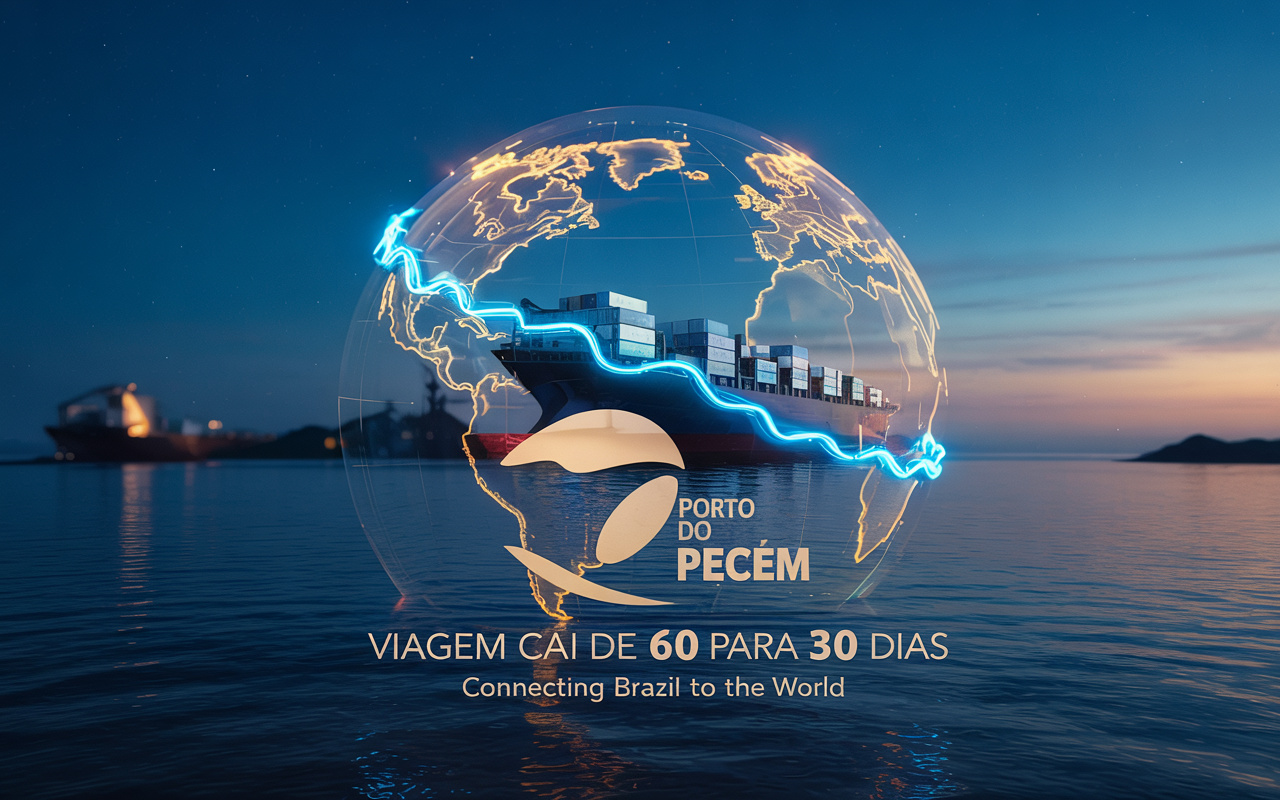

New Maritime Route Connects Brazil and China in 2025: Port of Pecém Reduces Travel Time by 30 Days, Moves 1,200 Weekly Containers, and Revolutionizes Exports.
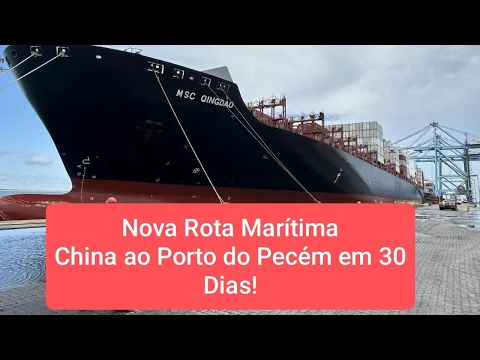
Maritime trade between Brazil and China entered a new chapter in 2025. The Port of Pecém, in Ceará, inaugurated a direct route with the Asian giant, reducing travel time by approximately 30 days and consolidating the northeastern terminal as one of the main international logistics hubs in the country.
Until now, the Brazil–China connection relied on intermediate stops at European, African, or Suez Canal ports, which increased costs and extended timelines. Now, with direct operations, the journey that previously took about 60 days is now completed in 30 days, giving Brazil a competitive edge in the transportation of food, fruits, proteins, and manufactured goods.
The Leap in Movement with the Arrival of the New Maritime Route Connecting Brazil and China
The expectation is that the Port of Pecém will move 1,200 containers per week just on this new route with China. This means an immediate growth of 10% in the total operational volume of the port, according to estimates from the Pecém Industrial and Port Development Company (CIPP S/A).
-
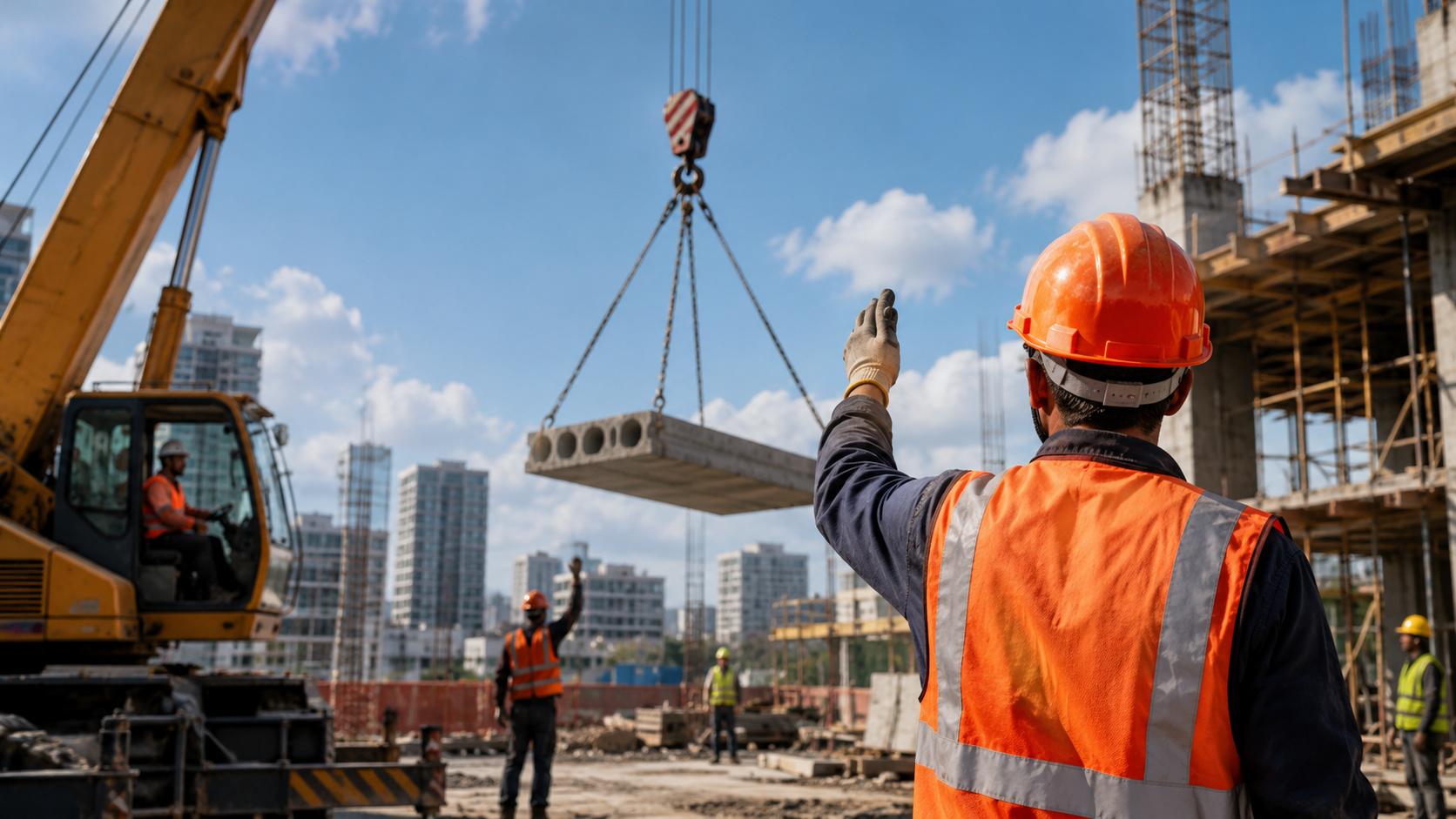
Why can the crane operator only obey the correct signalman on the construction site: among dozens of workers, a hand raised by the wrong person can confuse the maneuver and turn a load of tons into an immediate risk.

-
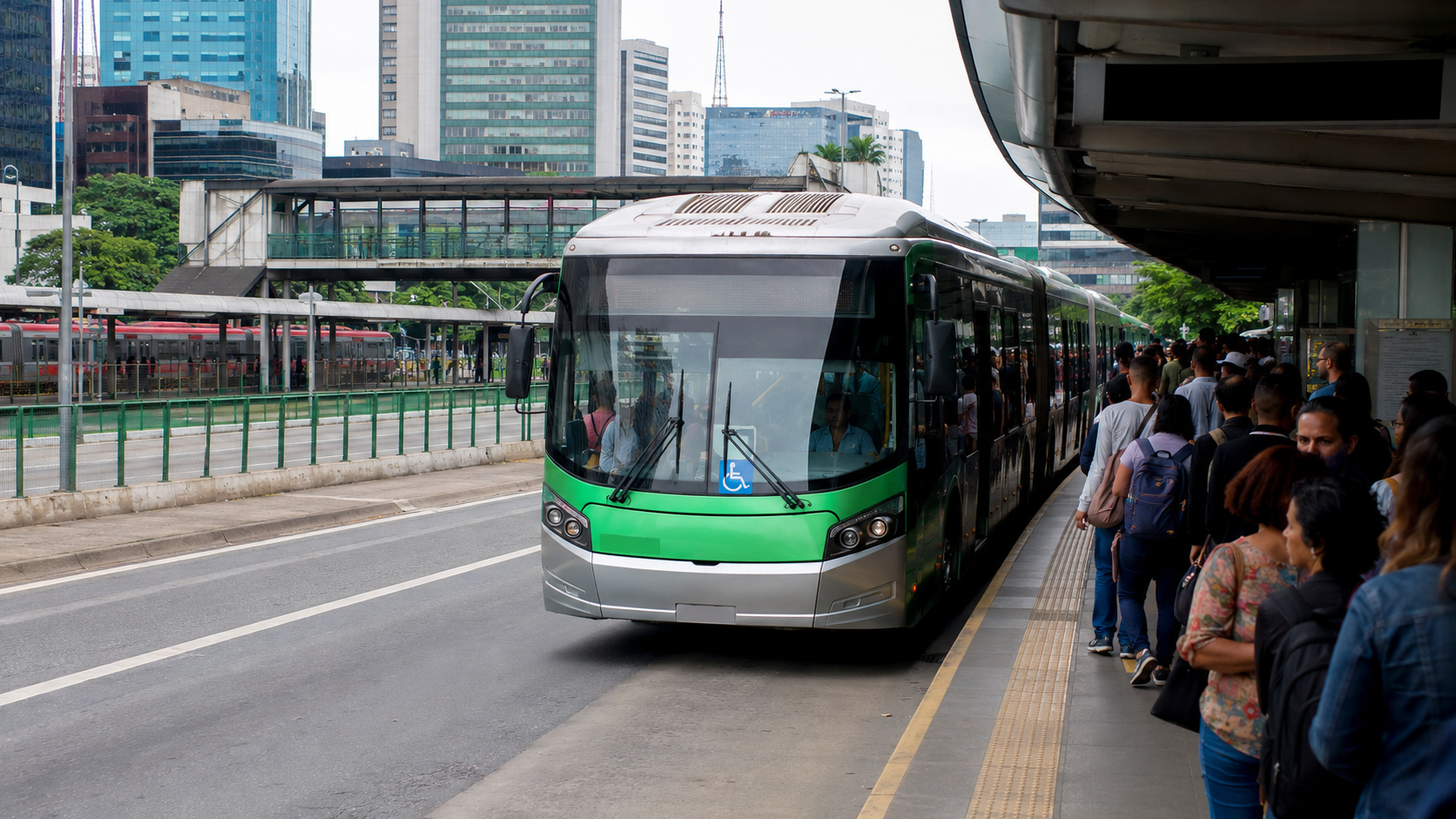
What changes with the new public transportation rules that can reduce pressure on fares and pave the way for zero fare in Brazil?
-
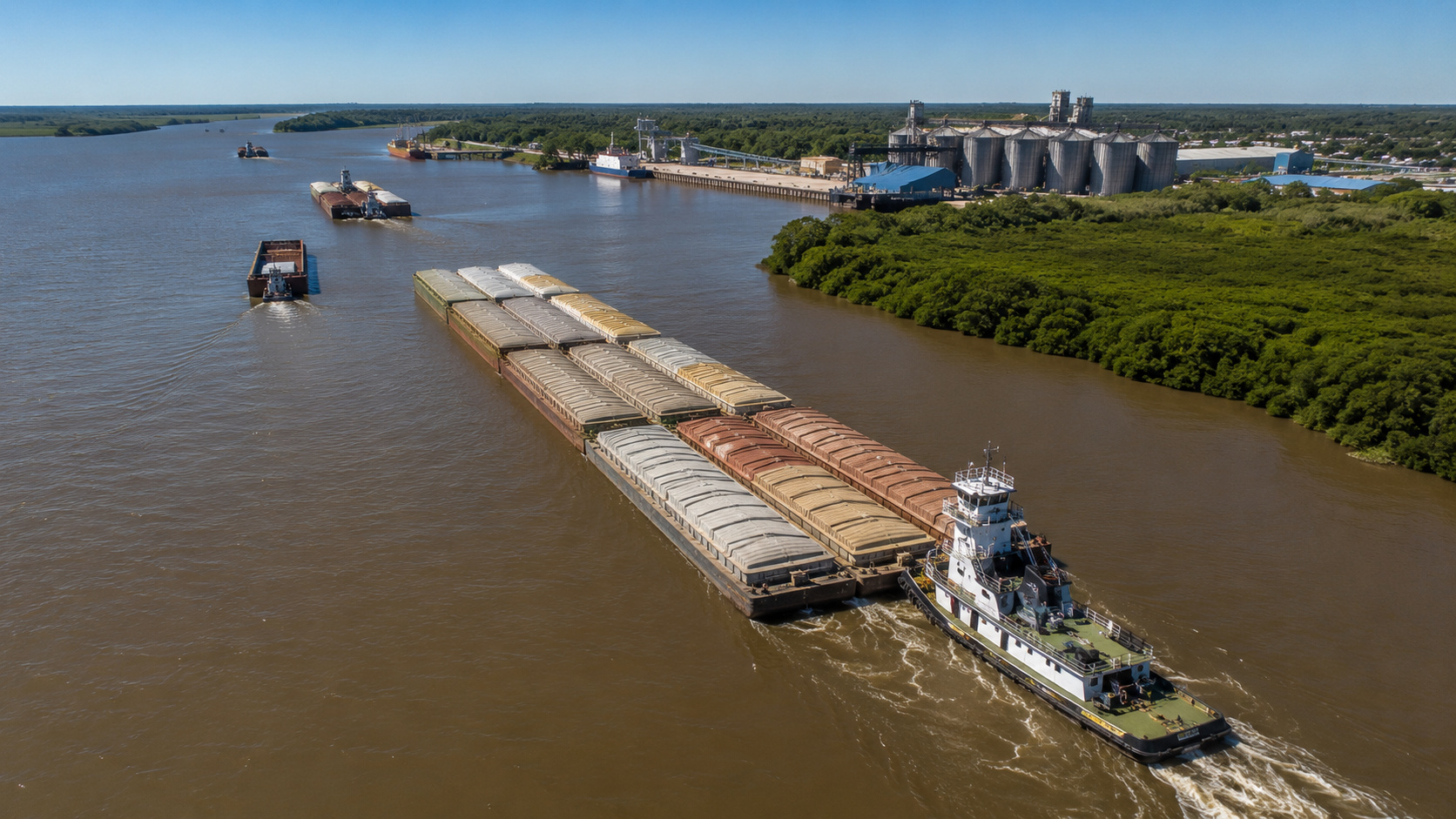
Argentina confirms Belgian giant to lead strategic Paraná River waterway and promises to reduce logistical costs on one of South America’s most important routes
-
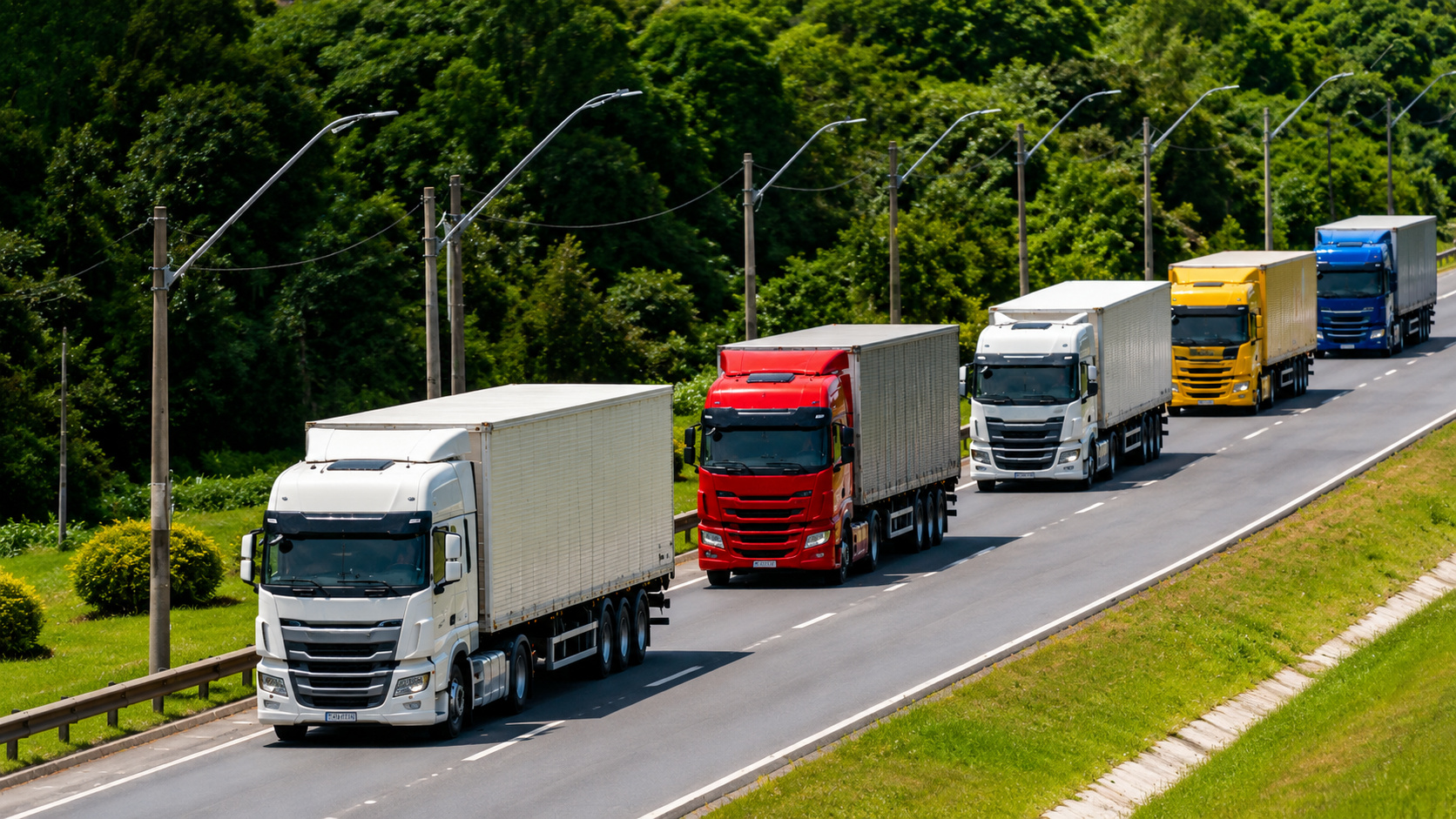
MBRF surprises the logistics sector by demonstrating how Artificial Intelligence can directly influence deliveries throughout Brazil by reorganizing distribution routes in seconds, optimizing fleet usage, reducing logistics costs, and speeding up product arrivals even in the face of unforeseen road incidents.

In practice, this expansion represents thousands of additional tons of cargo moved each month, including tropical fruits such as melon, mango, and papaya, as well as frozen proteins and manufactured products.
For the Northeast, this news places the region on the radar of global logistics chains, enhancing its relevance beyond the Brazilian domestic market.
The Role of China in Brazilian Trade
China has been Brazil’s largest trading partner for over a decade. In 2024, bilateral trade surpassed US$ 150 billion, with most Brazilian exports consisting of agricultural commodities (soy, beef, cellulose) and minerals (iron ore).
However, the challenge has always been logistics: maritime transport was expensive and time-consuming, creating bottlenecks for perishable products like fresh fruits and raising the final costs for exporters.
With the direct route from the Port of Pecém, this obstacle begins to be overcome. For northeastern producers of fruits, for instance, it means that they will be able to reach the Chinese market in much better freshness conditions, competing with traditional suppliers like Chile, Peru, and the Philippines.
The Impact on Fruit and Protein Exports
Brazil exported over 1 million tons of fruits in 2024, generating US$ 1.28 billion. In the first half of 2025, shipments had already increased 27% in volume, reaching 546 thousand tons. Part of this growth will be fueled by the new route with China.
Fresh fruits that previously faced risk of losses during transit now have a better chance of arriving intact. Melons and mangoes produced in Ceará and Rio Grande do Norte, for example, will be able to be shipped directly from Pecém to Chinese ports in half the time.
Additionally, the route opens the way for frozen animal proteins, especially chicken and beef, whose demand in China continues to grow. With fewer travel days, storage costs in refrigerated containers also decrease, enhancing Brazilian competitiveness.
Pecém as an International Hub
The Port of Pecém has already been standing out as an international logistics platform. Strategically located near North Atlantic routes and the Panama Canal, the terminal is the result of a partnership between the Government of Ceará and the Port of Rotterdam, in the Netherlands.
This European connection has allowed Pecém to adopt world-class management practices, becoming one of the most efficient ports in Brazil. The new route with China is a step further: it transforms the Ceará port into a convergence point between Europe, Asia, and the Americas.
Benefits for the Northeast and for Brazil
For the Northeast, the impacts are immediate:
- Increased competitiveness for fruits and seafood from the region.
- Job creation in transportation, storage, and logistics services.
- Attraction of investments in refrigerated terminals and infrastructure.
For Brazil as a whole, the route helps to diversify export logistics, reducing dependence on Southeast and South ports such as Santos and Paranaguá. This decentralizes foreign trade and makes the country more resilient during times of global logistical crises.
The Geopolitical Chessboard of Logistics
The new route should also be viewed in the context of maritime geopolitics. In recent years, China has been expanding its presence in strategic ports worldwide, investing in infrastructure and trade routes.
The fact that a northeastern Brazilian port is establishing a direct connection with China is not only a commercial advancement but also a political gesture of rapprochement. For Brazil, it represents an opportunity to establish itself as a reliable supplier in times of global competition for food and raw materials.
Risks and Challenges
Despite the optimism, the operation faces challenges. The first is sustaining demand: for the route to be financially viable, consistent volumes of exports and imports must be maintained.
Another point is the local port infrastructure. Although Pecém has modernized, the accelerated growth will require new investments in refrigerated storage, dredging, and terminal expansion.
Additionally, there is the risk of excessive dependence on China, which is a concern for agricultural sectors. To balance this, Brazil needs to leverage the new route as an opportunity to also expand to other Asian destinations, such as Japan, Korea, and Southeast Asia.

The inauguration of the direct route between the Port of Pecém and China in 2025 is more than a logistical advancement: it is a turning point for Brazilian foreign trade. Reducing travel time by 30 days and moving 1,200 containers per week means opening space for billions in new business, especially in sensitive sectors such as fresh fruits and frozen proteins.
This movement consolidates Ceará as an international logistics platform and reinforces Brazil’s role as a global food security leader. In times of trade disputes and supply challenges, the Pecém–China route symbolizes a future of greater integration, speed, and competitiveness.


