Portuguese
  Spanish


506 Million-Year-Old Fossil Reveals Predator With Three Eyes, Sharp Claws, and Preserved Circulatory System, Expanding Knowledge About Early Arthropods.
A rare and surprising fossil has just been identified by paleontologists in Canada. The Mosura fentoni, as it is called, lived 506 million years ago and exhibits unprecedented characteristics among the radiodonts, a group of extinct sea predators from the Cambrian period.
The discovery was published in the journal Royal Society Open Science and reveals more details about the diversity and early evolution of arthropods.
Predator With Three Eyes and Sharp Claws
The fossil was found in the famous Burgess Shale in British Columbia. The creature measured about the size of an index finger, had three eyes, spiny claws, and a circular mouth full of teeth.
-
Cambridge Scientists Achieve Solar-Powered Plastic Recycling, Converting Waste into Valuable Chemicals Without Fossil Fuels, Paving the Way for a Low-Carbon Circular Economy

-
In Ghana, Makafui Awuku Turns 250-300 Water Sachets Into Each 30-Year-Lasting School Desk, Lifting Children Off Classroom Floors

-
In September 2035, Mars to Shine Brightest Since 2003, Aligning with NASA and China’s Planned Human Mission to the Red Planet
-
Robots Descend Four Kilometers to Operate in the World’s Deepest Mine, Unbearable for Humans



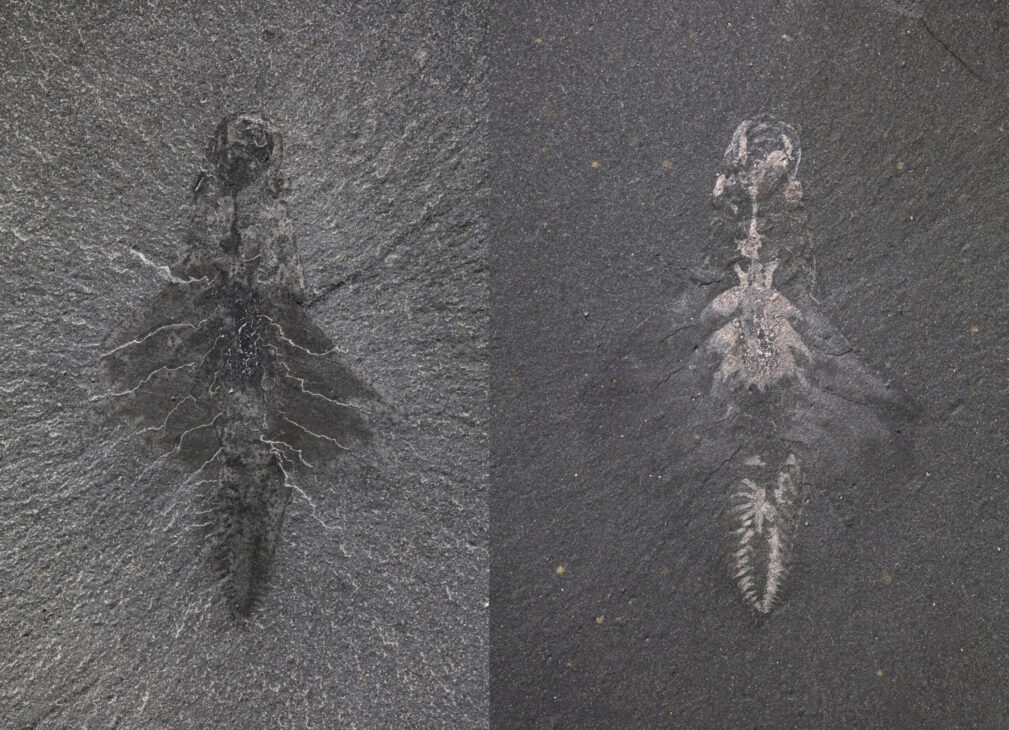
Side fins aided in locomotion. Despite its modest size, the animal was an active hunter and shared its environment with other species such as Anomalocaris canadensis, a predator about one meter long.
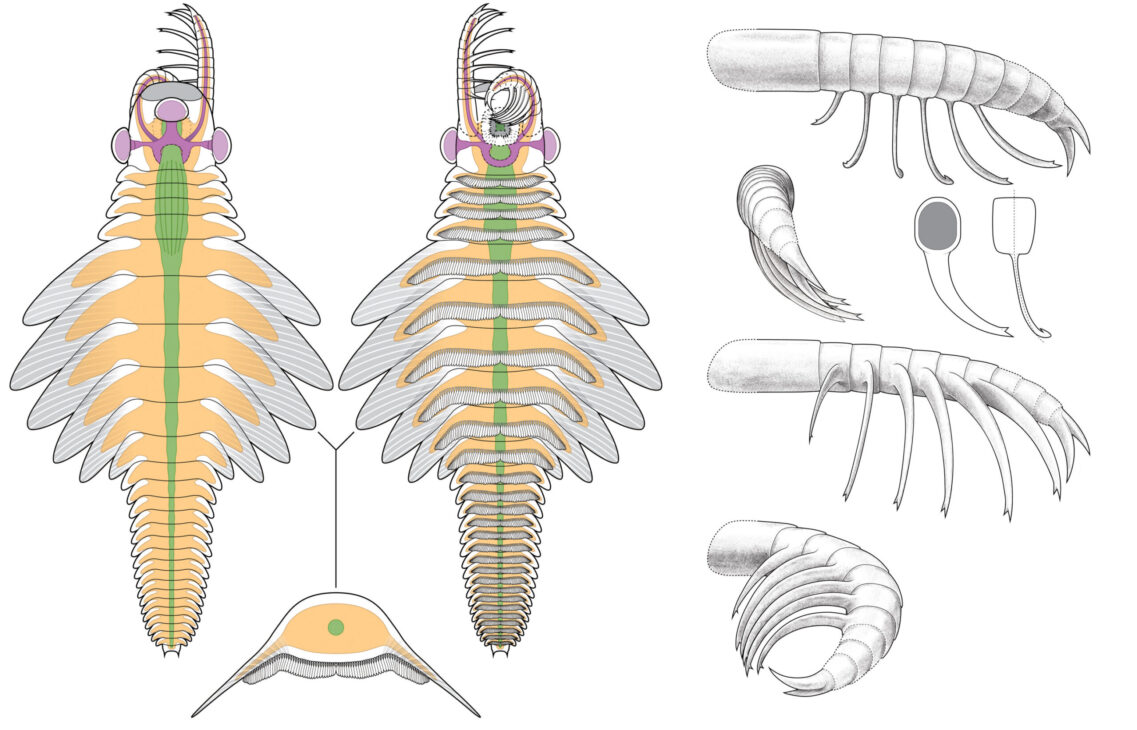
One of the main novelties of the Mosura is the presence of a body region similar to an abdomen, with 16 segments and respiratory structures.
According to Joe Moysiuk, curator of Paleontology and Geology at the Manitoba Museum, this feature is rare and resembles the morphology of modern animals, such as horseshoe crabs and insects. For him, it is a clear example of evolutionary convergence.
The “Sea Butterfly” and Its Impressive Anatomy
During the excavations, the new predator received a curious nickname from scientists: “sea butterfly.”
The name comes from the shape of the fins and the narrow body at the rear, which resembled the flight of a moth. This inspired the scientific name Mosura fentoni, a reference to the fictional Japanese monster Mothra.
Despite the name, the animal is far from being a real moth. It is part of an ancestral branch of arthropods, a group that includes insects, spiders, and crustaceans.
The radiodonts, as explained by Jean-Bernard Caron, co-author of the study, were the first to diversify on the evolutionary tree of arthropods. The discovery reinforces the idea that these ancient beings were already incredibly diverse.
In addition to the external shape, the fossils of Mosura revealed internal parts that are rarely preserved. Elements of the nervous system, digestive system, and even traces of the circulatory system were recorded. “Few sites in the world allow this level of detail in soft tissues,” says Caron, curator of the Royal Ontario Museum.
Circulatory System With Well-Preserved Traces
The Mosura did not have veins or arteries like humans. Its blood circulated through lacunae – large internal cavities where the heart pumped the fluid.
These lacunae were preserved as bright spots in the fossils, spreading even to the fins. This pattern helped resolve doubts about similar structures seen in other fossils.
“These well-preserved lacunae are key to understanding similar systems already found in ancient fossils, but which were previously misinterpreted,” says Moysiuk, who also serves as an Associate Researcher at the ROM. “They confirm the ancient origin of this type of circulation.”
Fossils Reveal Forgotten Treasures
Most fossils of Mosura were collected by the Royal Ontario Museum between 1975 and 2022, primarily at the Raymond Quarry within Yoho National Park.
Some specimens were also found in the Marble Canyon area within Kootenay National Park, about 40 km away.
An even older fossil was discovered by Charles Walcott, responsible for revealing the Burgess Shale to the world.
The discovery reinforces the value of scientific collections. “If you think you’ve seen it all, just open a museum drawer,” jokes Moysiuk.
For researchers, the collections hold valuable information yet to be interpreted, even decades after the materials were collected.
A World Heritage of Science and History
The fossils were found at sites managed by Parks Canada, in Yoho and Kootenay National Parks.
The Burgess Shale region was recognized as a UNESCO World Heritage Site in 1980 for its unique value to the history of the Earth. Parks Canada keeps the site open for guided tours, promoting education and science.
In the future, the public will be able to see Mosura fentoni up close. A specimen will be displayed for the first time at the Manitoba Museum in Winnipeg.
Other fossils of radiodonts are already available in the Willner Madge Gallery at the ROM in Toronto.
The new species joins other recent discoveries of radiodonts, such as Stanleycaris, Cambroraster, and Titanokorys, expanding knowledge about the Cambrian period.
Scientists continue to analyze new fossils from the region in search of more clues about the planet’s first animals.