Portuguese
  Spanish


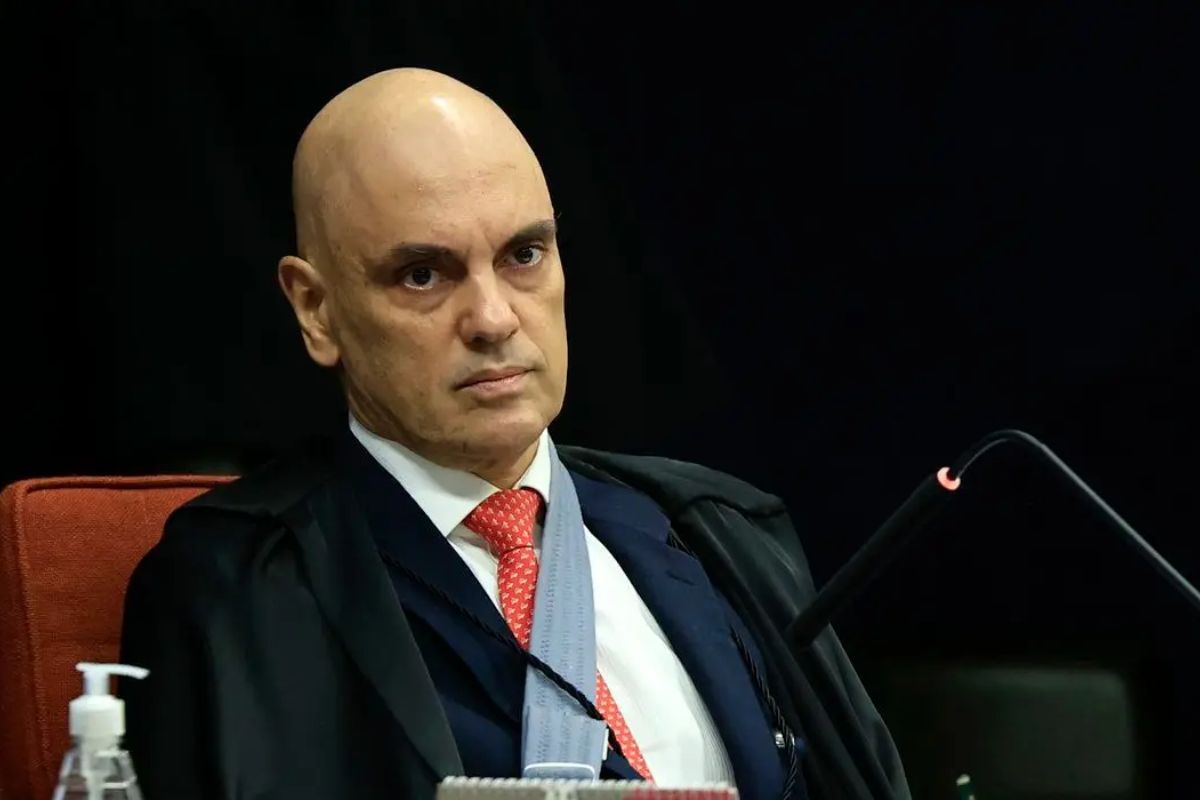


Alexandre de Moraes Lost Support on the STF After Being Sanctioned by the U.S. Find Out Why Even His Colleagues Did Not Want to Sign a Note in His Defense
The attempt by Minister Alexandre de Moraes to unify the Supreme Federal Court in a letter of support failed, revealing an unprecedented fissure among the members of Brazil’s highest court. The reason for the tension was the recent sanction imposed by the United States against Moraes, based on the Magnitsky Act — a U.S. legal provision that punishes foreign figures accused of serious human rights violations or acts of corruption. The measure caused a strong diplomatic and political backlash, but did not find unanimous support among his peers on the STF.
The Pressure for Support and the Retreat of the Ministers
Shortly after being informed about the sanction, Moraes sought to convince the other ministers to sign a joint letter of repudiation against the U.S. decision. However, more than half of the court’s members considered it inappropriate to draft an institutional document to counter a U.S. foreign policy. The majority view was that such an initiative could further compromise the image of the STF and generate unnecessary diplomatic friction.
In light of the resistance, a more cautious solution was chosen: an institutional note signed only by the president of the Supreme Court, Luís Roberto Barroso. The statement, in diplomatic tone, did not mention the United States directly, nor did it refer to the Magnitsky Act, disappointing Moraes’s expectations, who was counting on unrestricted support from his colleagues.
-
European Parliament Approves Digital Euro, Aiming to Challenge Visa and Mastercard’s Dominance and Transform Payments Across Europe by 2029

-
Israel finds Hezbollah militarized tunnel over 200 meters long under village, with 4 missile launch shafts, 12 chambers, anti-tank missiles, drones, and weapons depots at a depth of 25 meters.

-
Ukraine launches largest drone attack on Moscow since 2022, Russia claims to have intercepted nearly 200 aircraft near the capital, Kapotnya refinery targeted again, and offensive reignites alert about war reaching the Russian energy heart just a few kilometers from the Kremlin.

-
Truck drivers, freight, and fines from 2022 take center stage in politics: Chamber approves MP with amnesty, mandatory tracking by CIOT, million-dollar penalties, and new minimum wage for those who spend more than 24 hours on the road.


Dinner at Alvorada Exposes Internal Division
With the lack of consensus in the Court, a new attempt to demonstrate unity was orchestrated by President Luiz Inácio Lula da Silva. A dinner was organized at the Palácio da Alvorada, with the presence of all 11 STF ministers as a symbolic aim to reaffirm the cohesion among the branches of government and reinforce the narrative of defending national sovereignty. The image of the magistrates alongside the president would serve as a strategic piece in the communication campaign promoted by the Planalto, which aims to reverse declining approval ratings.
However, Lula’s plan suffered a setback: only six ministers attended the event. Present were Alexandre de Moraes, Cristiano Zanin, Edson Fachin, Flávio Dino, Gilmar Mendes, and Roberto Barroso. In contrast, André Mendonça, Cármen Lúcia, Dias Toffoli, Luiz Fux, and Nunes Marques were absent, reinforcing the perception of a growing discomfort with the paths taken by Moraes within the Court.
Protocol Participation and Internal Criticism
Among the ministers present at the Alvorada, not all attended by conviction. Edson Fachin, for example, attended reluctantly. His presence was motivated primarily by institutional reasons, as he will soon assume the presidency of the Supreme Court, with Alexandre de Moraes as vice. Absence could be misinterpreted in this context of transition in the Judiciary.
Sources close to the STF indicate that there is a growing sentiment that Moraes is leading the court down a dangerous and irreversible path. The trigger was a recent decision in which he mandated the use of an electronic ankle bracelet by former President Jair Bolsonaro, accompanied by insinuations that the United States could be deemed “foreign enemies” of Brazil. This rhetoric was considered excessive and inappropriate by several ministers, especially given the delicacy of diplomatic relations with Washington.
Isolation and Institutional Wear
The episode reveals the increasing isolation of Alexandre de Moraes within the Supreme Federal Court. Despite his prominence in recent years, particularly in politically impactful decisions, the minister now faces resistance among his colleagues. The failure of the attempt at institutional mobilization — both through the letter and the dinner — makes it clear that his support base in the court is no longer unanimous.
The court’s moderate response, coupled with the absence of almost half of the ministers at a symbolic meeting with the president of the Republic, suggests that the STF is undergoing a moment of internal redefinition. At the center of this crisis lies the wearing down of Moraes’s image, increasingly associated with controversial decisions and a discourse that not everyone is willing to endorse.