Portuguese
  Spanish


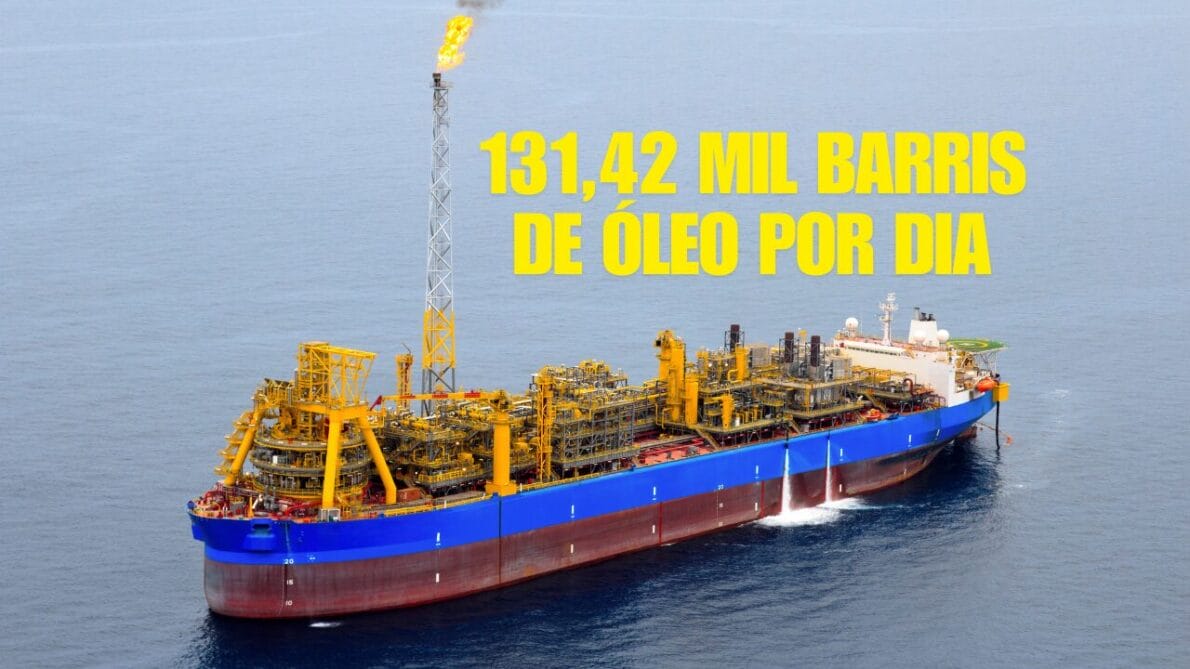

Union Oil Production Fell 1.5% in February, Totaling 131 Thousand Barrels Per Day Due to Contractual Adjustments in Sepia; Mero Leads Production.
In February 2025, the Union’s oil production reached 131.42 thousand barrels per day (bpd), according to data from eight production-sharing contracts and the Individual Production Agreements (AIPs) of the non-contracted areas of Atapu, Mero, and Tupi.
The volume represents a slight retraction of 1.5% compared to the previous month, primarily reflecting the temporary reduction of the Union’s stake in the Sepia field, due to the application of the contractual Earn Out mechanism. Nevertheless, Mero remained the leading production field, accounting for 64% of the total allocated to the Union.
Decline in Oil Production Reflects Contractual Adjustment and Not Reduction in Total Production
The slight decrease in the barrels of oil attributed to the Union is related to the cost recovery process of the Sepia contract, through the Earn Out.
-
Oil production grows in Rio, but reserve replacement raises a warning sign

-
Petrobras is expected to complete the drilling of the Morpho well in the Foz do Amazonas in August 2026, the first well in the Equatorial Margin, an oil frontier that the ANP estimates at more than 30 billion barrels and could redraw the map of Brazil.

-
Oil returns to the center of concerns with tension between the US and Iran

-
IEA reduces forecast for global oil demand in 2026 after impacts of the Middle East crisis



This mechanism allows the contracted company to recover extra amounts paid to the Union during the auctions if the price of Brent oil exceeds the initial estimate.
Thus, part of the production is temporarily withheld from being allocated to the Union, without an actual decline in the field’s global production.
Mero Easily Leads Oil Production Among Fields Under Sharing Regime
Even with the decline, the Mero field continues to be a key player in the Union’s oil production, accounting for 64% of the volume in February.
In total, production under production-sharing contracts reached 1.19 million barrels per day — a 4% increase compared to January, mainly driven by the efficient performance of the Búzios field, which produced 517.76 thousand bpd. Mero, for its part, contributed 429.2 thousand bpd.
Since the beginning of the historical series in 2017, more than 1.1 billion barrels have been produced under this model, with Búzios being the largest producing field.
The Union’s accumulated share reaches 70.16 million barrels.
Natural Gas Also Records Significant Decrease
In addition to the reduction in oil production, the Union also saw its share of natural gas production fall to 246 thousand cubic meters per day — a decrease of 59% compared to the previous month.
The main factor for this drop was the temporary interruption of exports in Búzios and the decline in volumes in Sepia.
Even so, Búzios remains the largest supplier to the Union, accounting for 49% of the natural gas received.
Gas Exports Are Impacted by Technical Shutdowns
Considering total production — combining Union and consortia — natural gas exports reached 3.94 million m³ per day, representing a reduction of 10% compared to January.
The impact was caused by shutdowns on platforms P-77, P-75, and FPSO Carioca in Búzios, during the commissioning of the interconnection of platform P-70 (Atapu) to Route 3.
Despite the interruptions, Búzios continues to be the main exporter, accounting for 89% of the total volume.
Since 2017, the cumulative natural gas export under the sharing regime has reached 3.4 billion m³, with 229 million m³ belonging to the Union.
Expectations for Recovery in the Coming Months
With the normalization of exports in Búzios, already resumed in April 2025, and the temporary nature of adjustments via Earn Out, the trend is for a gradual recovery of the Union’s oil and gas production.
The positive outlook reinforces the strategic importance of production-sharing contracts and the Union’s growing role in exploring pre-salt resources.