Portuguese
  Spanish


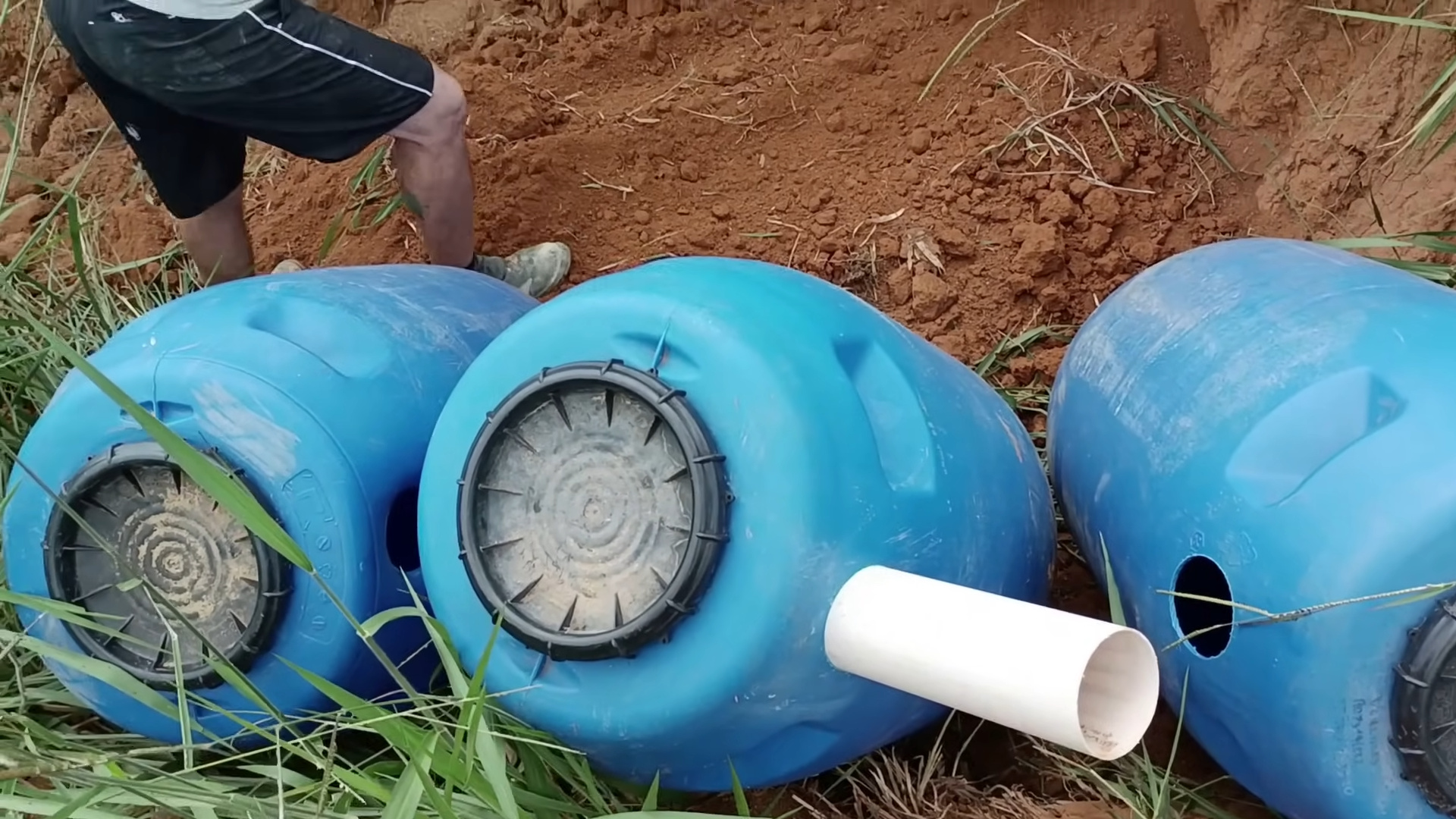


Biodigester With Plastic Drum and PVC Pipes Can Treat Household Sewage, Generate Biofertilizer, and Cost Less Than R$ 1,200, an Alternative to Conventional More Expensive Septic Tanks.
In many rural areas of Brazil, the absence of public sewage networks forces families to install conventional septic tanks. The problem is that the implementation cost can exceed R$ 5,000, depending on excavation, concrete rings, and labor.
As an alternative, simplified models of anaerobic biodigesters made with plastic drums and PVC pipes have been adopted in rural properties. The technology is not improvised: anaerobic digestion is a process widely documented in the scientific literature and used on an industrial scale for the treatment of organic waste.
What changes here is the scale and cost.
-
Vertical Farming Company Backed by SoftBank and Jeff Bezos Files for Bankruptcy, Valuation Plummets from $1.9 Billion to Under $15 Million

-
Indian Inventor Develops Solar-Powered Machine Enabling Blind Farmers to Independently Manage Crops with Sensors and Audio Alerts

-
Brazilian Honey Supplying U.S. Supermarkets Faces Price Hike and Job Threats Amid New Tariff Round
-
Drought in France Threatens Beet Crops, Raising Fears of Sugar Price Surge Across Europe


What Is an Anaerobic Biodigester and How Does It Work
The biodigester is a closed system where organic waste is decomposed by bacteria in the absence of oxygen. This process, known as anaerobic digestion, generates two main products:
- Biogas (rich in methane)
- Stabilized effluent that can be used as biofertilizer
In the household case, the system can receive organic sewage from toilets and sinks, as long as it is properly sized.

Anaerobic digestion reduces organic load and stabilizes waste before it infiltrates into the soil.
Basic Structure With Plastic Drum and PVC
Simplified models use:
- 200-liter plastic drum or larger container
- PVC pipes for inlet and outlet
- Valve for biogas release
- Hermetic sealing system
The drum functions as a digestion chamber. The organic material enters through a feed pipe and remains inside the tank for a specified retention time.

During this period, microorganisms degrade the organic matter. Proper sealing is essential to maintain an oxygen-free environment and allow biogas production.
Small Scale Household Sewage Treatment
In rural properties, the biodigester can replace the traditional black tank, offering more controlled treatment.
The system allows:
- Odor reduction
- Reduction of organic load
- Production of partially stabilized effluent
After digestion, the effluent can go to an infiltration trench or a complementary system. It is important to highlight that sizing must consider the daily volume of sewage generated.
Biofertilizer Generation
One of the by-products of digestion is liquid biofertilizer, rich in nutrients such as nitrogen and phosphorus.
This material can be applied in agriculture, as long as used according to technical guidance. The biofertilizer is a direct result of the controlled decomposition of organic matter.
In family properties, this represents the reuse of waste within the production system itself.
Biogas Production in Household Models
In larger rural biodigesters, biogas can be channeled for use in adapted stoves or heating.

In very small systems, production may be limited depending on the organic load. Biogas is primarily composed of methane and carbon dioxide.
Production depends on the quantity and quality of the material input into the system.
Comparison With Conventional Septic Tank
The traditional septic tank involves:
- Deep excavation
- Installation of concrete rings
- Inspection chamber
- Drainage system
The compact biodigester reduces excavation and can be installed partially buried.
The material cost can be below R$ 1,200 in small models, depending on the drum volume and local pipe prices. The final value varies according to region and system size.
Technical Limitations and Necessary Precautions
Despite the reduced cost, the biodigester requires:
- Proper sizing
- Periodic maintenance
- Efficient sealing
- Complementary infiltration system
Direct disposal without additional treatment can cause soil contamination. The system does not completely eliminate the need for proper management of the effluent.
Application in Rural Brazil
Institutions like Embrapa and state rural extension agencies have already published models of biodigesters adapted to the reality of small properties.
The technology has been used for decades in different countries for the treatment of organic waste and energy production.
In areas without sewage networks, the solution can represent a viable technical alternative when properly implemented.
The biodigester with plastic drum and PVC pipes uses the scientific principle of anaerobic digestion to treat household sewage on a small scale, generate biofertilizer, and, in some cases, biogas.
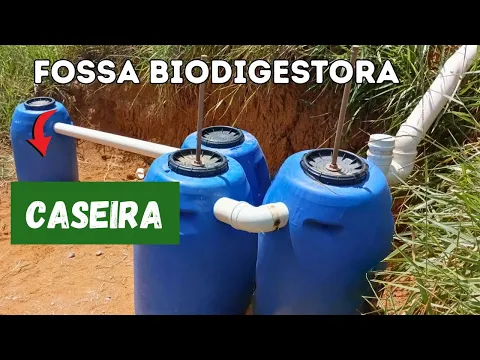

With material costs lower than those of a conventional septic tank, the system can reduce initial investment, as long as it is properly sized and installed with adequate sealing. The technology is based on a consolidated biological process, adapted for domestic and rural scale.
When well executed, the model allows for more controlled treatment of organic waste than rudimentary septic tanks, integrating basic sanitation and nutrient reuse in family properties.