Portuguese
  Spanish


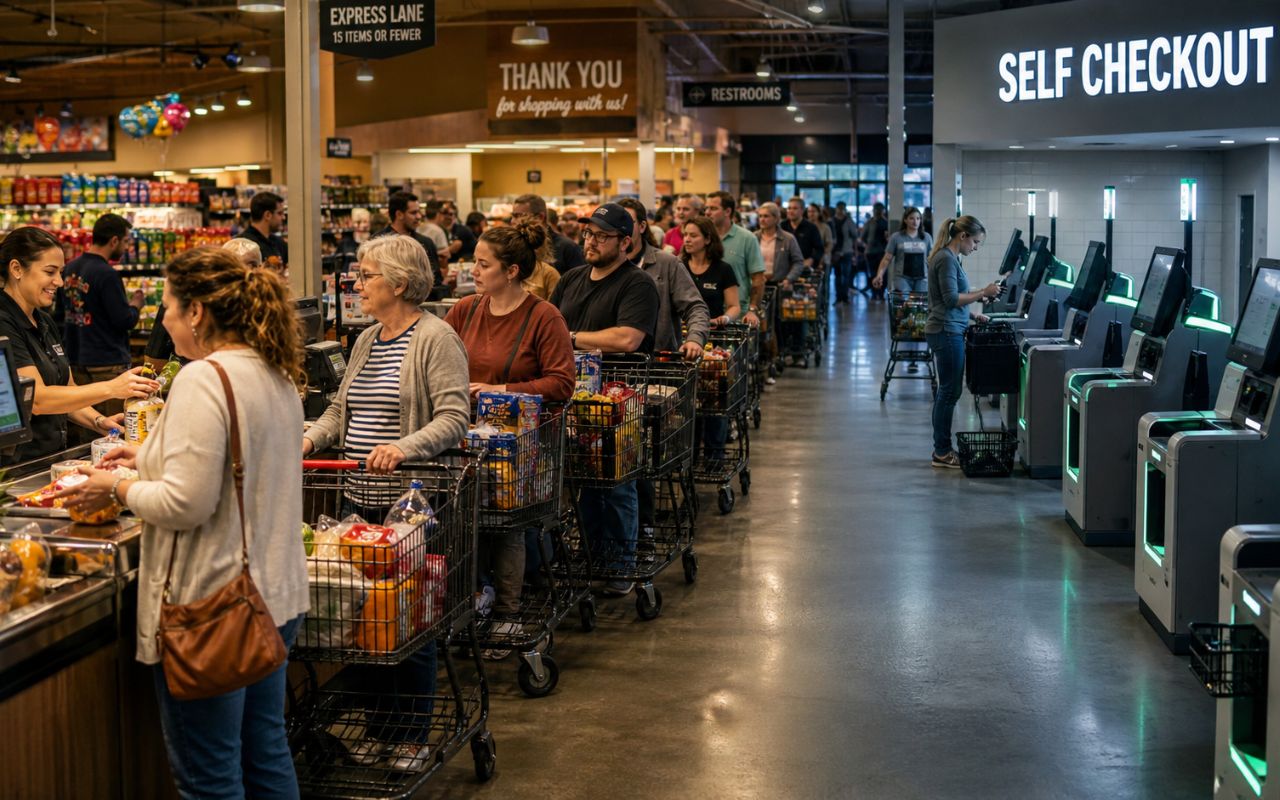

Do you prefer the human checkout line at the supermarket? Understand how avoiding self-checkout is linked to the psychology of well-being and the search for social connection.
The preference for traditional supermarket queues, even when self-checkout terminals are empty, puzzles those seeking maximum efficiency. However, this behavior is explained by psychology as a fundamental human need for recognition.
In a world increasingly dominated by digital processes, avoiding self-checkout becomes a silent way to ensure that the individual is “seen” and validated by another person.
This phenomenon occurs daily in urban centers, where the moment of payment ceases to be merely a financial transaction and becomes a space for social exchange indispensable for mental health.
-
Engineer Transforms Coconut Farm in Brazil into Sustainable Business, Processing 1,000 Coconuts Daily and Innovating with Dragon Fruit-Flavored Ice

-
From TV Host to TikTok Real Estate Mogul: Brazilian Sells Luxury Homes Worth Up to $22 Million to 1.8 Million Followers

-
14-Year-Old Student Wins Gold at Brazil’s Largest Math Olympiad After Six Months Without a Math Teacher, Becomes Sole Medalist from His City

-
Brazilian YouTube Sensation “Galinha Pintadinha” Celebrates 20 Years, Amassing 65 Million Subscribers and $700 Million in Annual Revenue




The invisible value of human micro-interactions
Unlike machines, which operate under a logic of coldness and speed, human service provides what experts call micro-interactions.
These are quick contacts, like a greeting or a casual comment, which have a disproportionate impact on the consumer’s mood.
According to studies conducted by Nicholas Epley, from the University of Chicago, interacting with strangers in routine tasks increases the feeling of happiness and social connection.
By avoiding self-checkout, the customer is unconsciously seeking an emotional break from the accelerated routine.
This interaction, however brief, activates brain mechanisms of well-being that touchscreens cannot replicate.
For many, this moment at the supermarket checkout can represent the only real human contact in a day surrounded by automations.

The psychology of “weak ties” and belonging
Sociology and behavioral psychology use the concept of “weak ties” to define the light connections we maintain with people outside our intimate circle.
Researcher Mark Granovetter demonstrated that these superficial contacts are essential pillars for emotional stability and a sense of community.
Check out why these moments are so valued by consumers:
- Mutual recognition: The act of looking into each other’s eyes and exchanging greetings humanizes the purchasing process.
- Breaking isolation: Small conversations help combat loneliness in large cities.
- Social rhythm: The spontaneity of human service gives a less mechanical rhythm to daily life.
- Feeling of support: The presence of an employee conveys emotional security in case of any problem with the products.
Therefore, choosing the conventional queue is a strategy for preserving mental health, ensuring that technology does not completely erase interpersonal relationships.
Mechanical efficiency vs. emotional health
Although self-checkout systems were created to reduce waiting times, they eliminate what is called “social friction.”
This term refers to the imperfect, yet warm, exchanges between people. By removing this contact to gain minutes of productivity, companies end up removing elements that support customers’ long-term well-being.
Psychology suggests that the obsession with speed can be costly for the human mind. Moments considered “unproductive” in the supermarket queue are, in fact, spaces where empathy and kindness flourish.
Therefore, avoiding the self-checkout is not a sign of lack of technological skill, but rather a prioritization of the quality of the human experience over the speed of the checkout.
With information from Gazeta de SP