Portuguese
  Spanish


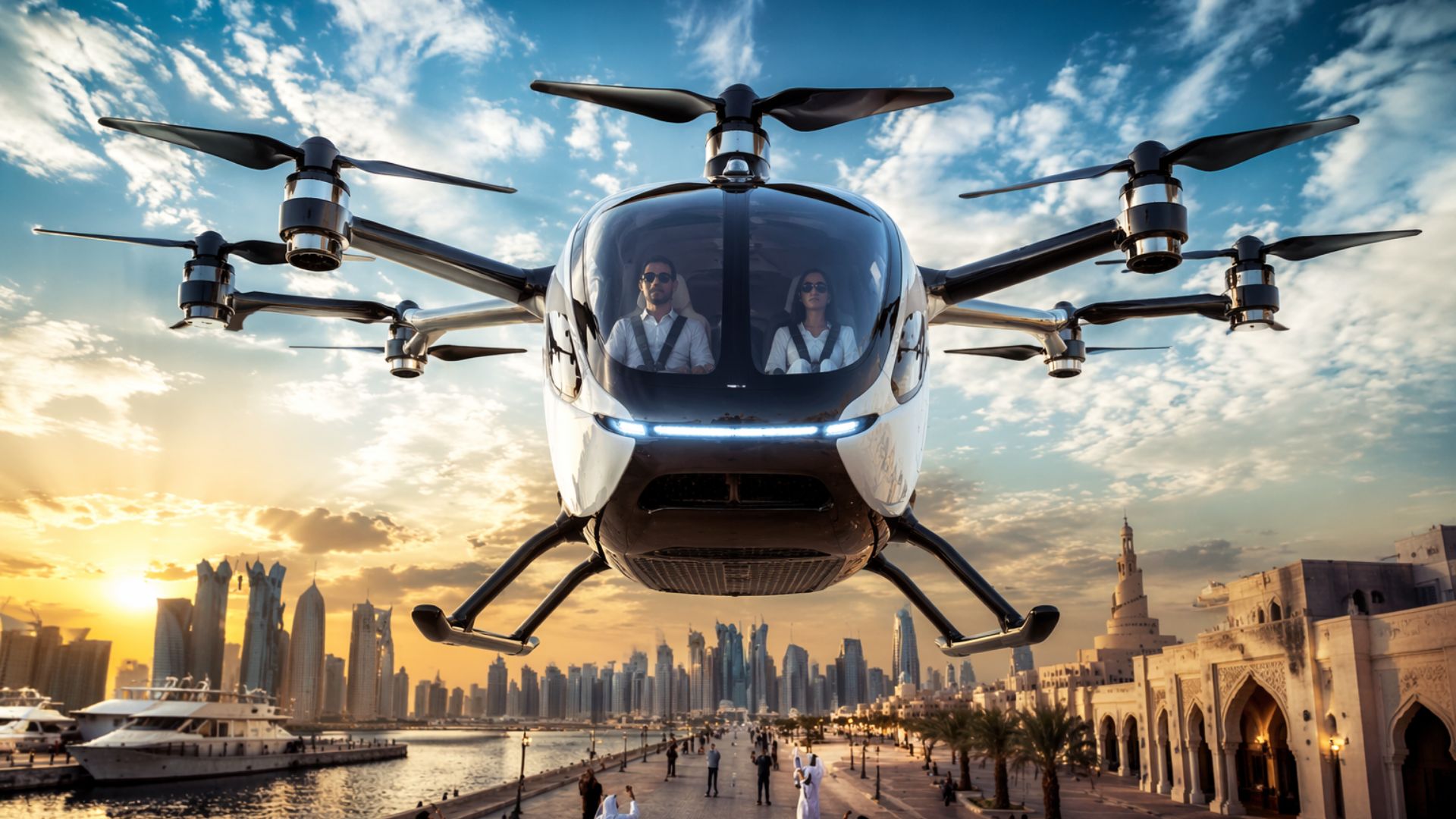

Urban tests with autonomous eVTOL place Doha at the center of air mobility, with real routes, passengers on board, and planned integration between strategic areas, reducing travel time and accelerating debates on regulation, infrastructure, and commercial use of this technology.
Qatar has firmly entered the map of urban air mobility by conducting, in Doha, the first urban flights with human transport of an autonomous eVTOL in the Middle East.
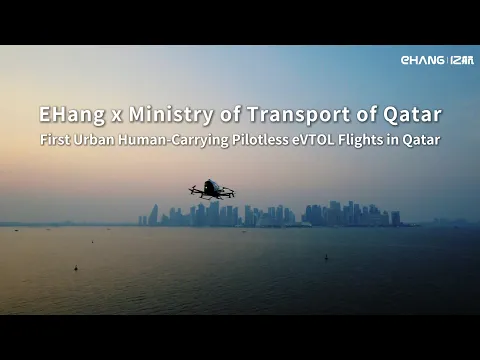
The operation was conducted with the EH216-S model from the Chinese manufacturer EHang, on a route between the Old Doha Port and the Katara Cultural Village, two strategic points in the capital, under the supervision of the country’s Ministry of Transport and with operational authorization from the Qatari civil aviation authority.
Urban test connects strategic points in Doha
More than a technological showcase, the test was presented as a practical demonstration of a service aimed at short and high-value logistical trips.
-
Brazilian Construction Worker Moves to France, Earns Up to €2,500 Monthly with Home Renovations, Gains Social Media Attention

-
US Navy Sinks USS Oriskany with 230 kg of C-4, Creating World’s Largest Artificial Reef in 37 Minutes

-
U.S. Dumped Tanks, Jeeps, and Coca-Cola into the Pacific in 1945 After British and French Lowball Offer, Creating “Million Dollar Point”
-
WHO Warns of Unnecessary Interventions in Natural Births Worldwide, Advocates for More Human-Centered Care, Reigniting Debate on Medicalization





According to EHang, the route taken during the flight campaign reduced to about eight minutes a journey that would take around 30 minutes by car, in a scenario designed to show how this type of aircraft can bypass traffic jams and connect relevant areas of the city.
The movement gained additional weight because it did not occur in an isolated environment or restricted to technical demonstrations far from the urban grid.
The choice of a connection between the port area and one of Doha’s main cultural hubs reinforced the goal of testing the feasibility of daily use of the aircraft in a city that concentrates tourism, events, business, and short-distance travel with strong pressure on road infrastructure.
Specifications of the EH216-S and operation proposal
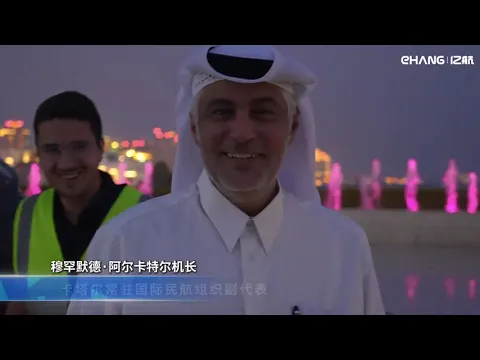

The EH216-S is an electric vertical takeoff and landing aircraft designed to carry two passengers with no pilot on board.
In the specifications released by the manufacturer, the model has a range of up to 30 kilometers and a maximum speed of 130 km/h, figures that place it within the operational range expected for urban routes and quick connections between areas of high circulation.
In practice, the project presented in Doha relies on the logic of complementary air mobility, rather than the replacement of traditional aviation.
As the equipment takes off and lands vertically, the proposal eliminates the need for large runways and focuses on smaller structures, integrated into a broader transportation network.
The manufacturer treats this design as a basis for future air taxi services, connections with airports, and corridors aimed at tourist areas or high-traffic zones.
Operation without a pilot and ground control system
Another central point is the autonomous nature of the operation.
The flight was conducted, according to the Ministry of Transport of Qatar, without direct human interference, supported by a complete self-control system based on artificial intelligence and advanced air navigation technologies.
This characteristic differentiates the model from initiatives that still rely on a pilot in the cockpit and shifts the focus of the debate to the robustness of command, monitoring, and ground response systems.
EHang also associates the EH216-S with a centralized command and control system, with real-time data exchange between the aircraft and ground stations.
According to the company, the platform combines monitoring, dispatch, operational management, and alert mechanisms, as well as resources aimed at redundancy of flight and power systems.
In a sector still consolidating, this operational architecture carries weight similar to that of the aircraft itself to support any commercial advancement.
Qatar’s strategy for smart mobility
The choice of Qatar for this test was not casual.
The country has been trying to consolidate an image linked to smart mobility, integration between modalities, and the use of technological solutions in urban infrastructure.
In an official statement, the Ministry of Transport linked the initiative to the national strategy for 2025-2030, which envisions a smarter, more resilient, and integrated transportation system, aligned with broader goals of modernization and sustainability.
In this context, the flight in Doha was treated as part of a testing campaign to evaluate not only the aircraft’s performance but also its potential future application in a regulated environment.
The operation served as a basis to measure the technical adequacy of the equipment, compatibility with urban airspace, and the necessary requirements to approve a service that, to move beyond the demonstration stage, depends on clear rules, ready infrastructure, and consistent safety protocols.
Regulation and challenges for commercial use
The regulatory dimension, in fact, is one of the most relevant points of the project.
EHang stated that the flights were conducted with operational authorization from the Qatar Civil Aviation Authority, in partnership with the Ministry of Transport.
The Qatari government reported that it will continue to evaluate the results of the campaign to formulate the necessary technical and regulatory milestones for the approval of this type of mobility, in line with international standards.
This detail helps shift the discussion to a less symbolic and more concrete ground.
The advancement of so-called flying cars is often presented to the public as a showcase of the future, but the decisive stage always involves certification, route design, defining suitable areas for landing and takeoff, airspace management, and integration with the existing urban network.
Without this set, the flight impresses, but does not convert into a real service.
Planned expansion and integration with airports
In the case of Doha, the chosen route also serves as a trial for a broader commercial model.
By connecting the port and cultural center, the test demonstrated how urban air mobility can be conceived to unite transport hubs, tourist destinations, and areas with high foot traffic.
The manufacturer described this route as a proof of concept for air shuttle services between strategic points, something that opens the door for future expansions in a city focused on international business and high-value tourism.
The next phase has not yet been presented as an operation open to the general public on a large scale.
Both the company and the Qatari government indicated that the project will be conducted in successive stages, respecting technical, operational, and regulatory requirements.
Among the points mentioned are the readiness of the infrastructure, the approval of operational systems, and compliance with safety, protection, and quality standards before the effective integration of the service into the country’s mobility network.
There is, therefore, an important difference between the visual impact of the novelty and the maturity required to transform it into everyday transport.
The test in Doha showed an aircraft capable of operating on a real urban route, with passengers and official authorization, but the very design of the project indicates that the deployment will depend on a broader chain of public and private decisions.
It is at this point that the case of Qatar ceases to be merely an image of innovation and begins to be observed as a reference for other cities interested in shortening travel without increasing pressure on the streets.