






 Portuguese
  Spanish


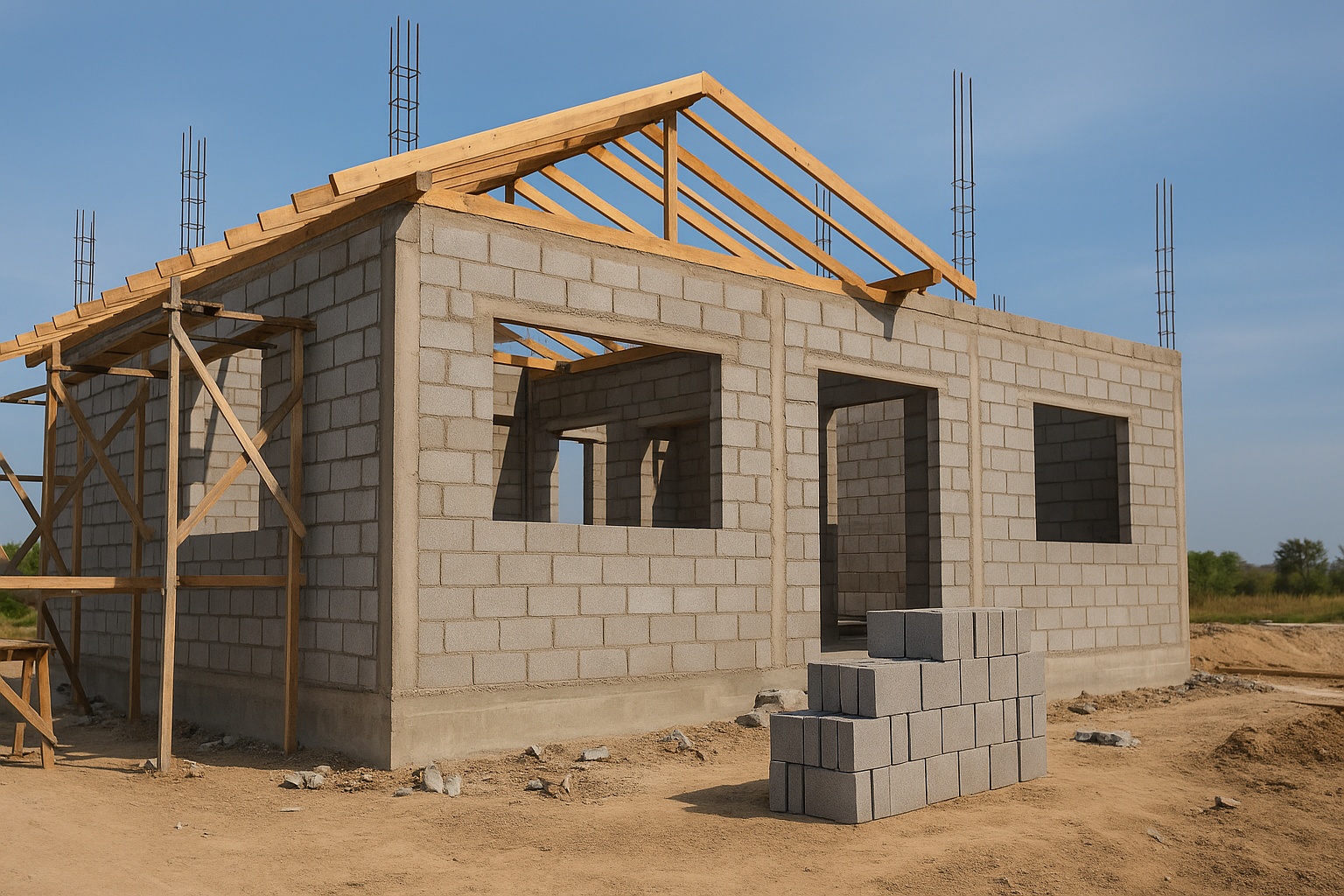


Real Comparison Between Building With Clay Brick: Prices, Labor, Waste, and Performance Based on SINAPI and Current Market.
The choice between common clay brick and concrete block is one of the most important decisions when building a low-cost house in Brazil. Although both materials are widely used, costs, structural performance, and impact on construction time can vary significantly. To clearly understand this difference, we used references from SINAPI, updated market research, and practices adopted by construction companies specializing in small housing.
The goal is to show how much it actually costs to build a one-story house with each system, considering real values, yield per square meter, and the advantages of each solution.
First of All, How Much Does It Cost to Build With Clay Brick?
Solid clay bricks and hollow bricks are still present in a good part of Brazilian residential construction, especially in the Northeast, Southeast, and South regions. The price varies by state, but a safe average found in SINAPI’s material tables and surveys with material supply stores places common hollow bricks between R$ 0.80 and R$ 1.40 each.
-
Two-Bedroom Home Built in a 40-Foot Shipping Container Delivered and Ready for Same-Day Living in São Paulo Countryside

-
China Constructs Artificial Island 32 km Offshore for Yangshan Port, Connected to Shanghai by 32 km Bridge, Unloading 3,000 Containers in 20 Hours
-
China’s $70 Billion River Diversion Project, the World’s Largest, Moves 44.8 Billion Cubic Meters Annually, Crosses Under the Yellow River, and Displaced 330,000 People
-
Indian Driver Spends 14 Years Digging 10-Meter Tunnel Through Mountain to Connect Isolated Village to the World





In a standard one-story house of approximately 40 to 50 m², between 4,000 and 6,000 pieces are required, depending on the number of internal walls, ceiling height, and floor plan layout.


Thus, the cost of the bricks alone usually ranges from R$ 3,200 to R$ 8,400. However, clay brick requires a greater volume of labor, as its assembly is slower and uses more mortar for setting.
In construction practice, this results in a total expenditure, including materials and labor — close to R$ 180 to R$ 260 per m² just to raise the walls. In a 40 m² house, this places the final cost of masonry at R$ 7,200 to R$ 10,400, not including plastering, skimming, painting, or finishes.
Another important point is waste. Since the brick is more fragile, losses due to breakage during transport and handling vary between 8% to 12%, which impacts the final cost. Moisture absorption is also higher, requiring well-done waterproofing in areas of contact with the ground and careful execution of lintels and counter-lintels to avoid cracks.
How Much Does It Cost to Build With Concrete Block?
Structural concrete block has gained popularity in Brazil due to its fast assembly and its ability to often eliminate the need for conventional pillars and beams. The average market price for blocks measuring 14 x 19 x 39 cm, the most used model for one-story houses, ranges from R$ 4.50 to R$ 6.20, depending on the region.

Although it seems more expensive per unit, the yield per square meter is much higher: only 12.5 blocks are needed to constitute 1 m² of wall, while clay brick requires about 25 to 30 pieces.
This places the block cost for a house of 40 to 50 m² between R$ 3,200 and R$ 4,500, practically the same level as the brick. The difference appears in the construction process.
Since the block is larger and has a more uniform fit, construction time can be reduced by up to 40%, also lowering labor costs. In assessments conducted by engineers and construction companies that use the system, the total cost of structural masonry with blocks ranges from R$ 130 to R$ 190 per m².
In a 40 m² house, this sets the total cost of the walls at R$ 5,200 to R$ 7,600, below the final value with clay brick. Additionally, waste is reduced: losses typically do not exceed 5%, due to the block’s greater mechanical resistance.
Performance, Durability, and Impact on Construction
When it comes to structural performance, the concrete block has the advantage. It offers greater compressive strength, allows for one-story constructions without visible pillars, and reduces the risk of cracks when executed correctly.
On the other hand, clay brick has better thermal performance in very hot regions, as its composition helps to delay heat transfer. This explains why it remains so popular in much of the Northeast.
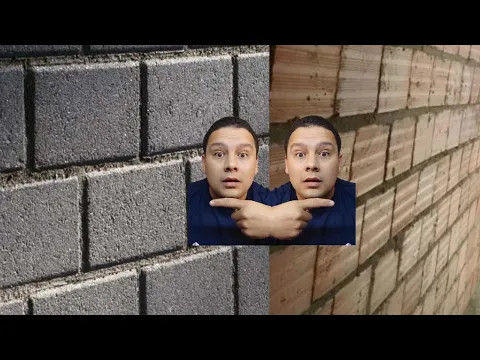
Regarding finishing, clay brick requires complete plastering on practically all internal and external walls. The concrete block can, in many economical and minimalist constructions, receive only a thin coat and painting, thereby reducing final costs. In constructions where an industrial aesthetic is desired, no plastering is necessary, which further cuts the budget.
In the end, the choice between structural block and clay brick depends less on the price of the individual piece and more on the whole: speed of construction, waste, need for finishing, and availability of professionals who master each technique.








Quem fez essa conta não entende nada de obra, bloco é muito mais difícil pra trabalhar e até mesmo na parte de tubulação elétrica e hidráulica é muito mais difícil pra trabalhar, outra coisa é que bloco pode ser melhor quando for fazer as paredes pra ficar a vista sem acabamento com reboco em muros ou galpão, e seria também pra construção de baixo padrão, com certeza tijolo de barro é muito melhor e mais fácil do que bloco de cimento
Essa conta tem que ser refeita, pois a mao de obra pra trabalhar com blocos de concreto são muito mais cara, o pedreiro não faz pelo mesmo valor devido ao peso dos blocos, difícil até de arrumar pedreiro pra trabalhar com blocos , enquanto o tijolo de barro 8furos 19×19 pesa 2kilos o bloco pesa mais de 4 kilos, sem falar no transporte enquanto um caminhão truck carrega 10 mil tijolos de barro ,o mesmo caminhão carrega no máximo 4.500 blocos gerando um custo do dobro do valor no frete, obra mais pesada lmagine construir uma casa de altos e baixos com blocos de concreto a ferragem tem que ser o dobro pra suportar tanto peso, enquanto o tijolo de barro fica menos da metade do peso economizando horrores no valor dos ferros e vigas!! Em termo de calor o bloco de concreto absorve muito mais o calor comprometendo no valor da conta de luz pra vida toda, casa com tijolo de barro fica bem mais refrescante, sem falar no valor de revenda casa feita com bloco de concreto não acompanha o mesmo valor de uma casa feita com tijolo de barro!!
Que reportagem mal feita, impressionante, nada de concreto, matemático, tudo de “tanto a tanto”, dependendo, não ajudou em nada, cálculos muito confusos, seria simples, casa de x metros quadrados, altura y, etc custo com tijolos xxx, com blocos xxxc e pronto.