Portuguese
  Spanish


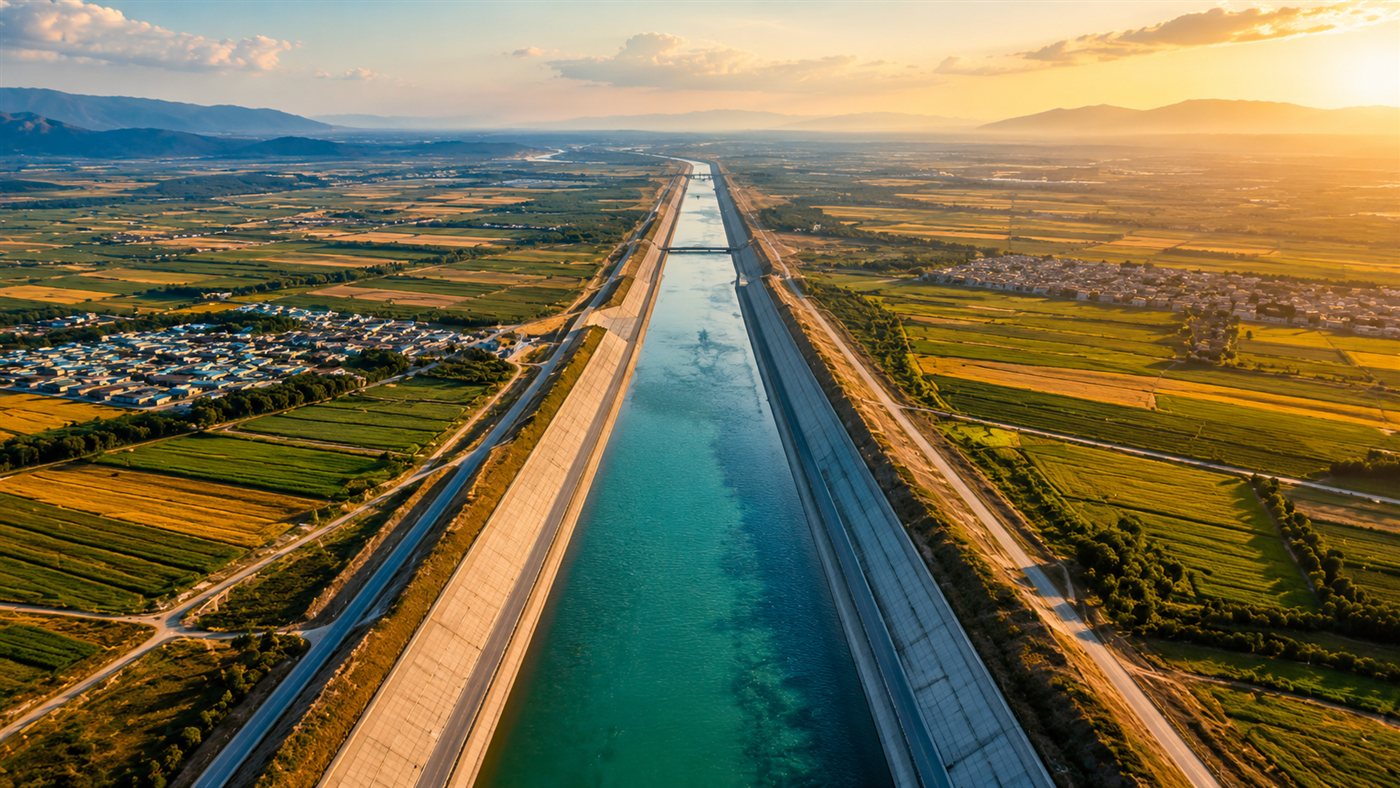

Moving entire rivers through mountains, under cities, and over more than 3,000 km: this is what China has been doing in the largest river diversion ever built on the planet. According to the channel The Impossible Build, in an analysis published in June 2025, the South-North Water Transfer Project was designed to move more than 44.8 billion m³ of water per year from the humid south to the dry and overcrowded north, enough to fill 18 million Olympic swimming pools.
The size of the bill matches the size of the work. By 2024, the project had already consumed more than 500 billion yuan, over US$ 70 billion, just on the eastern and central routes, displaced more than 330,000 people and started supplying Beijing and Tianjin, as The Impossible Build accounts. The video comparison gives the dimension: it’s like building 3 Panama Canals, only moving rivers uphill through earthquake zones.
The 1952 idea that Mao summed up in one sentence
The origin of the megaproject fits into a map sketch. According to The Impossible Build, in 1952 Mao Zedong looked at Chinese geography and suggested: there is more water in the south and less in the north, so, if possible, let’s borrow a little. It seemed simple, but the north concentrated the population, factories, and rapidly growing cities.
-
Indian Driver Spends 14 Years Digging 10-Meter Tunnel Through Mountain to Connect Isolated Village to the World

-
72 m² Prefabricated Home Arrives in a Container and Assembles in About an Hour
-
Brazilian Architect Patents Styrofoam House 20% Cheaper, Maintains 23°C Year-Round; Client Builds 280 Meters of Wall in 40 Days

-
Roof Tile Made from Recycled Milk Cartons Lasts 100 Years, Supports Over 150 kg per Square Meter, and is Produced in Brazil’s Passo Fundo Factory


The numbers of water desperation justified the boldness. In some areas, the water table under Beijing was dropping 5 meters per year, and new wells needed to go over 1 km deep to find water, as The Impossible Build reports. Meanwhile, the south suffered from the opposite problem: floods, heavy rains, and violent rivers. In 2003, after half a century of studies, the construction of the 3 routes, eastern, central, and western, finally began.
Eastern route: the water that passes under the Yellow River
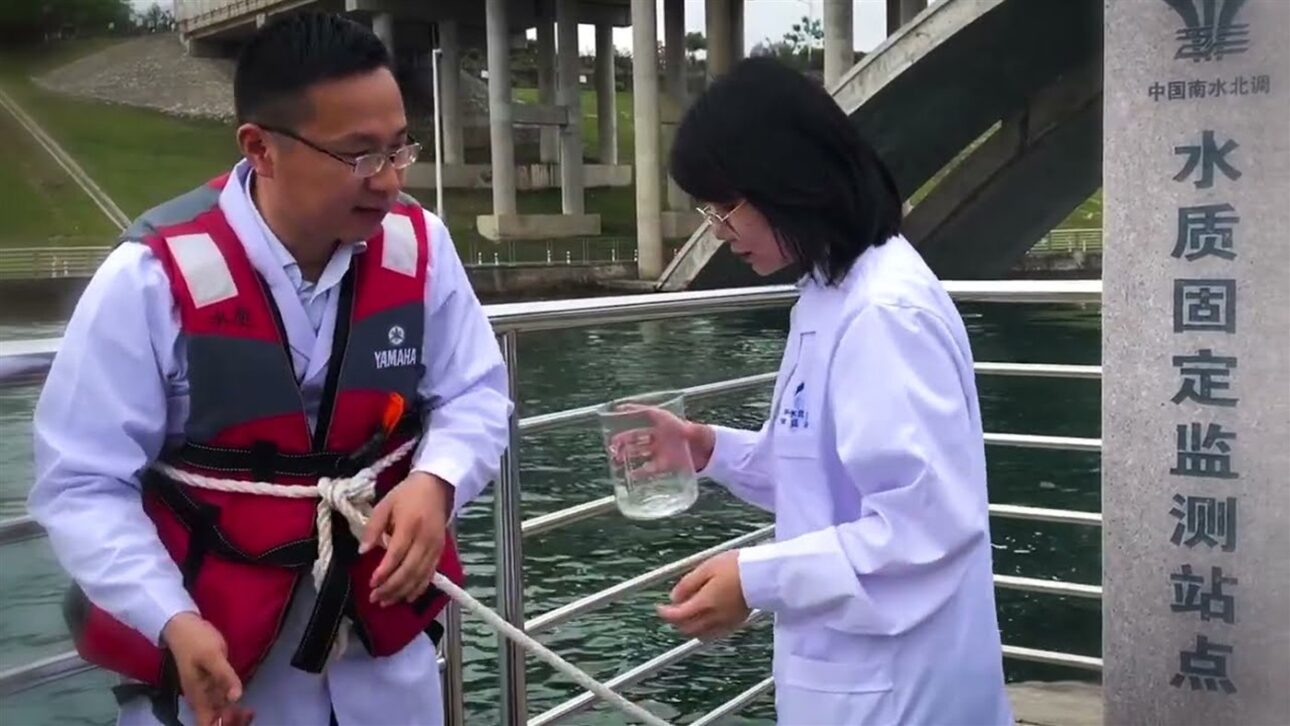
The first route took advantage of a 2,500-year-old relic. According to the The Impossible Build channel on YouTube, the eastern route follows the ancient Grand Canal, modernized with powerful pumps, new tunnels, and newly excavated sections, drawing water from the Yangtze River near Yangzhou and pushing it all northward, a distance compared in the video to extending pipes from New York to Atlanta.
The most impressive trick is halfway through. The engineers built giant underground tunnels for a river to pass beneath the Yellow River, with 23 pumping stations along the route, each strong enough to supply a small city, as described by The Impossible Build. The eastern route began delivering water to Shandong in 2014, then reached Tianjin, and today about 10 million people receive cleaner water through it, although the project had to treat years of industrial pollution along the way, amid skepticism from fish farmers at Dongping Lake, before studies indicated an overall improvement in quality.
Central route: 1,200 km by gravity, without a single pump
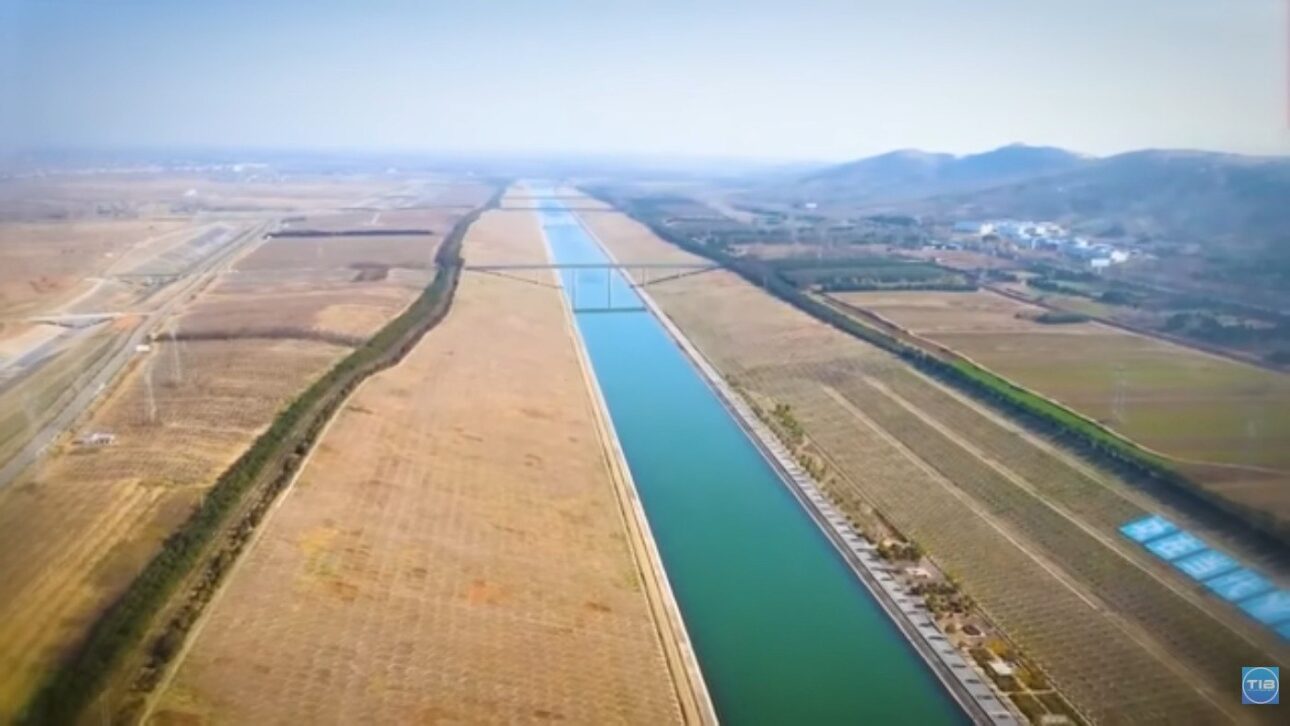
The main line of the system is a lesson in applied physics. According to The Impossible Build, the central route, nicknamed the Great Aqueduct, draws water from the Danjiangkou Reservoir on the Han River and sends it directly to Beijing. Instead of pumps, the engineers raised the height of the dam, increased the water level, and let gravity do the work.
The result requires no motor. The water travels more than 1,200 km in a continuous decline without using a single motor, and today one-third of all Beijing’s water, serving over 20 million people, comes from this route, as detailed by The Impossible Build. The flow even helped nature: the capital’s lakes began to refill, and the region’s underground water tables started to rise after decades of decline.
The 330,000 people removed from the path
No engineering ruler measures the human cost of the work. According to The Impossible Build, to make way for the reservoir and the central canal, about 330,000 people had to relocate in the provinces of Hubei and Henan, with entire cities uprooted.
Versions of the process diverge to this day. Some residents say they were forced to leave, others say they were promised better homes and lives, but the cost was enormous in money and heartbreak, as recorded by The Impossible Build. It’s the side of the transposition that doesn’t appear in the round numbers: each billion m³ that arrives clean in Beijing crossed the map over interrupted stories.
The 10-Year Tunnel That Returns Water to the Han River
Taking water from a river charges interest to those living downstream. According to The Impossible Build, the withdrawal from the Han River left less water for downstream communities, and the compensation turned into another colossal work: a new tunnel to bring extra water from the Three Gorges Reservoir back to the Han.
The technical details of the remedy are as impressive as the disease. The tunnel is a 10-year project that, when completed, will be the longest and deepest water tunnel ever constructed, running 1 km below the surface, as The Impossible Build anticipates. It’s the standard of the entire project: each giant solution creates a giant problem, which requires another giant solution.
The Western Route That Affects Rivers in Other Countries
The most ambitious part of the plan remains on paper, and for good reasons. According to The Impossible Build, the western route would take water from rivers in the western Chinese mountains to the Yellow River, but these rivers, like the Mekong and the Brahmaputra, do not belong solely to China: they flow to Vietnam, Cambodia, and India, and excessive withdrawal at the source would create serious problems downstream.
Geology adds another temporary veto. The route crosses areas of the Qinghai-Tibet Plateau that frequently tremble, and a strong earthquake could cause landslides and even the collapse of tunnels and canals, as The Impossible Build considers. Therefore, the western route is on hold, not canceled: in the project’s vocabulary, it’s a postponed chapter, not erased.
What River Diversion Has Already Changed in Beijing
The balance of supporters is concrete. According to The Impossible Build, Beijing’s water has become cleaner and lighter, without the salty taste of before, the population stopped drinking fluoride-laden groundwater, northern farmers began to irrigate more crops, factories gained supply, and rivers and lakes came back to life.
Critics counter with the cost measure. For them, the billions spent on river diversion would yield more in water recycling, desalination, and repairing the city’s leaky pipes, while villages along the canal see the water pass by without receiving a drop, and part of the volume evaporates in open sections, as The Impossible Build exposes. In Brazil, the discussion sounds familiar: it’s the same debate that accompanies the São Francisco River diversion, the largest Brazilian water project, on a Chinese continental scale.
The Account That Doesn’t Balance on Its Own and the Climate Risk


The system still operates with blind spots. According to The Impossible Build, only the central route has more than 60 control gates and 90 diversion points without regulation reservoirs, which made real-time control almost impossible, and the new digital systems for monitoring level, flow, and quality already respond to demands 5 times faster in some areas.
The long-term threat, however, is not technological. With warmer weather, southern China is becoming drier, glaciers are melting faster, and even the mighty Yangtze is starting to feel the strain: if the flow drops too much, there will be no water to send north, as The Impossible Build concludes. China solved the engineering puzzle, but the final decision still lies with nature.
The video covers the 3 routes, the tunnels under the Yellow River, the elevated Danjiangkou dam, and the debate over the western route.
China’s river diversion is the portrait of the century of infrastructure: $70 billion later, the north drinks the water from the south, and the question remains whether nature will sustain the loan. Tell us in the comments: should the western route come off the drawing board?