






 Portuguese
  Spanish


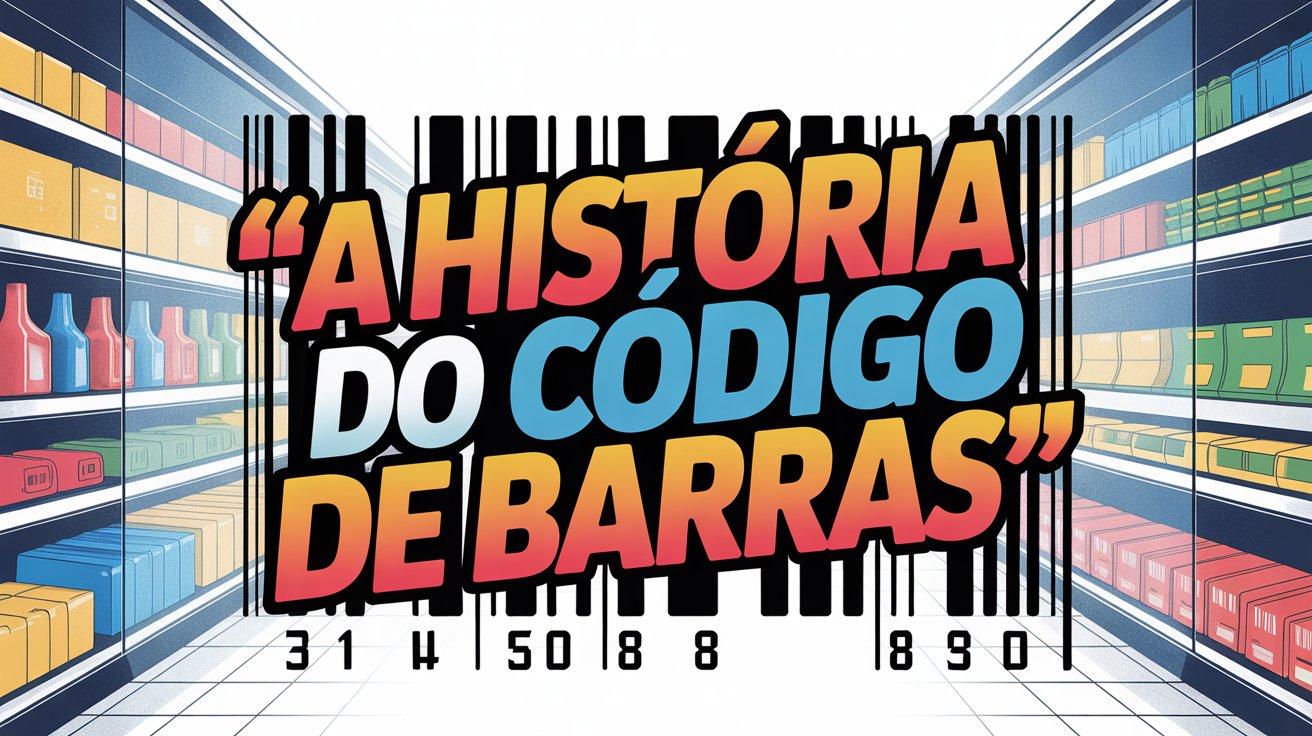
From A Stroke In The Sand To Billions Of Scans Per Day: The Creation That Went Unnoticed But Changed Everything You Buy
You may have scanned a product at the supermarket checkout without thinking too much about those black lines on a white background.
But behind the barcode – that seemingly simple set of vertical lines – lies a surprising story of ingenuity, resilience, and economic transformation.
Today, the system is responsible for identifying trillions of products worldwide, being scanned over 6 billion times per day. But it wasn’t always like this.
-
How Many Outlets Should Each Room Have? Guidelines Suggest 6 to 10 in the Kitchen, One Every 3.5 Meters in Living Rooms, and Specific Recommendations for Bedrooms, Bathrooms, Laundry Rooms, and Outdoor Areas

-
Family Turns Homemade Cheese Bread Recipe into a $17 Million Frozen Foods Business with 200 Tons Monthly Production and Over 1,400 Clients

-
Ancient 4,000-Year-Old City in Brazil Grew Wealthier and Reduced Inequality, Study Finds
-
Lost Page from Archimedes Palimpsest Resurfaces in French Museum After Decades, May Reveal Hidden Mathematical Calculations with X-ray and Multispectral Imaging




The Origin: A Desperate Request From An American Merchant
The story of the barcode begins with a very specific request made in 1948 by a supermarket manager in Philadelphia to a local university.
He wanted an automated system to record product prices at the point of sale, which would eliminate lines and the manual work of cashiers.
The request reached Norman Joseph Woodland, then a young engineer and inventor, and his colleague Bernard Silver, who delved into the idea.
Inspired by Morse code, Woodland had a “eureka” moment while vacationing at his grandfather’s house in Florida.
He drew a sequence of lines in the sand on the beach, based on the dots and dashes of Morse code, but transforming them into vertical lines of varying thicknesses.
It was the embryo of what would later become the barcode.
The First Patent: Long Before Its Application
In 1952, Woodland and Silver patented the system under the name of “Classifying Apparatus and Method”.
But at the time, the technology to read the codes did not yet exist. It took over 20 years for barcode readers to become viable and efficient enough for commercial use.
Bernard Silver did not live to see his invention take the world by storm: he died in a car accident in 1963.
Woodland, in turn, went on to work at IBM, where he tried to persuade the company to develop a scanner compatible with his invention.
But technical obstacles and a lack of interest caused the project to be shelved for years.

The Turnaround Of Supermarkets And The Birth Of The UPC
The big turnaround happened in the 1970s when major supermarket chains in the United States came together to create a universal coding system.
The idea was to standardize product identification to speed up sales and inventory management. Thus, the UPC – Universal Product Code was created, a simplified and standardized version of the code envisioned by Woodland and Silver.
The first product in the world scanned with a barcode was a package of Wrigley’s Juicy Fruit chewing gum, on June 26, 1974, at a Marsh supermarket in Ohio.
The item is still on display at the Smithsonian, the national museum of the USA, as a milestone of commercial automation.
From Supermarkets To The World: Global Expansion
With the massive adoption of the UPC in the USA, the system quickly spread to other countries.
Brazil began using barcodes in 1984, with standardization coordinated by GS1 Brazil, the organization responsible for assigning codes in the country to this day.
Today, barcodes are used in more than 190 countries, and in sectors that go far beyond retail: healthcare, logistics, industry, services, events, and even government documents.
Everything that needs to be identified quickly and accurately goes through some form of automatic coding.
More Than Lines: The Types And Evolutions Of The Barcode
You may have noticed that not all barcodes are the same. There are various standards, such as:
- EAN-13: used in general retail, with 13 digits.
- UPC-A: common in the USA, with 12 digits.
- DataMatrix and QR Code: two-dimensional versions that store much more information.
The revolution of QR Codes, by the way, has roots in the same principle created by Woodland: simplifying data reading efficiently.
The difference is that 2D codes allow for the storage of links, texts, geolocation, and much more – making them popular in mobile payments, marketing, and product tracking.
Impacts That No One Could Foresee
Few inventions have impacted global logistics as much as the barcode.
With it, stock control became automated, losses were reduced, sales analysis became more precise, and customer service became faster.
Today, it’s hard to imagine a world without this system.
From identifying medications and ensuring food provenance to controlling luggage at airports and even organizing sports competitions, barcodes are everywhere – and almost always go unnoticed.

Late But Deserved Recognition
Joseph Woodland received the National Medal of Technology from the United States in 1992, from then-President George H. W. Bush, nearly 40 years after the original invention.
The recognition came late, but it solidified his legacy as one of those responsible for the quiet revolution that drives modern commerce.
Interestingly, he never became wealthy from the idea. The patent was sold for less than US$ 15,000 in 1952, a trivial amount compared to the impact it would have decades later.




Be the first to react!