Portuguese
  Spanish



Raízen of Shell Group Acquires Louis Dreyfus Biosev for R$3.6 Billion Plus Shares, Expanding Its Dominance in Sugar and Ethanol in Brazil
Raízen, the world’s giant producer of sugar and ethanol from sugarcane, signed an agreement on Monday (02/08) to purchase plants from Louis Dreyfus Biosev, one of the largest companies in the sector, in a transaction involving a payment of 3.6 billion reais and shares. Take the opportunity to subscribe, Raízen has initiated recruitment and selection for job openings in SP and MS.
Read Also
- 50 Job Openings to Work at Multinational Ambev, the Largest Beverage Company in the World
- Japanese-Origin Multinational, Sankyu, Calls for Many Positions to Address Contracts During Maintenance Shutdown of Usiminas Steelworks
- Shell Seeks Young People Aged 20 to 34 Who Reside in Rio de Janeiro, Have Completed High School, and Possess Entrepreneurial Mindset and Behavior
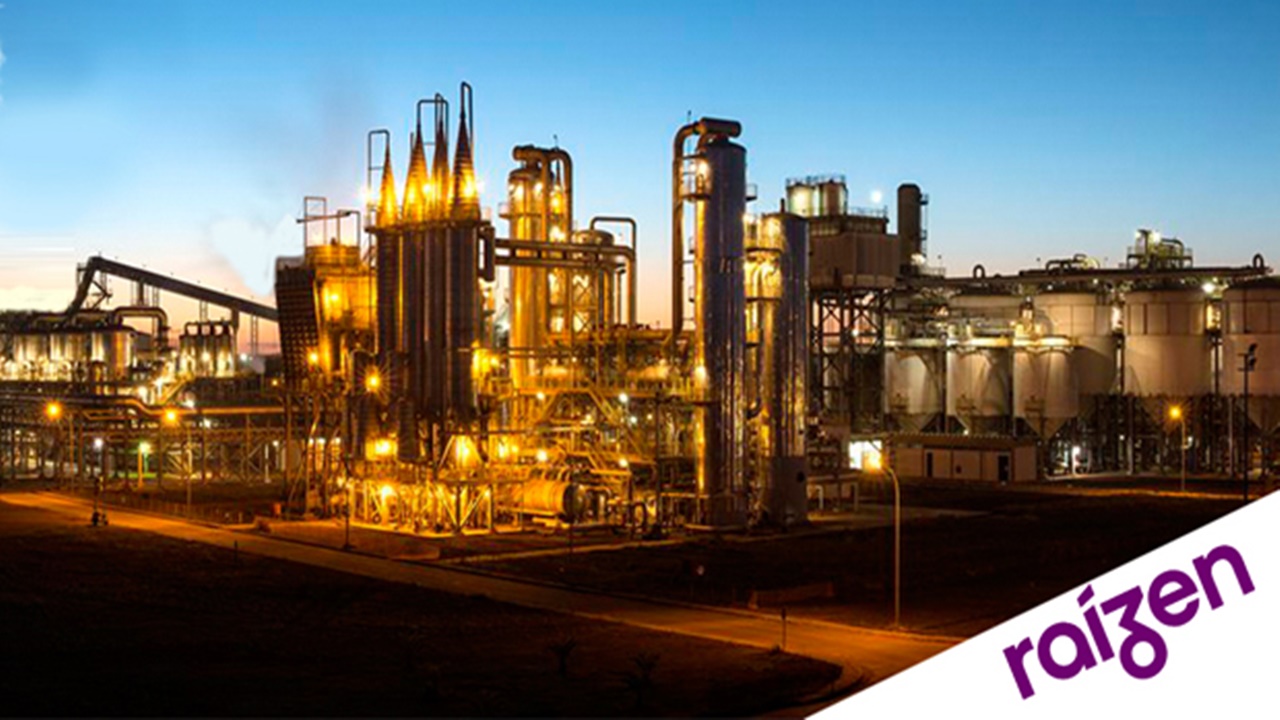
According to Raízen, the purchase includes nine strategically located sugar and ethanol plants (six in the State of São Paulo, two in Mato Grosso do Sul, and one in Minas Gerais), representing an installed crushing capacity of up to 32 million tons of cane. The operation also includes cogeneration of energy, with an export capacity of up to 1.3 GWh of electricity/year, and an area of 280 thousand hectares of planted cane.
Positioned competitively in the market, with operational efficiency and financial discipline, the giant ethanol producer reports that the operation adheres strictly to capital discipline principles and will not impact the company’s leverage, preserving its credit profile, which is currently rated as “investment grade” by the three largest global rating agencies.
-
Brazil’s ANP Opens 86 New Oil Blocks in the Equatorial Margin, Expanding the Amazon River Mouth Frontier

-
Warren Buffett’s Lesson: How Discipline, Extra Income, and Small Investments Can Transform Your Financial Future

-
Brazilian Farmer’s Viral Video on Onion Prices Opens New Income Opportunities Online

-
Brazil’s Chicken Exports Hit Record 2.936 Million Tons in Six Months, Earning $5.7 Billion, with China, Japan, and the Middle East Among Top Buyers


With the integration, Raízen, a joint venture of Cosan and Shell, will have a total of 35 producing plants, totaling an installed crushing capacity of 105 million tons of cane and approximately 1.3 million hectares of crops, equivalent to 15% of the planted area in Brazil.
If approved by CADE, under the agreement, Cosan and Shell will hold 48.25% of Raízen, while Biosev’s shareholders, a subsidiary of Louis Dreyfus, will keep the remaining 3.5%. However, there is a possibility that this minority stake could be purchased by Raízen in the future, according to certain contractual terms.
About the Transaction Between Ethanol Producers Raízen and Biosev
The negotiation involves an exchange of shares and cash payment, as Biosev’s assets will be integrated already net of debt. Once the transaction is completed, Biosev will become a subsidiary of Brazil’s largest ethanol producer, Raízen, and its current shareholders will migrate to a holding that will receive a minority interest in the company without voting rights. Below is the organizational chart of the structure:
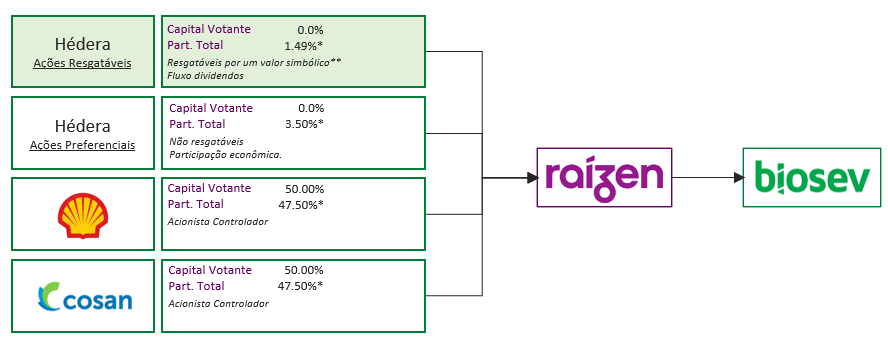
The shareholding percentages represented in this organizational chart are mathematically rounded.
** After the redemption of Redeemable Shares (temporary), shareholding in the total capital of Shell and Cosan will increase to 48.25% respectively.