






 Portuguese
  Spanish
  3 min of reading
  0 comments


Mercedes-Benz inaugurates a New Era in Urban Mobility with the Arrival of Its Electric Buses in Brazilian Public Transport.
Mercedes-Benz is heavily investing in electrification technologies, focusing on public transport in Brazil. The company is concentrated on R&D of electric vehicles, presenting solutions like the electric bus eCitaro and eO500U with high-capacity batteries for urban routes, and the EQ platform that can transform commercial vehicles. With an emphasis on solid-state batteries and charging infrastructure, Mercedes is leading a movement that promises sustainability, efficiency, and technological innovation in Brazilian public transport.
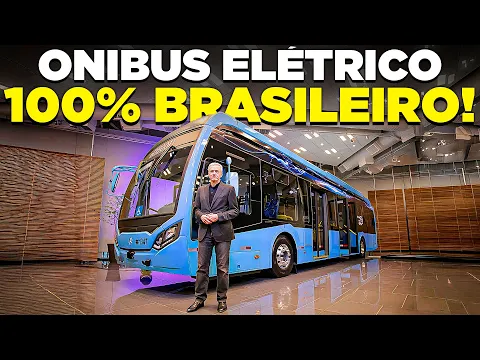

Revolution in Brazilian Public Transport: Mercedes Launches a New Era in the Electric Car Market
One of Mercedes-Benz’s main electric vehicles for public transport is the eCitaro. This electric bus is equipped with high-capacity batteries, allowing sufficient autonomy for daily operations on urban routes.
Mercedes-Benz develops electric cars on the EQ Platform, which can be adapted for commercial and public transport vehicles. This platform offers state-of-the-art technologies for energy efficiency and smart systems integration.
-
Uber Faces Shareholder Scrutiny as Board Accused of Ignoring Safety, Compliance, and Harassment Warnings Amid Over 3,500 U.S. Lawsuits

-
Ferrari’s First Electric Car Divides Fans, Priced at $630,000, Amid Concerns Over Limited Editions; Brand Clarifies It’s Not Just for Future Perks
-
BYD Dolphin Mini: The Electric Car That Defies Depreciation, Losing Only 3.58% in a Year and Becoming the Best-Selling Retail Model Under $22,000

-
Electric Car JAC E-JS4 Loses $19,000 in Value in One Year, Leading Record Depreciation of Used Cars in Brazil Due to Expensive Battery and New Models


New Brazilian Electric Bus from Mercedes-Benz Arrives in Argentina
The eO500U is a fully electric urban bus, developed and produced at the Mercedes-Benz factory in São Bernardo do Campo, São Paulo. Equipped with five battery modules, the vehicle has a range of up to 250 km on a single charge, which is sufficient to cover most daily urban routes without the need for intermediate recharging.
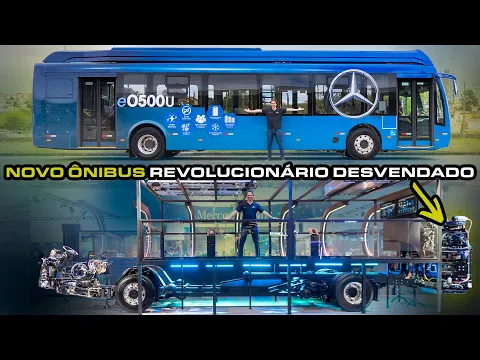
The charging system of the eO500U is of the plug-in type, allowing the vehicle to be charged quickly and efficiently. In just three hours, the bus’s batteries can be fully charged, minimizing downtime and maximizing the vehicle’s availability for operation.
The introduction of the electric bus eO500U in Argentina is an important milestone for Mercedes-Benz and for the country’s public transport sector. The initiative not only highlights the technological capability of the Brazilian manufacturer but also promotes the use of renewable energies and reduction of dependence on fossil fuels.
Batteries and Charging Infrastructure
The manufacturer is investing in solid-state batteries and fast charging technologies. The company is also forming partnerships with energy companies and local governments to develop adequate charging infrastructure.
The use of electric buses and cars significantly reduces CO2 emissions, improving air quality in Brazilian cities. Additionally, it contributes to the reduction of dependence on fossil fuels.
The high acquisition cost of electric vehicles and the need to adapt existing infrastructure are barriers that must be overcome. Tax incentives and subsidies may be necessary to facilitate the transition.
The Arrival of Electric Vehicles in Public Transport
When considering the integration of electric vehicles into public transport, it is essential to assess the social and economic impact that these technologies can bring. In addition to the aforementioned environmental and efficiency benefits, the generation of jobs in new areas such as electric vehicle maintenance and the construction of charging infrastructure is an important factor to consider.
Training programs and specialized technical education arise as crucial areas for investment, both from companies and the governmental sphere. These efforts will ensure that there is a qualified workforce to support and grow alongside the electric infrastructure.
Finally, it is vital that there is constant dialogue among all stakeholders—government, transport companies, manufacturers, and civil society. This collaboration in the development of adequate public policies and sustainable business models will facilitate the adoption of electric technologies, maximizing their benefits for public transport in Brazil.





Be the first to react!