Portuguese
  Spanish



The Leader Project by VLI Aims to Maximize the Energy Efficiency of Its Locomotives, Promoting More Economic Fuel Consumption While Reducing CO2 Emissions
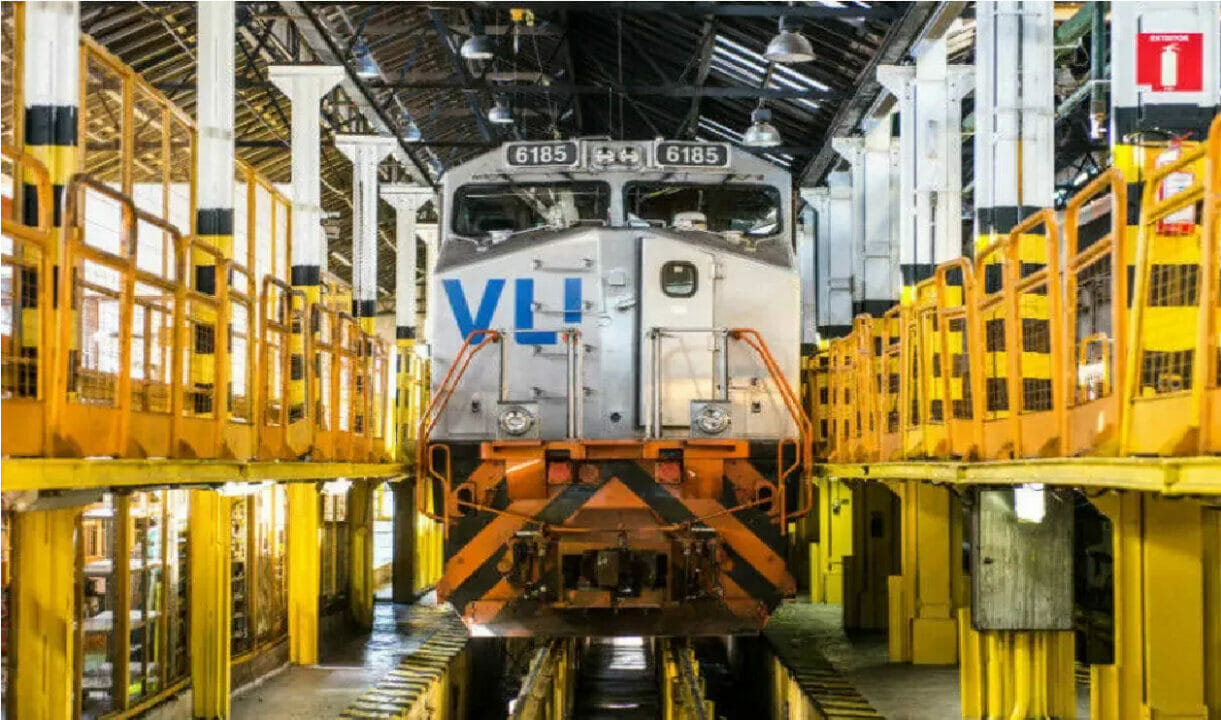
VLI, a leading company in logistics solutions for railways, ports, and terminals, is innovating the railroad sector with its Leader Project. This promising project aims not only to optimize the performance of locomotives, but also to significantly reduce CO2 emissions. By expanding its initiatives, the company is contributing to a more efficient and sustainable rail transport.
Economic Fuel Consumption and Energy Efficiency of Locomotives
The Leader Project by VLI aims to maximize the energy efficiency of its locomotives, promoting more economic fuel consumption while reducing CO2 emissions. This initiative is part of a larger commitment by the company to environmental responsibility and resource optimization. The locomotives equipped with this technology are operating in the Southeast, East, and North Corridors, representing a significant milestone in the railroad sector.
Implementation of the Leader Project in Over 200 Locomotives Across Brazil
The implementation schedule for the Leader Project is ambitious, with plans for the technology to be installed in 226 locomotives responsible for VLI’s main flows. The expectation is that fuel savings will reach 7% in the East and Southeast Corridors, and 3.5% in the North Corridor by 2024. This advancement is made possible by continuous technology improvement and specific adaptations for VLI’s operations.
-
Latin America’s Largest Port Invests $400 Million in Rail System with Trains Up to 2.4 Kilometers Long
-
180-Year-Old Bridge Disappears from Brazilian Farm, Found 180km Away, Sparks Investigation into Illegal Sale of Historical Heritage

-
Brazil’s Defunct Railway Network Leaves Over 100,000 Properties Abandoned for Nearly 30 Years, Facing Neglect and Safety Risks as Government Struggles to Regulate Assets Amid Degraded Stations and Unlawful Use

-
Belo Horizonte’s Beltway Project Risks Losing $5 Billion to Metro Expansion if Court Doesn’t Act Soon; State Government Plans New Lines with IDB Support




The technology behind the Leader Project allows the engineer to enable semi-autonomous driving when the train reaches a speed of over 8 km/h. This results in a more efficient operation with less consumption of fossil fuels.
Cesar Toniolo, general manager of Engineering, Development, and Operational Technology at VLI, highlights the importance of the Leader in the company’s cost-saving strategy. According to him, “This technology enables the identification of operational factors that facilitate more efficient driving, reducing the consumption of fossil fuels.”
Improvements and Adaptations of Technology and the Importance of the Engineer in the Project
The stages of the Leader Project involve continuous adaptations and improvements to ensure the effectiveness of the technology in reducing fuel use. The project is currently in the validation phase and adaptation to VLI’s operational reality.
Importantly, despite the advanced technology, the engineer remains essential in the operation of the train. It is his responsibility to supervise the driving assistant and take control when necessary. He is the key player in ensuring the safety of the railroad system, as well as executing operational procedures for stopping or alerts during train operation.
Reduction of Fuel and Material
In addition to saving fuel, the Leader Project will also contribute to the reduction of wear on rolling stock, resulting in additional savings and greater operational efficiency. With the successful implementation of this project, VLI is leading the way to a more sustainable and efficient rail transport while reinforcing its commitment to safety and the environment.
The Leader Project by VLI represents a remarkable advancement in the railroad sector, uniting operational efficiency, fuel savings, and the reduction of CO2 emissions. By adopting this technology, VLI is aligned with the demands of a world seeking more sustainable and efficient practices. The Leader Project is an example of how innovation and environmental commitment can positively transform rail transport, providing significant economic and ecological benefits.